November 2022 in “Munich Personal RePEc Archive (Ludwig Maximilian University of Munich)” Phosphatidylinositol 4-kinases are crucial for root growth, defense, and immunity in Arabidopsis thaliana.
 1 citations
,
May 2018 in “Tropical Journal of Pharmaceutical Research”
1 citations
,
May 2018 in “Tropical Journal of Pharmaceutical Research” Intense pulsed-light therapy helps mice grow hair by activating a specific growth pathway.
10 citations
,
July 2019 in “Advances in Wound Care” Reducing Flightless I protein improves wound healing by activating skin stem cells.
13 citations
,
April 1964 in “PubMed” Phosphatide distribution in mouse skin remains consistent in both normal and cancerous growths.
1 citations
,
October 2023 in “PROTOPLASMA”  76 citations
,
June 2008 in “Journal of the American Academy of Dermatology”
76 citations
,
June 2008 in “Journal of the American Academy of Dermatology” The conclusion is that certain scalp tissue changes are characteristic of lichen planopilaris, with mucinous perifollicular fibroplasia being a new feature for diagnosis.
 March 2014 in “Journal of The American Academy of Dermatology”
 Mycophenolic acid may help hair grow by activating pathways important for hair growth.
August 2021 in “Journal of Investigative Dermatology” ILC1-like cells can cause alopecia areata by disrupting hair follicle immunity, suggesting a new treatment approach.
 3 citations
,
April 2019 in “The journal of investigative dermatology/Journal of investigative dermatology”
3 citations
,
April 2019 in “The journal of investigative dermatology/Journal of investigative dermatology” ILC1 cells contribute to hair loss in alopecia areata.
PDGF signaling is crucial for cell development, wound healing, and fluid regulation in the body.
 71 citations
,
January 2015 in “Journal of molecular cell biology/Journal of Molecular Cell Biology”
71 citations
,
January 2015 in “Journal of molecular cell biology/Journal of Molecular Cell Biology” mTOR signaling helps activate hair stem cells by balancing out the suppression caused by BMP during hair growth.
 March 2024 in “Journal of cosmetic dermatology”
 Platelet-rich plasma (PRP) is an effective treatment for lichen planopilaris.
21 citations
,
August 2007 in “Experimental Dermatology” Overexpression of hurpin in mice leads to abnormal skin and higher skin cancer risk.
56 citations
,
January 2022 in “Burns & Trauma” WNT5A contributes to keloid scars by promoting cell changes through specific signaling pathways.
24 citations
,
January 2018 in “Development” Frizzled 3 and Frizzled 6 together control the orientation of mouse hair follicles.
 65 citations
,
June 2003 in “EMBO journal”
65 citations
,
June 2003 in “EMBO journal” Noggin overexpression delays eyelid opening by affecting cell death and skin cell development.
50 citations
,
February 2004 in “Genomics” A gene mutation causes lanceolate hair in rats by disrupting hair shaft integrity.
 9 citations
,
May 2012 in “PLOS ONE”
9 citations
,
May 2012 in “PLOS ONE” ILK is essential for skin development, pigmentation, and healing.
 February 2024 in “bioRxiv (Cold Spring Harbor Laboratory)”
 Activating TLR9 helps heal large wounds and regrow hair by involving a specific type of immune cell.
 April 2017 in “Journal of Investigative Dermatology”
 The BMP/Smads pathway and Id2 gene control hair follicle stem cells, affecting their rest and growth phases.
52 citations
,
September 2012 in “Oncogene”  July 2025 in “Advanced Science”
 Collagen VI and Semaphorin 3C are important for hair pigmentation and could help treat pigmentation disorders.

DOPE:DOPC liposomes can improve targeted cancer drug delivery, reducing side effects and increasing effectiveness.
 4 citations
,
July 2021 in “bioRxiv (Cold Spring Harbor Laboratory)”
4 citations
,
July 2021 in “bioRxiv (Cold Spring Harbor Laboratory)” BLMP-1 is important for regular molting and gene expression cycles in worms.
38 citations
,
March 1997 in “Journal of interferon & cytokine research” IL-1β inhibits human hair follicle growth.
October 2025 in “International Journal of Molecular Sciences” Rebamipide may help regrow hair by activating hair follicle stem cells.
June 2025 in “British Journal of Dermatology” Lichen planopilaris may have a genetic link.
January 2016 in “프로그램북(구 초록집)” LED light promotes hair growth by stimulating cell proliferation and reducing cell death.
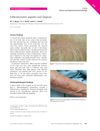 May 2014 in “Clinical and Experimental Dermatology”
 A 70-year-old woman with a rare skin condition improved after treatment with topical steroids and acitretin.
 11 citations
,
October 2016 in “Biomedicine & Pharmacotherapy”
11 citations
,
October 2016 in “Biomedicine & Pharmacotherapy” Both human platelet lysate and minoxidil can promote hair growth, but they affect different genes and cell survival rates.