325 citations
,
June 1994 in “Archives of Dermatology” Postmenopausal frontal fibrosing alopecia may be a unique condition linked to postmenopausal changes.
48 citations
,
November 2018 in “Journal of dermatological treatment” Women are more likely to have Lichen planopilaris, and treatments with cyclosporine and methotrexate are most effective but less safe than mycophenolate mofetil.
 February 2009 in “Journal of the American Academy of Dermatology”
 Transverse sections are better for non-scarring hair loss, vertical sections are better for lichen planopilaris, and either method works for other scarring hair loss types.
January 2016 in “Lithuanian University of Health Sciences” Different diseases cause specific skin and hair follicle changes in dogs with alopecia.
 11 citations
,
September 2001 in “The Cleft Palate Craniofacial Journal”
11 citations
,
September 2001 in “The Cleft Palate Craniofacial Journal” Hair transplant surgery successfully restored a boy's moustache hair on a cleft lip scar, with natural-looking results and patient satisfaction.
 1 citations
,
December 2022 in “Archives of Dermatological Research”
1 citations
,
December 2022 in “Archives of Dermatological Research” Fluid Platelet-Rich Fibrin (PRF) is more effective and faster at improving acne scars than Platelet-Rich Plasma (PRP), with similar mild side effects.
 January 2024 in “Pan African Medical Journal”
 Non-scarring hair loss is common in lupus patients and can be diagnosed with specific hair and tissue tests.
88 citations
,
July 2001 in “British journal of dermatology/British journal of dermatology, Supplement” The method effectively measures lipid changes and drug effects on skin follicles.
December 2023 in “Journal of Volgograd State Medical University” Different types of fat tissue play important roles in metabolism, heat production, and healing.
 72 citations
,
February 2011 in “The American Journal of Dermatopathology”
72 citations
,
February 2011 in “The American Journal of Dermatopathology” Anti-TNF therapy can cause a unique type of hair loss that may get better with topical treatments without stopping the therapy.
44 citations
,
January 2013 in “BMC Dermatology” TGFβ signaling prevents sebaceous gland cells from producing fats.
 18 citations
,
May 2013 in “Journal of Dermatological Treatment”
18 citations
,
May 2013 in “Journal of Dermatological Treatment” Non-ablative fractional laser treatments have a low risk of side effects in Asian patients.
15 citations
,
October 1996 in “Archives of Dermatology” Researchers identified a new hair loss pattern called "sisaipho type," where hair is lost across the scalp except around the edges.
 36 citations
,
November 2005 in “Journal of The American Academy of Dermatology”
36 citations
,
November 2005 in “Journal of The American Academy of Dermatology” Topical latanoprost doesn't effectively regrow hair in severe eyebrow alopecia areata cases.
 14 citations
,
May 2018 in “Journal of the American Academy of Dermatology”
14 citations
,
May 2018 in “Journal of the American Academy of Dermatology” Platelet-rich plasma might be a new way to treat lichen planopilaris.
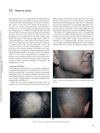 April 2012 in “Informa Healthcare eBooks”
 Alopecia areata is a common autoimmune condition causing varying hair loss, diagnosed by specific patterns of inflammation around hair follicles, with several treatment options available.
8 citations
,
July 2018 in “The Journal of Dermatology” Current corticosteroid pulse therapy is not very effective for severe rapidly progressive alopecia areata.
 September 2018 in “Plastic and Reconstructive Surgery – Global Open”
 Using real-time ultrasound during gluteal fat grafting is safe and reduces complication risks.
1 citations
,
January 1980 in “Acta Dermato Venereologica” Oral tetracycline reduces fat breakdown in hair lipids.
 March 2014 in “Journal of The American Academy of Dermatology”
 Mycophenolic acid may help hair growth, a combination treatment improves hair thickness in male hair loss, and early treatment of frontal fibrosing alopecia is important.
5 citations
,
August 2001 in “International Journal of Dermatology” A 20-year-old had hair loss and skin issues from lichen planopilaris starting at age 10.
6 citations
,
December 2021 in “Journal of Clinical Medicine” LiPADI is a useful tool for monitoring the severity and treatment of lichen planus.
 16 citations
,
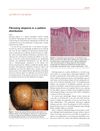
February 2010 in “Journal of the European Academy of Dermatology and Venereology”
16 citations
,
February 2010 in “Journal of the European Academy of Dermatology and Venereology” Fibrosing alopecia in a pattern distribution is a unique hair loss condition that may respond to antiandrogen therapy.
 July 2019 in “International journal of contemporary medical research”
 Men with genetic hair loss are more likely to have abnormal blood lipid levels, especially if the hair loss is severe.
March 2022 in “JAAD case reports” A man had a non-cancerous, fast-growing skin lump on his arm that was removed with surgery.
 2 citations
,
October 2017 in “Journal of The American Academy of Dermatology”
2 citations
,
October 2017 in “Journal of The American Academy of Dermatology” Focal atrichia helps diagnose female pattern hair loss.
 3 citations
,
June 2020 in “Cureus”
3 citations
,
June 2020 in “Cureus” A woman's hair loss led to discovering she had lupus.
 9 citations
,
January 2010 in “International Journal of Trichology”
9 citations
,
January 2010 in “International Journal of Trichology” The study found that the cause of alopecia areata can be identified through tissue analysis, and vertical sections are enough for diagnosis.
11 citations
,
December 2010 in “American journal of transplantation” Some patients developed hair loss after islet cell transplant possibly due to their immune-suppressing medications.
September 2025 in “International Journal of Medical Informatics” A machine learning model can predict scarring in lichen planopilaris using factors like vitamin D levels and diagnostic delay.