1 citations
,
June 2021 in “Preprints.org” Hair relaxers and straighteners can be toxic to skin cells.
 1 citations
,
November 2008 in “Acta crystallographica”
1 citations
,
November 2008 in “Acta crystallographica” Scientists successfully created and analyzed the structure of a part of the human androgen receptor with specific modulators and a peptide to understand how it binds differently in various tissues.
 April 2025 in “European Psychiatry”
 Mood stabilizers for bipolar disorder can cause skin issues, but severe reactions are rare.
 January 2025 in “Drug repurposing”
 New drug uses show promise but need more research.

Some medications, including retinoids, antifungals, and psychotropic drugs, can cause reversible hair loss if stopped or doses are reduced.
January 2022 in “Indian Journal of Psychiatry/Indian journal of psychiatry” Lithium for bipolar disorder can cause skin problems like rashes, which go away when the medication is stopped.
Hair samples showed changes in chemical elements over time and location in Venezuela.
 August 1994 in “Drugs & Therapy Perspectives”
 Some drugs can cause hair loss or growth, but hair usually returns to normal after stopping the drug.
January 2019 in “Spectrum Research Repository (Concordia University)” Topiramate impairs gene transmission in zebrafish, while Ginkgo biloba reduces harmful effects of high β-catenin levels.
 April 2018 in “The journal of investigative dermatology/Journal of investigative dermatology”
 Li2CO3 improved skin disease in a mouse model of Focal Dermal Hypoplasia without toxicity.
 December 2012 in “Journal of undergraduate research in Alberta”
 Elongating cilia boosts SKP stem cell renewal, especially with PDGF.
Wnt-activating drugs generally do not increase cancer risk.
January 1994 in “中医杂志:英文版” Hair trace element levels can guide new treatments for aplastic anemia.
74 citations
,
February 2011 in “Headache The Journal of Head and Face Pain” Sumatriptan injections, high-flow oxygen, and verapamil effectively treat cluster headaches.
 19 citations
,
October 2013 in “Headache: The Journal of Head and Face Pain”
19 citations
,
October 2013 in “Headache: The Journal of Head and Face Pain” The document concludes that inhalation of oxygen and sumatriptan injections are primary for cluster headaches, indomethacin for paroxysmal hemicrania, and lidocaine and lamotrigine for SUNCT, but SUNCT often resists treatment.
 11 citations
,
February 2007 in “Journal of Child and Adolescent Psychiatric Nursing”
11 citations
,
February 2007 in “Journal of Child and Adolescent Psychiatric Nursing” Combining mood stabilizers with antipsychotics is more effective for treating children with bipolar disorder than using mood stabilizers alone.
3 citations
,
February 2002 in “The American journal of psychiatry” Stopping birth control pills may have triggered a manic episode in a woman with HAIR-AN syndrome.
December 2014 in “Belarusian State Pedagogical University repository (Belarusian State Pedagogical University)” ECM components regulate β-Catenin activity, affecting wound healing.
 December 2006 in “The Brown University Psychopharmacology Update”
 Second-generation antipsychotics offer no significant benefit over first-generation ones for schizophrenia.
45 citations
,
February 2011 in “IOP Conference Series Materials Science and Engineering” The sensor accurately measures thallium ions in solutions with high selectivity.
 July 1996 in “Trends in Endocrinology and Metabolism”
 The book is a valuable reference on androgenic disorders for professionals but not suitable for laypeople or medical students.
 147 citations
,
April 1994 in “Drug Safety”
147 citations
,
April 1994 in “Drug Safety” Some drugs can cause hair loss or increase hair growth, but these effects are usually reversible when the drug is stopped.
 10 citations
,
January 2008 in “Acta dermato-venereologica”
10 citations
,
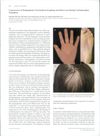
January 2008 in “Acta dermato-venereologica” Carbamazepine caused hair loss and skin eruptions in a woman, which improved after stopping the medication.
 August 1994 in “Drugs & Therapy Perspectives”
 The document concludes that H2-antagonists and proton pump inhibitors are highly effective for ulcers, eradicating Helicobacter pylori is important to prevent recurrence, and misoprostol helps with NSAID-related ulcers.
 180 citations
,
November 1991 in “American Journal of Psychiatry”
180 citations
,
November 1991 in “American Journal of Psychiatry” Fluoxetine was not effective in treating hair-pulling disorder in the short term.
 128 citations
,
January 2001 in “American Journal of Clinical Dermatology”
128 citations
,
January 2001 in “American Journal of Clinical Dermatology” Coal tar shampoos, salicylic acid, and topical corticosteroids are effective for scalp psoriasis, with Vitamin D3 analogues also showing benefits; severe cases may require stronger medication with more risks.
 78 citations
,
February 2011 in “Canadian Medical Association Journal”
78 citations
,
February 2011 in “Canadian Medical Association Journal” Acne treatment varies, with topical and systemic therapies effective, and more research needed on treatment order and long-term effects.
 47 citations
,
January 2017 in “RSC Advances”
47 citations
,
January 2017 in “RSC Advances” Keratin peptides can change hair shape gently without harsh chemicals.
 47 citations
,
January 2003 in “American Journal of Clinical Dermatology”
47 citations
,
January 2003 in “American Journal of Clinical Dermatology” Mood stabilizers can cause serious skin reactions; careful monitoring and immediate treatment are crucial.
 27 citations
,
January 2017 in “Neuropsychopharmacology”
27 citations
,
January 2017 in “Neuropsychopharmacology” The enzyme 5α-reductase is key in causing psychotic-like effects from sleep deprivation.