September 2025 in “Development” Nelfb is crucial for forming skin fat tissue by regulating genes needed for fat cell development.
 23 citations
,
December 2013 in “British Journal of Dermatology”
23 citations
,
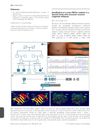
December 2013 in “British Journal of Dermatology” A new gene mutation linked to a skin condition was found in a Spanish family.
The microenvironment affects the behavior and survival of melanocytes with the GNAQ oncogene in melanoma.
 April 2026 in “Zenodo (CERN European Organization for Nuclear Research)”
 The package offers tools for exploring potential miRNA changes in female hair loss.
 November 2022 in “Gigascience”
 A specific genetic deletion in goats affects cashmere yield and thickness.
3 citations
,
May 2016 in “Dermatopathology” Lrig1 could be a marker for advanced sebaceous carcinoma.
 21 citations
,
November 2017 in “Livestock science”
21 citations
,
November 2017 in “Livestock science” Nellore cattle have genetic variations linked to their adaptation to tropical environments.
 March 2011 in “European Urology Supplements”
 Gene variation affects prostate issues and hair loss.
 2 citations
,
November 2022 in “Animal Bioscience”
2 citations
,
November 2022 in “Animal Bioscience” A specific RNA modification in cashmere goats helps activate hair growth-related stem cells.
July 2005 in “The American Journal of Human Genetics” The AR gene is linked to male-pattern baldness, TNFSF4 to heart disease, SLC19A3 to BBGD, MCT8 to a syndrome, and segmental duplications to genetic variation.
2 citations
,
January 2024 in “Revista Paulista de Pediatria” A rare genetic mutation caused severe symptoms in a 6-year-old girl with mandibuloacral dysplasia type A.
 1 citations
,
January 1970
1 citations
,
January 1970 Precise objectives can improve student achievement in health education.
 1 citations
,
September 2023 in “Clinical, cosmetic and investigational dermatology”
1 citations
,
September 2023 in “Clinical, cosmetic and investigational dermatology” Certain genetic variants linked to immune response increase the risk of alopecia areata in Taiwanese people.
August 2015 in “Han'gug dongmul jawon gwahag hoeji/Han-guk dongmul jawon gwahak hoeji/Journal of animal science and technology” TRα and CRABPII genes change their activity levels during goat fetal skin development.
 178 citations
,
October 2001 in “Genes & Development”
178 citations
,
October 2001 in “Genes & Development” The mutated hairless gene causes hair loss by acting as a new type of corepressor affecting thyroid hormone receptors.
 7 citations
,
June 2022 in “Czech Journal of Animal Science”
7 citations
,
June 2022 in “Czech Journal of Animal Science” Certain circular RNAs help cashmere goats grow more hair.
 40 citations
,
January 2017 in “Intestinal Research”
40 citations
,
January 2017 in “Intestinal Research” Genotyping for NUDT15 p.Arg139Cys can help predict thiopurine side effects in Japanese IBD patients.
January 2011 in “The Chinese Journal of Dermatovenereology” Shorter GGN repeats in the androgen receptor gene are linked to androgenetic alopecia.
The study found genetic variations in sheep linked to traits like milk production, growth, and health.
 55 citations
,
March 2015 in “Carcinogenesis”
55 citations
,
March 2015 in “Carcinogenesis” WNT10A helps esophageal cancer cells spread and keep renewing themselves.
July 2024 in “Journal of Investigative Dermatology” INTASYL is a promising, adaptable RNAi technology for treating skin cancers.
475 citations
,
October 2006 in “Proceedings of the National Academy of Sciences” Folliculin helps regulate energy and nutrient sensing, impacting Birt–Hogg–Dubé syndrome.
16 citations
,
December 2021 in “Journal of Integrative Neuroscience” miR-325-3p can slow down brain tumor growth by targeting FOXM1.
A specific gene change in APCDD1 increases the risk of hair loss.
1 citations
,
August 2019 in “Journal of pediatric & adolescent gynecology” A new genetic change causing early stop in the androgen receptor gene was found in a patient with androgen insensitivity syndrome.
September 2025 in “OPAL (Open@LaTrobe) (La Trobe University)” AR-27 E-Chol siRNA can effectively promote hair regrowth for androgenetic alopecia.
 7 citations
,
August 2017 in “PloS one”
7 citations
,
August 2017 in “PloS one” Key genes linked to hair growth and cancer were identified in hairless mice.
 14 citations
,
July 2010 in “Experimental Dermatology”
14 citations
,
July 2010 in “Experimental Dermatology” A new mutation in the HR gene causes hair loss in a specific family.
November 2020 in “UNC Libraries” Seven new genetic risk areas for prostate cancer were found.
 8 citations
,
December 2017 in “Skin appendage disorders”
8 citations
,
December 2017 in “Skin appendage disorders” WNT7A gene expression is higher in early stages of androgenetic alopecia, showing the role of WNT pathway, apoptosis, and inflammation in the disorder.