September 2025 in “Journal of Investigative Dermatology” SLC3A2 is crucial for hair follicle stem cell function and hair growth.
 April 2025 in “Journal of Investigative Dermatology”
 Fibronectin is essential for hair follicle regeneration by supporting stem cells.
 835 citations
,
October 2008 in “Nature Genetics”
835 citations
,
October 2008 in “Nature Genetics” Lgr5 is a marker for active, long-lasting stem cells in mouse hair follicles.
20 citations
,
July 2017 in “Journal of Investigative Dermatology” IL-1 receptor absence in mice leads to skin cysts and changes in immune response after UVB exposure.
2 citations
,
October 2023 in “PubMed” Scientists created a cell model to study and find treatments for a skin disease called RDEB.
May 2024 in “International journal of medicine and psychology.” Monoclonal antibodies LT-1, LT-2, and LT-7 help diagnose certain blood cancers.
 22 citations
,
March 2017 in “Scientific reports”
22 citations
,
March 2017 in “Scientific reports” Double-stranded RNA causes inflammation in hair follicle cells, which may help understand and treat alopecia areata.
5 citations
,
April 2022 in “The journal of investigative dermatology/Journal of investigative dermatology” A new therapy for a skin blistering condition has not been developed yet.
 4 citations
,
March 2019 in “Journal of Pure and Applied Microbiology”
4 citations
,
March 2019 in “Journal of Pure and Applied Microbiology” A 940nm laser effectively reduces inflammation in rat joints.
47 citations
,
September 2012 in “Human molecular genetics online/Human molecular genetics” Folliculin deficiency causes problems with cell division and positioning due to disrupted RhoA signaling and interaction with p0071.
 October 2025 in “Advanced Materials”
 New lipid/fiber microplexes improve mRNA therapy for degenerative diseases by enhancing cell function and treatment effectiveness.
 December 2023 in “Biological & pharmaceutical bulletin”
 IPM enhances skin penetration of hydrophilic drugs.
April 2012 in “Development” Rac1 is crucial for normal hair structure and pigmentation.
 April 2018 in “The journal of investigative dermatology/Journal of investigative dermatology”
 Li2CO3 improved skin disease in a mouse model of Focal Dermal Hypoplasia without toxicity.
11 citations
,
December 2017 in “Orphanet Journal of Rare Diseases” A new mutation in the ST14 gene broadens the understanding of ichthyosis-hypotrichosis syndrome.
August 2022 in “International Journal of Molecular Sciences” DNA methylation controls lncRNA2919, which negatively affects hair growth.
3 citations
,
July 2025 in “Clinical and Experimental Dermatology” Ritlecitinib may be more effective for severe alopecia areata than conventional treatments.
3 citations
,
November 2023 in “Journal of Investigative Dermatology” Over 45% of patients with alopecia areata benefit from ritlecitinib, mostly within a year.
91 citations
,
August 2019 in “Frontiers in Microbiology” RpoS helps Borrelia burgdorferi survive in hosts and adapt to different environments.
 5 citations
,
July 2014 in “Acta Crystallographica Section D-biological Crystallography”
5 citations
,
July 2014 in “Acta Crystallographica Section D-biological Crystallography” Mutations in the enzyme don't significantly change how it binds to its specific substances.
 11 citations
,
July 2014 in “Gene”
11 citations
,
July 2014 in “Gene” The S250C variant in a gene may cause autoimmunity and immunodeficiency by impairing protein function.
September 2025 in “Journal of the American Academy of Dermatology” Ritlecitinib may help treat alopecia areata by protecting hair follicles.
115 citations
,
December 2019 in “The Plant Journal” Nitrate helps plants manage phosphate uptake and starvation responses through NIGT1 proteins.
 5 citations
,
July 2020 in “JAMA Dermatology”
5 citations
,
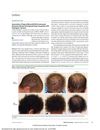
July 2020 in “JAMA Dermatology” Minoxidil solution applied twice daily improved hair growth in patients with Woolly Hair/Hypotrichosis due to LIPH gene issues, with mild side effects.
CRISPR gene editing reduces harmful molecules in cells from Emery–Dreifuss Muscular Dystrophy patients.
September 2025 in “Current Oncology” LncRNAs may help improve brain cancer treatment and diagnosis.
January 2000 in “The Mouseion at the JAXlibrary (Jackson Laboratory)” The lanceolate hair-J mutation in mice helps understand human hair disorders like Netherton's syndrome.
1 citations
,
January 2015 in “The Journal of Dermatology” Genetic testing is crucial for diagnosing and managing non-Herlitz junctional epidermolysis bullosa.
4 citations
,
July 2025 in “International Journal of Molecular Sciences” Targeting amphiregulin may improve treatment for fibrosis and cancer.
 December 2025 in “Frontiers in Medicine”
 Ritlecitinib successfully treated a child's alopecia universalis after baricitinib failed.