4 citations
,
March 2024 in “Journal of Investigative Dermatology” SPRY1 deficiency in skin cells causes stem cells to move to the skin surface, leading to increased pigmentation.
 April 2017 in “Journal of Investigative Dermatology”
 SIG-1451 could be a promising new treatment for atopic dermatitis.
October 2021 in “European journal of cancer” Repeated biopsies are crucial for managing lupus panniculitis when initial treatments fail.
 16 citations
,
June 2015 in “Pediatric dermatology”
16 citations
,
June 2015 in “Pediatric dermatology” Lichen Planopilaris in teens is rare, often misdiagnosed, and responds well to steroids.
1 citations
,
January 2004 in “Adelaide Research & Scholarship (AR&S) (University of Adelaide)” SPARC likely aids in tissue remodeling during the hair cycle, not in starting new hair growth phases.
2 citations
,
January 2014 in “Photochemical & photobiological sciences” Grasp protein helps maintain skin health after UVB exposure.
Early diagnosis and treatment of Lichen Planopilaris are crucial to prevent permanent hair loss.
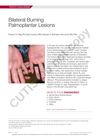
The woman was diagnosed with lichen sclerosus, a rare skin condition, after initial misdiagnosis and ineffective treatments.
 5 citations
,
January 2024 in “The International Journal of Developmental Biology”
5 citations
,
January 2024 in “The International Journal of Developmental Biology” Mouse models help target specific genes in lymphatic cells for research.
75 citations
,
July 2016 in “New phytologist” The protein RSL4 is crucial for making root hairs longer by controlling genes related to cell growth.
May 2009 in “OPAL (Open@LaTrobe) (La Trobe University)” Suppressing the HGPS mutation may improve symptoms and suggest reversibility.
 April 2024 in “Cellular signalling”
 Activating TRPMLs helps human cells important for hair growth and increases hair growth in mice.
 April 2016 in “Journal of The American Academy of Dermatology”
 Lichen planus may be associated with a higher risk of metabolic syndrome.
13 citations
,
June 2014 in “Molecular therapy” The lentiviral array can monitor and predict gene activity during stem cell differentiation.
53 citations
,
April 2016 in “Stem cell research & therapy” LL-37 helps stem cells grow and move, aiding tissue regeneration and hair growth.
 February 2025 in “Journal of Clinical Investigation”
 RNase L hinders hair growth by altering immune signals.
 April 2023 in “Journal of Investigative Dermatology”
 POUF51 and HES3 are key in controlling stem cell numbers in psoriasis.
 April 2018 in “The journal of investigative dermatology/Journal of investigative dermatology”
 Mitochondrial dysfunction may contribute to chronic inflammation and immune system issues in Lichen planopilaris.
April 2026 in “Reviews in Medical Virology” Trichodysplasia spinulosa is a rare skin condition linked to weakened immune systems, mostly in organ transplant patients.
September 2025 in “OPAL (Open@LaTrobe) (La Trobe University)” SELP::KP improves hair strength, elasticity, and health, making it a promising hair cosmetic.
 89 citations
,
November 2014 in “International Journal of Nanomedicine”
89 citations
,
November 2014 in “International Journal of Nanomedicine” Using nanostructured lipid carriers to deliver spironolactone could improve treatment for hair loss.
 12 citations
,
August 2022 in “Stem cell reviews and reports”
12 citations
,
August 2022 in “Stem cell reviews and reports” Increasing PBX1 reduces aging and cell death in hair follicle stem cells by boosting SIRT1 and lowering PARP1 activity.
 3 citations
,
May 2022 in “Clinical and experimental dermatology”
3 citations
,
May 2022 in “Clinical and experimental dermatology” Drugs targeting EMT molecules show promise for treating lichen planopilaris.
 11 citations
,
July 2016 in “Endocrinology”
11 citations
,
July 2016 in “Endocrinology” Higher Lnk protein levels in ovaries may lead to insulin resistance in women with PCOS.
 17 citations
,
October 2006 in “Molecular and Cellular Endocrinology”
17 citations
,
October 2006 in “Molecular and Cellular Endocrinology” The L457(3.43)R mutation in the human lutropin receptor causes increased activity and hormone insensitivity, leading to precocious puberty.
 March 2025 in “Pain Physician”
 Cooling the skin before injections reduces pain for patients with hair loss.
 July 2022 in “The journal of investigative dermatology/Journal of investigative dermatology”
 MPZL3 protein helps keep sebaceous gland size and cell growth in check.

Plakophilin 1 helps control skin cell immune responses to prevent excessive inflammation.
39 citations
,
November 2017 in “PubMed” Low-dose naltrexone helps reduce symptoms and slow down lichen planopilaris without side effects.
November 2014 in “DOAJ (DOAJ: Directory of Open Access Journals)” Nanostructured lipid carriers can effectively deliver spironolactone to hair follicles for treating hair loss.