December 2024 in “Food Bioscience” Limosilactobacillus fermentum MF10 helps hair grow by activating certain cell signals in mice.
7 citations
,
March 2011 in “The Journal of Gene Medicine” Lentiviral vector effectiveness in skin is influenced by external factors, not receptor availability.
 January 2025 in “Biomedicines”
 High testosterone levels can harm fertility by disrupting the LIF signaling pathway in the uterus.
13 citations
,
August 2000 in “Blood” Measuring minimal residual disease on day 15 helps identify high-risk leukemia patients.
 April 2018 in “Journal of Investigative Dermatology”
 BLZ-100 is safe for use in skin cancer surgery and may help identify cancerous tissue.
Laser diode light boosts hair follicle cell growth and certain gene expressions.
August 2025 in “BMC Pharmacology and Toxicology” The LTF gene may help predict and manage nonspecific orbital inflammation.
 November 2025 in “Archives of Dermatological Research”
 Limelight (CB-EVs) safely promotes hair growth.
33 citations
,
September 1990 in “Proceedings of the National Academy of Sciences” The study showed that a specific DNA sequence can control gene expression in hair growth areas of mice.
52 citations
,
October 2007 in “Molecular Therapy” Injecting lentiviral vectors into early gestation mice effectively targets skin stem cells for potential gene therapy.
5 citations
,
February 2019 in “bioRxiv (Cold Spring Harbor Laboratory)” 3D cell cultures produce extracellular vesicles similar to those in the body.
5 citations
,
November 2005 Confocal Laser Scanning Microscopy is effective for tracking compounds in the skin.
 April 2017 in “Journal of Investigative Dermatology”
 Researchers improved a method to study individual cells in newborn mouse skin and found a way to assess the severity of a skin condition in humans.
 February 2025 in “Journal of Biophotonics”
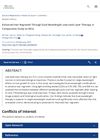
 Dual-wavelength laser therapy promotes better hair regrowth than single-wavelength treatments.
53 citations
,
April 2016 in “Stem cell research & therapy” LL-37 helps stem cells grow and move, aiding tissue regeneration and hair growth.
6 citations
,
January 2022 in “BIO-PROTOCOL” The protocol allows easy imaging of dividing cells in C. elegans and can be used for other organisms.
46 citations
,
May 1995 in “Proceedings of the National Academy of Sciences” A specific gene region can control targeted and responsive gene expression in mice, useful for skin disorder treatments.
January 2025 in “Journal of Investigative Dermatology” Chromatin changes and gene activity timing are linked during stem cell differentiation.
6 citations
,
January 2014 in “Genetics and Molecular Research” The method successfully created stable transfection donor cells for goat hair follicle research.
4 citations
,
May 2024 in “Cytotechnology” 15 citations
,
July 2009 in “Biomedical Chromatography” A reliable method was developed to measure aristolochic acid-I in rat blood.
OCT4B1 and SOX-2 levels are higher in Crohn's and ulcerative colitis patients, possibly aiding tissue repair.
 5 citations
,
April 2019 in “Phytochemical Analysis”
5 citations
,
April 2019 in “Phytochemical Analysis” The new ELISA method is reliable and eco-friendly for checking the quality of Pueraria candollei.
SH-SY5Y cell lysate is effective for diagnosing Satoyoshi syndrome.
 July 2023 in “Biomolecules”
 The new "whisker follicle microinjection assay" can test how different biomolecules affect hair growth and color.
September 2017 in “The journal of investigative dermatology/Journal of investigative dermatology” Different types of human skin cells respond uniquely to various colors and doses of light, which could lead to specialized light treatments for skin conditions.
7 citations
,
February 2020 in “Analytical and Bioanalytical Chemistry” December 2024 in “Tissue and Cell” A new method helps detect androgen receptor movement in cells, aiding research on hair loss treatments.
 June 2017 in “Journal of The American Academy of Dermatology”
 LED light helps hair follicle cells grow and prevents them from dying by activating certain cell pathways.