 1 citations
,
March 2014 in “PubMed”
1 citations
,
March 2014 in “PubMed” Androgenic alopecia (AA) in Indian women is rarely reported, with varying severity and patterns, and hair pull tests and trichograms help understand it better.
 1 citations
,
May 2013 in “PubMed”
1 citations
,
May 2013 in “PubMed” The document concludes that female pattern baldness involves hair thinning, is classified differently than in men, and is assessed using the Ludwig classification. It also explains the hair growth cycle stages.
 1 citations
,
October 2012 in “Gynäkologische Endokrinologie”
1 citations
,
October 2012 in “Gynäkologische Endokrinologie” The document concludes that proper diagnosis and individualized treatment are crucial for managing androgenization in women effectively.
 1 citations
,
January 2009 in “Journal of Clinical Dermatology”
1 citations
,
January 2009 in “Journal of Clinical Dermatology” More men have Androgenic Alopecia than women, it's often inherited, and stress can contribute to it.
1 citations
,
January 2004 in “Journal of Clinical Dermatology” Young people with mild hair loss may experience it due to social stress.
 July 2026 in “International Journal of Homoeopathic Sciences”
 Homeopathic treatment improved hair health and confidence in a woman with hair loss.
June 2026 in “Clinical and Experimental Dermatology” Standardized assessment tools for androgenetic alopecia are needed.
 June 2026 in “European Medical Journal”
 More severe hair loss is linked to more sexual dysfunction in both men and women.
March 2026 in “Frontiers in Medicine” A hybrid model using traditional methods, trichoscopy, and AI improves hair loss assessment.
December 2025 in “Actas Dermo-Sifiliográficas” Bicalutamide may improve hair growth in postmenopausal women with mild side effects.
June 2025 in “British Journal of Dermatology” ALUDWIG can help standardize female hair loss assessment from a single image.
 January 2025 in “International Journal of Trichology”
 Severe hair loss may increase the risk of dying from COVID-19.
April 2024 in “Journal of Pakistan Association of Dermatologists” Hair fall is not significantly linked to stress but is often caused by poor diet, low protein, and tight hairstyles.
 March 2024 in “Healthcare”
 Stem cell treatment improved life quality and sexual function in women with hair loss.
 January 2024 in “International Journal of Dermatology Research”
 Minoxidil alone is as effective as the combination but has fewer side effects.
December 2023 in “Journal of Asia Pacific Aesthetic Sciences” Using one's own hair stem cells can improve hair density in Asian individuals with hair loss.
 December 2023 in “Siriraj Medical Journal”
 5% Azelaic acid is as effective as 2% Minoxidil for female pattern hair loss and could be an alternative for those allergic to Minoxidil or pregnant.
 June 2023 in “Journal of General Procedural Dermatology and Venereology Indonesia”
 Older, overweight women with children and a family history of hair loss are more likely to experience female pattern hair loss.
 April 2023 in “Pakistan Journal of Medical and Health Sciences”
 Platelet rich plasma treatment is effective for hair loss in both men and women.

Platelet-rich plasma injections effectively treat hair loss in both men and women, increasing hair density with high patient satisfaction and no significant side effects.
 January 2018 in “Georg Thieme Verlag eBooks”
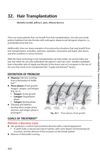
 Hair transplantation is a surgical procedure to move hair to bald areas, requires good donor hair, and results show in about a year.
 September 2017 in “Journal of Investigative Dermatology”
 The combination of Stemoxydine® and Resveratrol improves hair density in women with Female Pattern Hair Loss.

Female hair loss is often hereditary and can be treated with medication, hair transplants, and lasers.
September 2014 in “Tehran University Medical Journal TUMS Publications” Type II diabetes is not linked to hair loss in women.

More men have androgenic alopecia than women, with stress linked to the condition in both genders.
 January 2009 in “대한피부과학회지”
 The conclusion is that more women in their forties are getting AGA and stress is linked to AGA in both men and women.
January 2008 in “대한피부과학회지” Androgenetic alopecia is more common in men, often linked to genetics and hormones.
January 2008 in “대한피부과학회지” Androgenetic alopecia is more common in men, linked to genetics and androgen levels, but routine pelvic ultrasound isn't recommended.
January 2003 in “Clínicas pediátricas de Norteamérica” Androgenetic alopecia is a common cause of hair loss, with treatments like minoxidil and hair transplantation available, and new therapies are being developed.
June 2001 in “European Journal of Dermatology” A 54-year-old woman experienced progressive hair loss starting in adolescence, leading to sparse scalp hair and almost no eyebrows or eyelashes.