 September 2025 in “Romanian Journal of Medical Practice”
 Iron deficiency is linked to female pattern hair loss.

Stress significantly contributes to hair loss, especially in women and those aged 31-40.

Researchers found a genetic link for hereditary hair loss but need more analysis to identify the exact gene.
 November 2019 in “Journal of Aesthetic Nursing”
 The article concludes that a thorough diagnosis and treatment plan, including medications, non-invasive methods, or surgery, is important for managing hair loss, with a combination of minoxidil and finasteride being particularly effective.
 January 2019 in “Springer eBooks”
 Some chemicals and drugs can cause hair loss, which usually grows back after stopping the treatment.
 May 2017 in “InTech eBooks”
 Early treatment of children's hair loss, which can be caused by various factors, is important due to its emotional impact.
 April 2016 in “Medical Acupuncture”
 The document concludes that hair loss in women is treated with medications, therapies, and surgery in Western medicine, and with acupuncture and herbs in Chinese medicine, but hereditary hair loss is hard to reverse.
 November 2014 in “Prescriber”
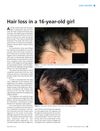
 The 16-year-old girl with hair loss was successfully treated for alopecia areata, leading to significant hair regrowth.
 April 2014 in “Journal of Aesthetic Nursing”
 Mesotherapy with natural extracts and vitamins can improve hair loss and promote regrowth in most women.
 November 2020 in “Skin Research and Technology”
 Videodermoscopy better identifies female hair loss than clinical diagnosis.
 March 2012 in “Journal of The American Academy of Dermatology”
 White females have higher hair density, while Asian females have thicker hair in hair loss cases.
 August 2002 in “Zeitschrift für Hautkrankheiten”
 Female pattern hair loss affects crown, increases with age, and has limited treatments.
 May 2002 in “British Journal of Dermatology”
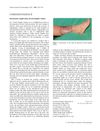
 Hair loss caused by longer latent hair cycle and sudden miniaturization, not gradual follicle size reduction.

Eclipta alba L. (Urang-Aring) can help treat hair loss.
 April 1998 in “Journal of women's health”
 Hair loss in women is often due to hereditary conditions or stress, and while treatments like minoxidil can help, diagnosis and management require medical guidance.
 89 citations
,
December 2010 in “The Journal of Dermatology”
89 citations
,
December 2010 in “The Journal of Dermatology” The conclusion is that an algorithm using trichoscopy helps diagnose different types of hair loss but may need updates and a biopsy if results are unclear.
 47 citations
,
December 2020 in “Journal of the European Academy of Dermatology and Venereology”
47 citations
,
December 2020 in “Journal of the European Academy of Dermatology and Venereology” The document concludes that understanding and treating hair loss requires recognizing its various types and using appropriate diagnostic tools and treatments.
 40 citations
,
July 2017 in “Frontiers in Medicine”
40 citations
,
July 2017 in “Frontiers in Medicine” Early and personalized treatment for hair loss in young people is crucial to prevent permanent damage and should include psychological support.
 18 citations
,
May 2016 in “Annals of Medicine”
18 citations
,
May 2016 in “Annals of Medicine” The article concludes that correctly diagnosing systemic causes of hair loss requires a detailed clinical evaluation and a systematic diagnostic approach.
 13 citations
,
July 2004 in “Skinmed”
13 citations
,
July 2004 in “Skinmed” Common types of non-scarring hair loss have various causes and treatments, but more effective solutions are needed.
 11 citations
,
June 2022 in “Frontiers in immunology”
11 citations
,
June 2022 in “Frontiers in immunology” New protein changes may be involved in the immune attack on hair follicles in alopecia areata.
 8 citations
,
January 2020 in “Plastic and Aesthetic Nursing”
8 citations
,
January 2020 in “Plastic and Aesthetic Nursing” The article concludes that different types of hair loss require specific treatments and psychological support is important.
 1 citations
,
July 2018 in “Elsevier eBooks”
1 citations
,
July 2018 in “Elsevier eBooks” Many treatments for hair loss show potential, but more testing is needed to confirm their effectiveness. Only minoxidil for women and minoxidil and finasteride for men are FDA approved.
 January 2025 in “International Journal of Biological Innovations”
 Medicinal plant substances can help prevent hair loss and improve hair health.
 June 2011 in “The Journal for Nurse Practitioners”
 Up to half of adult women may experience hair loss, and doctors should use medical history, exams, and tests to find the cause and treat it.
 June 2024 in “Bőrgyógyászati és Venerológiai Szemle”
 New treatments for hair loss, like JAK inhibitors, PRP, anti-androgens, and minoxidil, offer better options.
 37 citations
,
January 2009 in “Dermatology”
37 citations
,
January 2009 in “Dermatology” Healthy women tend to lose more hair in July and April, and the least in February.
 32 citations
,
August 2019 in “Nature Communications”
32 citations
,
August 2019 in “Nature Communications” Chemotherapy causes permanent hair follicle damage by triggering stem cell loss.
 2 citations
,
February 2017 in “International Journal of Molecular Sciences”
2 citations
,
February 2017 in “International Journal of Molecular Sciences” Erdr1 could be a new marker for diagnosing hair loss.
 2 citations
,
October 2015 in “Primary Care: Clinics in Office Practice”
2 citations
,
October 2015 in “Primary Care: Clinics in Office Practice” Doctors should diagnose hair loss by examining the patient and possibly doing tests, and then treat it based on the type, which may prevent permanent hair loss.