8 citations
,
July 2015 in “Molecular cytogenetics” A complex X chromosome rearrangement can increase the risk of multiple autoimmune diseases.
42 citations
,
December 2011 in “The journal of immunology/The Journal of immunology” RANKL causes lymph nodes to grow by making certain cells multiply.
3 citations
,
May 2016 in “Dermatopathology” Lrig1 could be a marker for advanced sebaceous carcinoma.
January 2008 in “Memorial University Research Repository (Memorial University)” Pygopus 2 helps ovarian cancer cells grow by aiding ribosomal RNA production, independent of Wnt signaling.
7 citations
,
January 1988 3 citations
,
January 1994 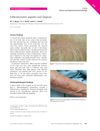 May 2014 in “Clinical and Experimental Dermatology”
 A 70-year-old woman with a rare skin condition improved after treatment with topical steroids and acitretin.
1 citations
,
December 2022 in “PubMed” The lncRNA LOXL1-AS1 may help diagnose and treat androgenic alopecia.
July 2026 in “Nature Communications” CXCR3+ T cells and B cells drive skin disease and hair loss in lupus, with potential targets identified for treatment.
January 2024 in “Animals” SP1 promotes and KROX20 inhibits hair cell growth by affecting the CUX1 gene.
 46 citations
,
December 2001 in “Journal of Endocrinology/Journal of endocrinology”
46 citations
,
December 2001 in “Journal of Endocrinology/Journal of endocrinology” FLRG and follistatin have different roles in wound healing.
18 citations
,
July 2006 in “British Journal of Dermatology” Connexin 30 is usually absent in normal skin but can appear in certain skin conditions.
 9 citations
,
February 2005 in “The journal of investigative dermatology/Journal of investigative dermatology”
9 citations
,
February 2005 in “The journal of investigative dermatology/Journal of investigative dermatology” The document concludes that the human keratin gene cluster is complex, with a need for updated naming to reflect over 50 functional genes important for hair and skin biology.
 73 citations
,
April 2013 in “Stem cells”
73 citations
,
April 2013 in “Stem cells” LGR5 helps maintain corneal cell characteristics and prevents unwanted changes by controlling specific cell signaling pathways.
1 citations
,
November 2023 in “International Journal of Molecular Sciences” SOX18 helps sheep hair cells grow by activating a specific cell growth pathway.
 April 2018 in “Journal of Investigative Dermatology”
 CENPV, a new partner of CYLD, helps regulate ciliary acetylated tubulin and is overexpressed in certain skin tumors.
4 citations
,
May 2020 in “The journal of pediatrics/The Journal of pediatrics” A boy with monilethrix has brittle hair that breaks easily due to a genetic condition, which might improve by puberty.
September 2018 in “Translational andrology and urology” MOTILIPERM may help treat male infertility by reducing stress in cells.
 4 citations
,
August 2023 in “Nature Communications”
4 citations
,
August 2023 in “Nature Communications” Mouse zigzag hair bends form due to a 3-day cycle of changes in hair progenitors and their environment.
 102 citations
,
August 2008 in “Genes & Development”
102 citations
,
August 2008 in “Genes & Development” Laminin-511 is crucial for early hair growth and maintaining important hair development signals.
 40 citations
,
November 1998 in “The journal of investigative dermatology/Journal of investigative dermatology”
40 citations
,
November 1998 in “The journal of investigative dermatology/Journal of investigative dermatology” S100A3 protein is crucial for hair shaft formation in mice.
12 citations
,
September 1990 in “The Anatomical Record” Human anagen hair follicles have unique carbohydrate patterns during keratinization.
6 citations
,
October 2023 in “Animal Biotechnology” A specific gene variation in goats is linked to better growth traits.
July 2005 in “The American Journal of Human Genetics” The AR gene is linked to male-pattern baldness, TNFSF4 to heart disease, SLC19A3 to BBGD, MCT8 to a syndrome, and segmental duplications to genetic variation.
August 2020 in “OPAL (Open@LaTrobe) (La Trobe University)” April 2017 in “Journal of Investigative Dermatology” Reduced Stx17 expression may contribute to Alopecia Areata.
5 citations
,
October 2021 in “American Journal of Medical Genetics Part A” A new genetic variant causes BRESHECK syndrome by disrupting cell growth and stress response.
April 2021 in “The journal of investigative dermatology/Journal of investigative dermatology” CTCF protein is essential for skin and hair follicle development in mice.
15 citations
,
June 2020 in “The journal of investigative dermatology/Journal of investigative dermatology” Mice with extra human KLK14 had hair and skin problems, including weaker cell bonds and inflammation, linked to Netherton syndrome.
43 citations
,
April 2010 in “Clinical genetics” Truncating mutations in the C2orf37 gene cause Woodhouse–Sakati syndrome.