3 citations
,
May 2023 in “Pediatric Dermatology” A 9-year-old boy had a rare scalp condition usually seen in young men.
3 citations
,
December 2003 in “Archives of Pathology & Laboratory Medicine” The nodule was a benign cutaneous lymphadenoma, not cancer, and was successfully removed.
 2 citations
,
July 2022 in “Dermatology Reports”
2 citations
,
July 2022 in “Dermatology Reports” EPDS and MS might share an immune-related cause.
 2 citations
,
June 2021 in “PubMed”
2 citations
,
June 2021 in “PubMed” Chronic scalp lesions with crusts and pus indicate Erosive Pustular Dermatosis, which is confirmed by biopsy and effectively treated with strong topical steroids.
 2 citations
,
January 2011 in “Dermatologica Sinica”
2 citations
,
January 2011 in “Dermatologica Sinica” Taiwan reported its first case of a rare scalp condition with no clear cause or treatment.
1 citations
,
December 2023 in “JAAD International” Mast cells may significantly contribute to central centrifugal cicatricial alopecia.
1 citations
,
December 2021 Cats likely have a reactive skin condition, while dogs may have a more complex, possibly cancerous one.
1 citations
,
May 2021 in “Thyroid Research and Practice” Short-term side effects of low-dose radioactive iodine therapy are common but temporary.
 1 citations
,
May 2020 in “Journal of The American Academy of Dermatology”
1 citations
,
May 2020 in “Journal of The American Academy of Dermatology” Inflammation and fibrosis are important factors in hair loss, but more research with better control samples is needed.
1 citations
,
January 2020 in “Bioscience Reports” Long-term use of finasteride in women can cause hormonal changes, DNA damage, and menstrual issues.
 1 citations
,
June 2012 in “Actas Dermo-Sifiliográficas”
1 citations
,
June 2012 in “Actas Dermo-Sifiliográficas” Early and aggressive treatment of scarring alopecia is important to prevent further hair follicle damage.
 1 citations
,
April 2010 in “Expert Review of Dermatology”
1 citations
,
April 2010 in “Expert Review of Dermatology” The document concludes that early diagnosis and treatment are crucial for managing rare hair loss disorders and that more research is needed to improve treatment strategies.
 January 2026 in “Clinical Cosmetic and Investigational Dermatology”
 Early diagnosis and targeted anti-inflammatory treatments can improve outcomes in androgenetic alopecia with perifollicular inflammation and fibrosis.
August 2025 in “Veterinary Dermatology” Canine alopecia areata is a chronic condition needing long-term management.
 July 2025 in “Clinical Dermatology Review”
 Azathioprine can cause unexpected hair loss and severe bone marrow issues, so careful monitoring is needed.
 July 2024 in “International Journal of Dermatology Venereology and Leprosy Sciences”
 Minoxidil can help regrow hair in people with alopecia areata.
November 2023 in “Journal of Skin and Sexually Transmitted Diseases” Gefitinib can cause scalp skin issues and permanent hair loss.
 September 2023 in “Clinical, cosmetic and investigational dermatology”
 A patient with a rare form of lupus improved after treatment for skin ulcers and hair loss on the face and scalp.
 January 2023 in “Journal of Cutaneous Pathology”
 The study found certain scalp biopsy features can help tell apart alopecia areata from pattern hair loss even when typical immune cells are not seen.
November 2021 in “Anais brasileiros de dermatologia/Anais Brasileiros de Dermatologia” The woman has a rare, harmless skin condition specific to pregnancy that causes itchy bumps and will go away after she gives birth.
 September 2019 in “Journal of Investigative Dermatology”
 Researchers developed a 3D skin model with its own immune and blood vessel cells to better understand skin health and disease.
Multiphoton microscopy can effectively distinguish between scarring and non-scarring alopecia.
 January 2018 in “Skin appendage disorders”
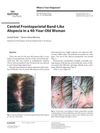
 A woman's hair loss was correctly diagnosed as Lichen planopilaris after initial misdiagnosis, highlighting the usefulness of trichoscopy in diagnosing hair disorders.
January 2016 in “Indian dermatology online journal” The patient has frontal fibrosing alopecia (FFA).
November 2014 in “The Pediatric Infectious Disease Journal” The child was diagnosed with a skin condition involving inflamed hair follicles.
 April 2012 in “Informa Healthcare eBooks”
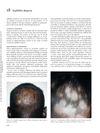
 Syphilitic alopecia is a rare hair loss condition in secondary syphilis that looks similar to another condition but can be diagnosed with specific tests and responds to antibiotics.
 January 2012 in “Yearbook of Dermatology and Dermatologic Surgery”
 The study concluded that a 'Swiss cheese' pattern in hair follicles is a useful sign for diagnosing alopecia areata.
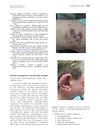
A 72-year-old man was diagnosed with a rare skin form of Rosai-Dorfman disease after years of misdiagnosis.
Dissecting cellulitis and folliculitis keloidalis cause intense inflammation without bacterial infection.
 January 1981 in “The Journal of Toxicological Sciences”
 Hydrocortisone 17-butyrate 21-propionate ointment caused reversible side effects like skin issues, weight gain, and organ changes in dogs.