 18 citations
,
November 2016 in “Neuromuscular Disorders”
18 citations
,
November 2016 in “Neuromuscular Disorders” Patients with myotonic dystrophy often have skin problems that suggest early aging and vitamin D issues, and the severity of these problems is linked to their genetic condition and vitamin D levels.
 April 2016 in “The journal of investigative dermatology/Journal of investigative dermatology”
 MPZL3 is crucial for seborrheic dermatitis development.
30 citations
,
October 1999 in “Differentiation” Mutant MK6a transgenes in mice cause blistering, hair loss, and potential human alopecia.
The curly mutation in SELH/Bc mice affects hair and may help study human genetic disorders.
3 citations
,
August 2022 in “International Journal of Molecular Sciences” TSC2-/meth cells can cause skin lesions, hair growth, and lung issues, and may be treated with chromatin remodeling agents.
 9 citations
,
July 2010 in “British Journal of Dermatology”
9 citations
,
July 2010 in “British Journal of Dermatology” The document suggests a rare skin condition might be caused by a genetic phenomenon.
January 2022 in “International journal of dermatology and venereology” A Chinese man with KID syndrome had a new mutation in the GJB2 gene.
 28 citations
,
February 2010 in “British journal of dermatology/British journal of dermatology, Supplement”
28 citations
,
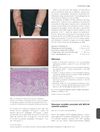
February 2010 in “British journal of dermatology/British journal of dermatology, Supplement” WNT10A mutations cause varied symptoms in patients with odonto-onycho-dermal dysplasia.
13 citations
,
February 2012 in “International Journal of Dermatology” A new genetic mutation in the CDH3 gene causes hair loss and eye problems in young people.
 April 2017 in “Journal of Investigative Dermatology”
 Deep phenotyping helps distinguish between xeroderma pigmentosum and trichothiodystrophy, aiding in diagnosis and treatment.
April 2024 in “Anais Brasileiros de Dermatologia” January 2000 in “The Mouseion at the JAXlibrary (Jackson Laboratory)” The lanceolate hair-J mutation in mice helps understand human hair disorders like Netherton's syndrome.
 April 2023 in “The journal of investigative dermatology/Journal of investigative dermatology”
 Folliculotropic mycosis fungoides has unique molecular features and cell interactions that could guide targeted therapy.
 April 2024 in “Current Rheumatology Reviews”
 MCTD should be considered in children with recurring muscle issues, lupus-like symptoms, and edema.
 January 2026 in “Frontiers in Medicine”
 A child has a rare hair and skin disorder due to specific gene variants, suggesting broader genetic testing is needed.
48 citations
,
August 1998 in “Developmental Biology” Deleting part of a gene in mice causes wavy hair and high pup loss.
 March 2024 in “Research Square (Research Square)”
 Combining genetic and physical trait analysis improves diagnosis accuracy for monogenic diabetes.
 5 citations
,
January 2016 in “Genetics and molecular research”
5 citations
,
January 2016 in “Genetics and molecular research” Certain genetic variations in the A2M gene are linked to better milk quality in Murrah buffaloes.
 4 citations
,
February 2022 in “International Journal of Molecular Sciences”
4 citations
,
February 2022 in “International Journal of Molecular Sciences” Myotonic Dystrophy may age cells faster, and drugs that target aging could be potential treatments.
20 citations
,
December 1999 in “Journal of Investigative Dermatology” Mutations in the hHb6 gene cause the hair disorder monilethrix.
 1 citations
,
April 2016 in “British Journal of Dermatology”
1 citations
,
April 2016 in “British Journal of Dermatology” Buschke-Ollendorff syndrome is a rare genetic disorder causing skin and bone changes, with some cases also showing ADHD or developmental delays.
1 citations
,
July 2007 in “Journal of Investigative Dermatology” The mutation causes hairless mice due to mislocalized and dysfunctional HR protein.
April 2024 in “Journal of clinical medicine” Classical PCOS types A and B are most common and linked to higher health risks.
 January 2012 in “Journal of Investigative Dermatology”
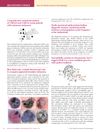
 Some Greek melanoma patients have gene mutations linked to increased cancer risk, a new color feature helps diagnose melanoma, the incidence of a skin condition in the Netherlands is rare, and a gene possibly affects male-pattern baldness.
28 citations
,
November 2018 in “American Journal of Medical Genetics Part A” ODC1 gene mutations cause a neurodevelopmental disorder with large head size, hair loss, and facial abnormalities.
July 2002 in “Science Signaling” Modified β-catenin can cause different effects in mouse skin cells, leading to cysts or tumors depending on the cell type.
 1 citations
,
February 2017 in “The American journal of dermatopathology/American journal of dermatopathology”
1 citations
,
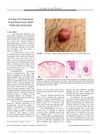
February 2017 in “The American journal of dermatopathology/American journal of dermatopathology” A man with a skin nodule was diagnosed with a rare skin condition called cutaneous focal mucinosis, which can be confused with other skin cancers.
 March 2024 in “Research Square (Research Square)”
 The TT genotype of a specific SNP in sheep is linked to better wool quality.
52 citations
,
February 2012 in “PloS one” Lack of Ctip2 in skin cells delays wound healing and disrupts hair follicle stem cell markers in mice.
 7 citations
,
January 2020 in “Journal of Dermatology”
7 citations
,
January 2020 in “Journal of Dermatology” Cantu syndrome, which causes excessive hair growth and skin issues, is due to a mutation in the ABCC9 gene, and understanding this could help develop new treatments for hair diseases.