Search
for
Sort by
Research
60-90 / 1000+ results
research Production of mannosylerythritol lipids and their application in cosmetics
Mannosylerythritol lipids are good for skin and hair care products.
research `Cyclic alopecia' inMsx2mutants: defects in hair cycling and hair shaft differentiation
Msx2-deficient mice experience irregular hair growth and loss due to disrupted hair cycle phases.
research Coordinated inhibition of SOX9 and cell cycle progression by microRNA-200 restricts sebaceous gland fate specification
MicroRNA-200 prevents sebaceous gland development by inhibiting SOX9 and cell cycle progression.

research Molecular heterogeneity of quiescent melanocyte stem cells revealed by single-cell RNA-sequencing
Different types of inactive melanocyte stem cells exist with unique characteristics and potential to develop into other cells.
research Prenatal diagnosis of a fetus harboring an intermediate load of the A3243G mtDNA mutation in a maternal carrier diagnosed with MELAS syndrome
Prenatal genetic diagnosis may not predict MELAS syndrome severity in offspring.

research A 10 Mb duplication in chromosome band 5q31.3–5q33.1 associated with late-onset lipodystrophy, ichthyosis, epilepsy and glomerulonephritis
A genetic duplication on chromosome 5 was linked to a woman's unique combination of medical conditions.
research N6-methyladenosine RNA Methylation Correlates with Immune Microenvironment and Immunotherapy Response of Melanoma
Low m6Ascores in melanoma predict better survival and response to immunotherapy.
research The Fraser Complex Proteins (Frem1, Frem2, and Fras1) Can Form Anchoring Cords in the Absence of AMACO at the Dermal–Epidermal Junction of Mouse Skin
Certain skin proteins can form anchoring structures without the protein AMACO.
research Author response: The molecular basis for ANE syndrome revealed by the large ribosomal subunit processome interactome
Defective protein folding due to a mutation is key in ANE syndrome.
research Decision letter: Deletion of the MAD2L1 spindle assembly checkpoint gene is tolerated in mouse models of acute T-cell lymphoma and hepatocellular carcinoma
Deleting the MAD2L1 gene in mice led to rapid tumor growth despite chromosomal instability.

research 1434 Epithelially derived MPZL3 negatively regulates murine and human sebaceous gland size and sebocyte proliferation
MPZL3 protein helps control the size of oil glands and the growth of oil-producing cells in both mice and humans.

research Macrophages maintain mammary stem cell activity and mammary homeostasis via TNF-α-Cdk1/Cyclin B1 axis
Macrophages help maintain mammary stem cells and balance through specific signaling.

research Beyond the Epidermal-Melanin-Unit: The Human Scalp Anagen Hair Bulb Is Home to Multiple Melanocyte Subpopulations of Variable Melanogenic Capacity
The human scalp has different types of pigment cells in hair follicles with varying abilities to produce pigment.
research BRCA2 in abscission
The tumor suppressor BRCA2 helps in cell division by bringing key proteins to the area where cells split.
research Lineage commitment of dermal fibroblast progenitors is controlled by Kdm6b‐mediated chromatin demethylation
Kdm6b is crucial for skin cell differentiation.

research MULTIOMICS – A NEW EXCITING ERA OF RESEARCH
Multiomics is revolutionizing biology by enabling breakthroughs in research and disease diagnosis.

research The Role of ATP-dependent Chromatin Remodeling in the Control of Epidermal Differentiation and Skin Stem Cell Activity
ATP-dependent chromatin remodeling is crucial for skin development and stem cell function.
research Role of macrophages in collagen resorption during hair growth cycle
Macrophages help break down collagen around hair follicles during hair growth.
research Impaired turnover of autophagolysosomes in cathepsin L deficiency
Cathepsin L deficiency causes large, abnormal cell structures and health issues in mice.
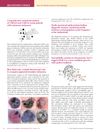
research BJD Editor's Choice
Some Greek melanoma patients have gene mutations linked to increased cancer risk, a new color feature helps diagnose melanoma, the incidence of a skin condition in the Netherlands is rare, and a gene possibly affects male-pattern baldness.

research A multi-omic single-cell landscape of perinatal mouse skin maps lineage specification and reveals shared dynamics in human fetal skin
Mouse and human skin development share similar fibroblast timelines.
research Author response: Deletion of the MAD2L1 spindle assembly checkpoint gene is tolerated in mouse models of acute T-cell lymphoma and hepatocellular carcinoma
Deleting the MAD2L1 gene is tolerated in certain mouse cancer models.
research Genome-wide meta-analysis implicates mediators of hair follicle development and morphogenesis in risk for severe acne
Genetic variations affecting skin structure play a key role in severe acne.
research Extradermal melanin transfer? Lack of macroscopic spleen melanization in old C57BL/6 mice with de-synchronized hair cycle.
Old C57BL/6 mice with unsynchronized hair cycles show less melanin in their spleens.

research Synchronous profiling and analysis of mRNAs and ncRNAs in the dermal papilla cells from cashmere goats
Non-coding RNAs help control hair growth in cashmere goats.
research Linkage of Monilethrix to the Trichocyte and Epithelial Keratin Gene Cluster on 12q11-q13
research The role of macrophages in skin homeostasis
Macrophages are vital for skin healing, hair growth, salt balance, and cancer defense.
research A gene for monilethrix is closely linked to the type II keratin gene cluster at 12q13
Monilethrix is linked to a gene cluster on chromosome 12.
research GENOTYPE ? PHENOTYPE CORRELATIONS IN CUTANEOUS MELANOMA PATIENTS CARRIER OF THE MITF p.E318K PATHOGENIC VARIANT
MITF+ melanoma patients are more likely to have multiple melanomas and unique skin patterns.