 9 citations
,
February 2018 in “Forensic Science International”
9 citations
,
February 2018 in “Forensic Science International” The study could not confirm if Victor Vinnetou was Mbuyisa Makhubu and suggested more evidence, like DNA tests, is needed.
 January 2025 in “Journal of Case Reports and Scientific Images”
 Early diagnosis and treatment are crucial for managing Folliculotropic Mycosis Fungoides on the scalp.

Frontal fibrosing alopecia in men is often misdiagnosed and needs better diagnostic criteria and treatments.
 1 citations
,
February 2017 in “The American journal of dermatopathology/American journal of dermatopathology”
1 citations
,
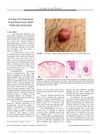
February 2017 in “The American journal of dermatopathology/American journal of dermatopathology” A man with a skin nodule was diagnosed with a rare skin condition called cutaneous focal mucinosis, which can be confused with other skin cancers.
 February 2024 in “Skin research and technology”
 The research suggests that immune cells and a specific type of cell death called ferroptosis are involved in Frontal fibrosis alopecia.
 April 2016 in “Journal of Investigative Dermatology”
 MEK and BRAF inhibitors increase sebum production and accumulation, which could cause acne-like side effects.
475 citations
,
October 2006 in “Proceedings of the National Academy of Sciences” Folliculin helps regulate energy and nutrient sensing, impacting Birt–Hogg–Dubé syndrome.
 April 2023 in “JAAD international”
 Patients with Frontal fibrosing alopecia in Morocco often have skin conditions and thyroid disorders.
 68 citations
,
May 2016 in “Experimental dermatology”
68 citations
,
May 2016 in “Experimental dermatology” FFA's causes may include environmental triggers and genetic factors.
 March 2025 in “Journal of Clinical Medicine”
 Frontal fibrosing alopecia in men is often misdiagnosed and needs better diagnostic criteria and treatment strategies.
November 2025 in “Journal of Investigative Dermatology” Alpha-MSH affects mitochondrial function, and MC1R mutations may increase skin aging.
 November 2022 in “Research Square (Research Square)”
 Using facial sunscreen and moisturizer may increase the risk of frontal fibrosing alopecia.
 1 citations
,
April 2017 in “Journal of Investigative Dermatology”
1 citations
,
April 2017 in “Journal of Investigative Dermatology” D-OCT shows increased blood vessel growth in response to tissue damage in Frontal Fibrosing Alopecia and is useful for diagnosis and monitoring.
13 citations
,
March 2014 in “Journal of Clinical Laboratory Analysis” Higher MIF levels in alopecia areata patients suggest it could be a treatment target and disease predictor.
 32 citations
,
March 2014 in “PLOS ONE”
32 citations
,
March 2014 in “PLOS ONE” Mice lacking fibromodulin have disrupted healing patterns, leading to abnormal skin repair and scarring.
14 citations
,
January 2014 in “Indian Journal of Dermatology Venereology and Leprology” Frontal fibrosing alopecia can affect men's beards and leads to permanent hair loss.
Early diagnosis and treatment of frontal fibrosing alopecia are crucial to prevent permanent hair loss.
 April 2018 in “Journal of Investigative Dermatology”
 Aging reduces skin cell renewal and defense against germs due to TGFbeta, but blocking TGFbeta could help restore these functions.
January 2024 in “Updates in clinical dermatology” Frontal fibrosing alopecia is a scarring hair loss condition mainly affecting postmenopausal women, with unclear causes.
 1 citations
,
April 2021 in “Journal of The American Academy of Dermatology”
1 citations
,
April 2021 in “Journal of The American Academy of Dermatology” Some overweight or obese men with long-term frontal fibrosing alopecia may have abnormal sex hormone levels.
January 2026 in “Dermatologic Therapy” Folliculotropic Mycosis Fungoides requires stage-based treatment, with early stages using skin therapies and advanced stages needing aggressive treatments.
 January 2025 in “Indian Journal of Dermatology”
 Frontal fibrosing alopecia is a challenging hair loss condition with no known cause or definitive treatment.
6 citations
,
January 2018 in “Advances in experimental medicine and biology”  8 citations
,
November 2018 in “Australasian Journal of Dermatology”
8 citations
,
November 2018 in “Australasian Journal of Dermatology” Frontal fibrosing alopecia in families shows similar signs to individual cases and may have a genetic link.
June 2025 in “British Journal of Dermatology” Frontal fibrosing alopecia can occur in men and may be linked to immune triggers like vaccines.
21 citations
,
February 2006 in “Clinical Cancer Research” Mitf plays a key role in melanoma progression and is linked to disease stage.
 May 2015 in “Journal of the American Academy of Dermatology”
 Certain drugs and supplements may contribute to hair loss in the frontal hairline in older women.
December 2023 in “JEADV Clinical Practice” Brownish halos around axillary hair can help diagnose frontal fibrosing alopecia.
 July 2023 in “Developmental medicine and child neurology/Developmental medicine & child neurology”
 DFMO treatment improves hair growth, muscle tone, and development in Bachmann-Bupp syndrome patients.
July 2020 in “DOAJ (DOAJ: Directory of Open Access Journals)” Excessive sun protection might contribute to frontal fibrosing alopecia.