Search
for
Sort by
Research
480-510 / 1000+ results
research Steroid 5α-reductase inhibition by polymethoxyflavones
Certain natural compounds can block an enzyme linked to prostate enlargement and hair loss, showing potential for new treatments.
research 555 Dermal single-cell atlas: a novel tool to explore fibroblast heterogeneity
A new tool helps study hair follicle cells to develop better treatments for hair disorders.

research Antiandrogenic activity of Riboflavin 5′-phosphate (FMN) in 22Rv1 and LNCaP human prostate cancer cell lines
Riboflavin 5′-phosphate (FMN) shows potential for treating androgen-related conditions but may be limited in treating prostate cancer.
research In vivo response of GsdmA3Dfl/+ mice to topically applied anti-psoriatic agents: effects on epidermal thickness, as determined by optical coherence tomography and H&E staining
Betamethasone dipropionate reduced skin thickness, fish oil increased it, and combined treatment had no significant effect.
research Frontal fibrosing alopecia: clinical and prognostic classification
Researchers found three patterns of Frontal fibrosing alopecia, with Pattern III having the best prognosis after treatment.

research Study of Human Leukocyte Antigen ( HLA ) in 13 cases of familial frontal fibrosing alopecia: CYP 21A2 gene p.V281L mutation from congenital adrenal hyperplasia linked to HLA class I haplotype HLA ‐ A*33:01 ; B*14:02; C*08:02 as a genetic marker
A genetic marker linked to a type of hair loss was found in most patients studied.
research Stable transfection and identification of a hair follicle-specific expression vector of IGFBP-5 in goat fetal fibroblasts
The method successfully created stable transfection donor cells for goat hair follicle research.

research Sunscreen and facial skincare products in frontal fibrosing alopecia: a case–control study
Regular use of sunscreen may be linked to frontal fibrosing alopecia.
research 64 Follicular unit excision (FUE)motorizedbluntBlunt punchMotorized Blunt Punch Follicular Unit Extraction
Motorized FUE with blunt punches improved hair restoration by reducing damage during graft harvesting.
research 420 Alopecia in children and adults with cystic fibrosis on elexacaftortezacaftor-ivacaftor
research A Phase III, Multicenter, Parallel-Design Clinical Trial to Compare the Efficacy and Safety of 5% Minoxidil Foam Versus Vehicle in Women With Female Pattern Hair Loss.
5% minoxidil foam is effective and safe for hair regrowth in women with hair loss.
research Histopathological characterization of inflammatory interparietal involvement in frontal fibrosing alopecia
FFA and FAPD might be related or stages of the same disease.

research Lineage Commitment of Dermal Fibroblast Progenitors is Mediated by Chromatin De-repression
Skin cell types develop when specific genes are turned on by removing certain chemical tags from DNA.
research Minoxidil topical foam: A new kid on the block
Minoxidil topical foam is a better, less irritating treatment for hair loss.
research Cultured human skin fibroblasts: a model for the study of androgen action

research An integrative analysis of the lncRNA-miRNA-mRNA competitive endogenous RNA network reveals potential mechanisms in the murine hair follicle cycle
The research found new potential mechanisms in mouse hair growth by studying RNA interactions.
research Early Diagnosis and Prompt Treatment Improves Quality of Life in Patients with Frontal Fibrosing Alopecia
Early diagnosis and quick treatment improve life quality for FFA patients.

research 382 Environmental pathobiology of frontal fibrosing alopecia (FFA): Does linalool promote FFA development and progression by inducing epithelial hair follicle stem cell damage and MICA expression in the bulge?
Linalool in personal care products may contribute to hair loss by damaging hair follicle stem cells and triggering harmful immune responses.
research PTCH1 Germline Mutations and the Basaloid Follicular Hamartoma Values in the Tumor Spectrum of Basal Cell Carcinoma Syndrome (NBCCS)
NBCCS and BFHS might be the same syndrome, helping better identify and manage cases.

research Frontal fibrosing alopecia: An update on the hypothesis of pathogenesis and treatment
The document concluded that more research is needed to find the best treatment for Frontal fibrosing alopecia.
research Facial and Extrafacial Lesions in an Ethnically Diverse Series of 91 Patients with Frontal Fibrosing Alopecia Followed at a Single Center
Most patients with frontal fibrosing alopecia had facial bumps, with Hispanic/Latino and premenopausal women being more affected, suggesting a more severe condition.
research 산사 열수추출물의 모발 성장과 모유두세포의 성장인자 유전자 발현에 대한 영향
Crataegi Fructus water extract helps hair grow better and thicker.

research Frontal fibrosing alopecia: a case series of 65 patients seen in a single Italian centre
The study concluded that severity of Frontal fibrosing alopecia is not linked to how long someone has it, can start before menopause, and eyebrow loss may be an early sign.
research LHX2 is a direct NF-κB target gene that promotes primary hair follicle placode down-growth
LHX2 is essential for hair follicle development, controlled by NF-κB and TGFβ2 signaling.
research Reply to ‘Frontal fibrosing alopecia’
Smoking doesn't cause or prevent Frontal Fibrosing Alopecia, hormonal imbalance may be involved, and a combination of antiandrogens and steroids can help stabilize the condition.
research RECENSIONES - Editiones externae - Bügelfibeln der Merowingerzeít im westlichen Frankreich I-II.
FUE is a less invasive hair restoration method that avoids visible scars and reduces recovery time.
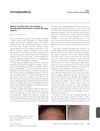
research Absence of vellus hair in the hairline: a videodermatoscopic feature of frontal fibrosing alopecia
Lack of small, fine hair on the front hairline is a key sign of frontal fibrosing alopecia.
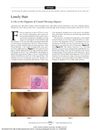
research Lonely Hair
Isolated long hairs at the original hairline can help diagnose Frontal Fibrosing Alopecia.
research Stem cell factor combined with matrix proteins promotes attachment and migration of amelanotic melanocyte from human follicle hair
Stem cell factor and certain proteins help melanocytes from hair follicles move and attach better, aiding vitiligo repigmentation.