 July 2023 in “Turkish journal of veterinary research”
 Wild boar bristles in Balıkesir vary in length and thickness but are unsuitable for species separation.
28 citations
,
June 1991 in “Veterinary Dermatology” Black and white Saluki dogs have a unique hair loss condition different from Doberman pinschers.
October 2024 in “Rapid Communications in Mass Spectrometry” Sika deer shoulder hair is good for analysis.
The gene Endothelin 3 makes mice's fur darker by increasing pigment cells and pigment levels.
October 2025 in “Molecular Genetics and Genomics” 9 citations
,
September 1977 in “Journal of Small Animal Practice” Mange in guinea pigs can be cured with gamma benzene hexachloride washes.
Eclipta alba helps with hair growth, liver health, and blood pressure.
 May 2026 in “Journal of Wildlife and Conservation Medicine”
 Mange-like skin lesions in snow leopards and prey in Kyrgyzstan raise concerns about disease spread.
22 citations
,
January 1999 in “Dermatology” The condition might be caused by genetic changes after birth.
30 citations
,
November 2019 in “Genetics selection evolution” Chinese domestic goats have unique genetic traits due to domestication and geographic isolation.
 5 citations
,
June 2023 in “BMC genomics”
5 citations
,
June 2023 in “BMC genomics” A specific gene mutation causes long hair in Angora rabbits.
14 citations
,
September 2017 in “General and comparative endocrinology” Barn owls with smaller black spots have higher testosterone levels, which might be due to genetic effects on hormone regulation rather than hormone effects on coloration.
August 2022 in “Zenodo (CERN European Organization for Nuclear Research)” The herbal hair dye effectively provides a natural reddish-brown color without synthetic chemicals.
7 citations
,
March 1990 in “Pigment Cell Research” Certain chemicals cause hair graying in black mice but not yellow mice.
March 2026 in “Journal of Investigative Dermatology”  January 2022 in “Revista Dermatológica Centro Uraga”
 Monilethrix is a genetic hair disorder affecting hair shape, seen in two brothers.
11 citations
,
November 1991 in “Journal of Neuropathology & Experimental Neurology” Brindled mice show abnormal catecholamine neuron development due to copper deficiency.
1 citations
,
October 2019 in “International Journal of Dermatology and Venereology” Zebrafish help understand genetic causes of skin pigment disorders like albinism.
May 2025 in “Ecology and Evolution” The Indus River dolphin has low genetic diversity due to a past bottleneck and human impact.
3 citations
,
April 2023 in “Veterinary sciences” Researchers found genes that may explain why some pigs grow winter hair, which could help breed cold-resistant pigs.
7 citations
,
October 2012 in “Anais Brasileiros de Dermatologia” A patient had both white piedra and head lice, showing their differences.
9 citations
,
May 2021 in “Frontiers in aging neuroscience” Taking triterpenoids from Ganoderma lucidum over a long time can help slow down brain aging and improve overall health in mice.
 January 2025 in “Annals of Maxillofacial Surgery”
 PRP therapy is more effective and preferred over minoxidil for hair loss.
 July 2023 in “Deleted Journal”
 Alopecia areata is the most common type of baldness treated with corticosteroids and minoxidil.
20 citations
,
January 2002 in “Laboratory Animals” Mutations in the hairless gene cause hair loss and skin cysts in rhesus macaques.
2 citations
,
January 1973 in “ACTA HISTOCHEMICA ET CYTOCHEMICA” Brown skin in guinea pigs has more ascorbic acid and related enzymes, black skin uses ascorbic acid well, and white skin has the most protein.
3 citations
,
March 2019 in “Acta histochemica” Angiotensin II is found at higher levels in black sheep skin and may influence coat color.
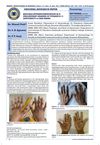 July 2021 in “PARIPEX INDIAN JOURNAL OF RESEARCH”
 Knuckle darkening can be an early sign of vitamin B12 deficiency.
The scant hair in snthr-1Bao mice is likely caused by a deletion affecting the Plcd1 gene.
Eclipta alba Linn. is effective for various health issues and promotes hair growth.