 August 2023 in “Journal of Cosmetic Dermatology”
 Both minoxidil-spironolactone and minoxidil-finasteride treatments work for hair loss, but minoxidil-spironolactone is slightly more effective, especially in women.
 21 citations
,
December 2013 in “Archives of Dermatological Research”
21 citations
,
December 2013 in “Archives of Dermatological Research” No link found between new male baldness genes and female hair loss.
 20 citations
,
December 2008 in “PubMed”
20 citations
,
December 2008 in “PubMed” Finasteride 1 mg helps prevent more hair loss in men with male pattern baldness.
 5 citations
,
April 2006 in “Skin Research and Technology”
5 citations
,
April 2006 in “Skin Research and Technology” Scalp coverage scoring accurately measures hair loss and treatment effectiveness.

Toupees improved perceived attractiveness, especially by older people, but had little effect on perceived self-assurance and health.

The review suggests the study on male pattern baldness needs to improve in areas like sample size, methodology, and bias for better quality and credibility.

Wearing a toupee makes men seem more attractive and slightly healthier, but doesn't change how confident they appear.
 38 citations
,
June 2003 in “Journal of Investigative Dermatology Symposium Proceedings”
38 citations
,
June 2003 in “Journal of Investigative Dermatology Symposium Proceedings” Finasteride effectively improves hair growth and slows hair loss in men with male pattern baldness.
 9 citations
,
December 2008
9 citations
,
December 2008 Men with untreated male pattern hair loss continue to lose hair over a 5-year period.
 December 2025 in “Zenodo (CERN European Organization for Nuclear Research)”
 Male pattern baldness may be reversed by reducing scalp tension and improving blood flow.
 December 2025 in “Zenodo (CERN European Organization for Nuclear Research)”
 Male pattern baldness may be treated by addressing blood flow and electrical issues in the scalp.
 December 2025 in “Zenodo (CERN European Organization for Nuclear Research)”
 Male pattern baldness may be reversed by addressing scalp tension and improving blood flow.
 December 2025 in “Zenodo (CERN European Organization for Nuclear Research)”
 Male pattern baldness may be reversed by reducing scalp tension and improving blood flow.
 October 2023 in “Acta dermato-venereologica”
 Minoxidil and platelet-rich plasma can help turn thin hair into thicker hair in male pattern baldness.
February 2023 in “Cureus” Male pattern baldness in medical students is linked to higher depression, loneliness, and internet addiction.
November 2022 in “Journal of Investigative Dermatology” Minoxidil and PRP can help convert miniaturized hair follicles back to normal in male pattern baldness.
January 2020 in “Journal of Genetics and Gene Therapy” The combination of hair follicle stem cells and PRP shows promise for treating hair loss in Asian men and women.
 October 2024 in “Archives of Dermatological Research”
 Male and female pattern hair loss have different molecular pathways, suggesting unique treatment targets for each sex.
 25 citations
,
July 2013 in “Journal of Dermatological Science”
25 citations
,
July 2013 in “Journal of Dermatological Science” Six new hair loss factors in men not linked to female hair loss.
 May 2015 in “Journal of The American Academy of Dermatology”
 Niosomal minoxidil, when applied topically, increases hair count more than conventional minoxidil solution.
 9 citations
,
March 1985 in “Head & Neck Surgery”
9 citations
,
March 1985 in “Head & Neck Surgery” Topical minoxidil is the most promising treatment for male pattern hair loss, but more research is needed to confirm its effectiveness and safety.
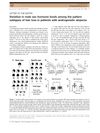 March 2017 in “Journal of Dermatology”
 Different hair loss patterns may be linked to varying male hormone levels.
 February 2025 in “Skin Appendage Disorders”
 Adrenal tumors can cause hair loss and high testosterone in women.
 1 citations
,
January 2017 in “Springer eBooks”
1 citations
,
January 2017 in “Springer eBooks” The document explains how hair loss patterns in men and women, known as Androgenetic alopecia, are classified using the Hamilton-Norwood system for men and the Ludwig grade system for women.
 June 2024 in “Journal of cosmetic dermatology”
 The document corrects errors in a table about hair loss in women.
May 2018 in “PLATELET RICH PLASMA IN ANDROGENIC ALOPECIA IN MALE AND FEMALE PATIENTS- A MYTH, A PROSPECTIVE STUDY.”  January 2016 in “Springer eBooks”
 The document explains how hair loss in men and women, known as Androgenetic alopecia, is categorized using the Hamilton-Norwood system for men and the Ludwig grade system for women.
June 2026 in “The Journal of Dermatology” November 2015 in “Institutional Repositories DataBase (IRDB)”