31 citations
,
March 2014 in “Journal of the European Academy of Dermatology and Venereology” BRAF inhibitors for melanoma often cause skin side effects, but they can be managed with proper care.
28 citations
,
October 1984 in “Journal of Investigative Dermatology”  7 citations
,
February 2004 in “Clinical and Experimental Ophthalmology”
7 citations
,
February 2004 in “Clinical and Experimental Ophthalmology” Finasteride, often used for hair loss, can potentially cause cataracts.
3 citations
,
April 2012 in “Cancer research” Mouse skin cancer progression involves a unique group of cells marked by ABCG2 and MTS24.
1 citations
,
October 2023 in “Frontiers in Oncology” Genomic profiling for myeloid cancers can find important inherited mutations, but it's challenging when these mutations aren't related to the patient's symptoms.
 1 citations
,
January 2020 in “Research Square (Research Square)”
1 citations
,
January 2020 in “Research Square (Research Square)” Banana (Musa × paradisiaca) may help fight cervical cancer and skin cancer.
 1 citations
,
February 2018 in “Orthopedics and rheumatology”
1 citations
,
February 2018 in “Orthopedics and rheumatology” Combining Western chemotherapy with Traditional Chinese Medicine can reduce side effects and improve immune response in treating bone and soft tissue tumors.
 1 citations
,
March 2015 in “Journal of the European Academy of Dermatology and Venereology”
1 citations
,
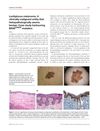
March 2015 in “Journal of the European Academy of Dermatology and Venereology” A clinically suspected melanoma appeared benign under the microscope but was confirmed by specific tests and a rare mutation.
October 2025 in “The Sri Lanka Journal of Dermatology” Inverted follicular keratosis can look like cancer but is actually a harmless tumor.
 July 2025 in “SKIN The Journal of Cutaneous Medicine”
 Ashwagandha may help with skin and hair issues, but more research is needed.
The role of 5α-reductase-3 in prostate cancer is unclear and needs more research.
July 2019 in “Journal of the ASEAN Federation of Endocrine Societies” The woman had a rare adrenal tumor removed, and she recovered well with no signs of the tumor returning.
April 2024 in “JEADV Clinical Practice” Guidelines for full-body skin exams, including hidden areas, are needed to guide doctors and inform patients.
A 69-year-old smoker was wrongly diagnosed with lung cancer but actually had a rare lymphatic system disorder.
ETS2 is crucial in squamous cell carcinoma development and could be a therapeutic target.
ETS2 drives cancer progression in squamous cell carcinoma and is linked to poor patient outcomes.
Rehabilitation improved patients' mobility but did not reduce 30-day hospital readmission rates after stem cell transplants.
88 citations
,
August 1998 in “Carcinogenesis” High levels of ODC and a mutant Ha-ras gene cause tumors in mice.
 56 citations
,
March 2015 in “Cell death and differentiation”
56 citations
,
March 2015 in “Cell death and differentiation” Older skin has higher cancer risk due to inflammation and stem cell issues.
42 citations
,
October 2006 in “Theriogenology” Porcine skin cells are useful for studying wound healing and cancer.
![Comparative Oncology: Evaluation of 2-Deoxy-2-[18F]Fluoro-D-Glucose (FDG) Positron Emission Tomography/Computed Tomography (PET/CT) for the Staging of Dogs with Malignant Tumors](/images/assets/d55cf8d9-d8ee-4735-9b38-42a266b4059d/small/24322.jpg) 17 citations
,
June 2015 in “PLOS ONE”
17 citations
,
June 2015 in “PLOS ONE” FDG PET/CT scans can change cancer treatment plans for dogs.
 15 citations
,
July 2013 in “Cell Reports”
15 citations
,
July 2013 in “Cell Reports” Indian Hedgehog helps control skin cell growth and protects against aggressive skin cancer.
12 citations
,
October 2006 Matriptase imbalance contributes to cancer development and spread.
3 citations
,
April 2019 in “Stem cells international” Markers CRABP1, Nestin, and Ephrin B2 are present in skin cancer environments and may influence their development.
April 2026 in “IntechOpen eBooks” Burn injuries can cause long-term itching, skin color changes, and cancer risks, needing personalized treatment.

Ca²⁺-mediated protein citrullination controls cell growth in the CNS and may help treat brain tumors.
 October 2020 in “Our Dermatology Online”
 Skin changes and high vitamin B12 levels can be early signs of cancer.
30 citations
,
May 2019 in “Journal of the European Academy of Dermatology and Venereology” 26 citations
,
June 2024 in “Frontiers in Immunology” SOCS1 and SOCS3 help control skin inflammation and are important for developing treatments for skin diseases.
 March 2021 in “Revista Colombiana de Cancerología”
 Cancer patients with COVID-19 face higher risks due to possible additional infections.