Mdm2 is crucial for controlling p53 to maintain healthy cells and prevent tumors.
30 citations
,
August 2005 in “British journal of dermatology/British journal of dermatology, Supplement” A specific gene mutation causes hair loss and potential eye issues, even if vision seems normal.
94 citations
,
October 1994 in “The Journal of Cell Biology” Too much keratin 16 in mice skin causes abnormal skin thickening and structure.
 133 citations
,
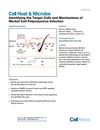
May 2016 in “Cell Host & Microbe”
133 citations
,
May 2016 in “Cell Host & Microbe” Human dermal fibroblasts are the main cells targeted by a virus that can cause a deadly skin cancer, and a certain inhibitor can effectively block this infection.
 67 citations
,
August 2007 in “American Journal of Pathology”
67 citations
,
August 2007 in “American Journal of Pathology” Overexpressing the mineralocorticoid receptor in mouse skin causes skin thinning, early skin barrier development, eye issues, and hair loss.
June 2026 in “Health Science Reports” STEAP3 protein might help treat hair loss, but more testing is needed.
 10 citations
,
November 2017 in “Journal of Investigative Dermatology”
10 citations
,
November 2017 in “Journal of Investigative Dermatology” A mutation in the FAM83G gene is linked to skin and hair abnormalities in two related individuals.
November 2024 in “Biochemical and Biophysical Research Communications” Abnormal gene expression related to keratin causes hair loss in certain mice.
 6 citations
,
June 2021 in “Developmental biology”
6 citations
,
June 2021 in “Developmental biology” Dermal EZH2 controls skin cell development and hair growth in mice.
January 2008 in “HAL (Le Centre pour la Communication Scientifique Directe)” The mutant HR bmh protein affects hair follicle formation by failing to repress vitamin D receptor activity.
 November 2023 in “bioRxiv (Cold Spring Harbor Laboratory)”
 Scientists made a mouse that shows how a specific protein in the skin changes and affects hair growth and shape.
3 citations
,
August 2022 in “International Journal of Molecular Sciences” TSC2-/meth cells can cause skin lesions, hair growth, and lung issues, and may be treated with chromatin remodeling agents.
101 citations
,
August 2001 in “The Journal of Cell Biology” A new keratin 6 type in mice explains why some mice without certain keratin genes still have normal hair and nails.
 January 2022 in “bioRxiv (Cold Spring Harbor Laboratory)”
 Skin lesions in Carney complex are likely caused by a specific group of skin cells that promote pigment production due to a genetic mutation.
January 2007 in “Journal of Inner Mongolia University” The research helps in creating genetically modified animals to study hair growth.
 August 2022 in “Frontiers in genetics”
 A new genetic change in the DSC3 gene is linked to a rare condition causing hair loss and skin blisters in a child.
 1 citations
,
July 2023 in “Communications biology”
1 citations
,
July 2023 in “Communications biology” Removing Mediator 1 from certain mouse cells causes teeth to grow hair instead of enamel.
5 citations
,
May 2024 in “Developmental Cell” Lower GATA3 levels in mice help hair regrow by changing certain immune cells.
September 2021 in “The journal of investigative dermatology/Journal of investigative dermatology” Three genes linked to the development of trichilemmal cysts were found.
 January 2025 in “Nature Communications”
 CPK1 helps root hair growth in Arabidopsis by activating channels for calcium signaling.
3 citations
,
December 2024 in “Journal of Animal Science” LncRNA MSTRG.14227.1 hinders hair follicle development in cashmere goats, affecting cashmere quality.
22 citations
,
May 2007 in “Molecular Biotechnology” 8 citations
,
June 2016 in “Journal of Investigative Dermatology” A rare genetic deletion in the KRT1 gene causes unique skin symptoms in a family.
 53 citations
,
January 2011 in “Diabetes”
53 citations
,
January 2011 in “Diabetes” People with PCNT mutations often develop severe insulin resistance and early-onset diabetes during childhood or adolescence.
 26 citations
,
July 2016 in “The journal of investigative dermatology/Journal of investigative dermatology”
26 citations
,
July 2016 in “The journal of investigative dermatology/Journal of investigative dermatology” The protein Par3 is crucial for healthy skin, affecting the skin barrier, cell differentiation, and stem cell maintenance.
 March 2014 in “Chinese Journal of Dermatology”
 Hair loss in androgenic alopecia patients is linked to changes in certain genes that control cell growth and death.
14 citations
,
July 2019 in “Journal of Investigative Dermatology” Integrin-linked kinase is crucial for melanoblasts to properly colonize the skin.
 September 2019 in “The journal of investigative dermatology/Journal of investigative dermatology”
 Not having enough cystatin M/E protein causes less hair growth and dry skin.
11 citations
,
January 2014 in “Dermatology” Certain SPINK5 gene mutations are common in Israeli families with Comèl-Netherton syndrome.
April 2023 in “Journal of Investigative Dermatology” AL136131.3 slows hair growth by affecting energy processes in hair loss.