4 citations
,
February 2021 in “Journal of Pharmaceutical Sciences” The model can help predict how finasteride and minoxidil work when applied to the scalp.
 January 2026 in “Frontiers in Molecular Biosciences”
 A new method helps diagnose alopecia areata using specific gene markers and could guide targeted treatments.
127 citations
,
April 1999 in “Journal of Investigative Dermatology” Rodent models helped understand psoriasis but none perfectly replicated the disease.
 38 citations
,
January 2016 in “Cell Death and Disease”
38 citations
,
January 2016 in “Cell Death and Disease” The TCL1 transgenic mouse model is useful for understanding human B-cell leukemia and testing new treatments.
17 citations
,
July 2024 in “Frontiers in Oncology” New therapies and trials are needed for Merkel cell carcinoma, a tough skin cancer.
 December 2024 in “International Journal of experimental research and review”
 Adding obesity data to machine learning models improves heart disease prediction accuracy.
 November 2022 in “Piretc”
 The document provides a way to measure how new ideas affect the making of goods in a region.
 February 2024 in “Frontiers in physics”
 The new model detects hair clusters more accurately and efficiently, helping with early hair loss treatment and diagnosis.
Machine learning can accurately predict Polycystic Ovary Syndrome in women using clinical features.
 December 2023 in “The journal of cell biology/The Journal of cell biology”
 The mTurq2-Col4a1 mouse model shows how the basement membrane develops in live mammals.
1 citations
,
November 2025 in “Science Advances” Two gene variants cause white spots in cattle.
3 citations
,
March 2024 in “arXiv (Cornell University)” The new AI system improves remote skin condition diagnosis and access to care.
Understanding hair follicle interactions can help treat male pattern baldness.
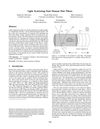 161 citations
,
July 2003 in “ACM Transactions on Graphics”
161 citations
,
July 2003 in “ACM Transactions on Graphics” Researchers developed a new model for more realistic computer graphics rendering of hair by considering how light scatters on hair fibers.
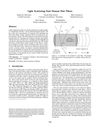
Researchers developed a new model for more realistic computer graphics of hair by considering how light scatters on hair fibers.
Cialis and Finasteride could be repurposed to treat aggressive melanoma.
2 citations
,
June 1983 in “Proc., Annu. Meet., Air Pollut. Control Assoc.; (United States)” Ingesting minoxidil can cause severe health issues, requiring urgent medical treatment.
 December 2022 in “Research Square (Research Square)”
 The QuantAnts machines can find cancer markers and create CRISPR targets for them.
1 citations
,
January 2024 in “Animal Research and One Health” Mouse models are essential for studying and improving genetic traits in agriculture.
SL-HyDE improves medical information retrieval accuracy without needing labeled data.

"Bider" markings in Dun Mongolian horses are caused by a complex network of genes and pathways.
 1 citations
,
November 2021 in “World Family Medicine Journal /Middle East Journal of Family Medicine”
1 citations
,
November 2021 in “World Family Medicine Journal /Middle East Journal of Family Medicine” Different specialties at different hospitals use various consultation models.
 12 citations
,
November 2014 in “PLOS Computational Biology”
12 citations
,
November 2014 in “PLOS Computational Biology” The study concluded that hair growth in mice is regulated by a stable interaction between skin cell types, and disrupting this can cause hair loss.
July 2024 in “International Journal of Molecular Sciences” MicroRNAs could help assess and manage multiple chronic diseases.
 2 citations
,
March 2023 in “Research Square (Research Square)”
2 citations
,
March 2023 in “Research Square (Research Square)” Forensic DNA phenotyping faces challenges due to inconsistent terminology, limited genetic understanding, and debates over technology and models.
Moles may stop growing due to cell cooperation, not just because of individual cell aging.
June 2026 in “Mendeley Data” June 2026 in “Mendeley Data”  September 2023 in “Reports of Vinnytsia National Medical University”
 The models accurately predicted urticaria in Ukrainian women but struggled to differentiate between mild and severe cases based on body structure.

The study aims to create a model to improve personalized and preventive health care.