March 2022 in “Oncology Times” Tebentafusp-tebn improves survival rates in uveal melanoma patients but has common side effects like rash and fatigue.
91 citations
,
July 2004 in “Journal of Biological Chemistry” Overexpressing SSAT enzyme reduces prostate tumor growth in mice.
 27 citations
,
September 1999 in “Journal of Investigative Dermatology”
27 citations
,
September 1999 in “Journal of Investigative Dermatology” Human skin cells contain Protease Nexin-1, and male hormones can decrease its levels, potentially affecting hair growth.
 January 2026 in “International Journal of Research and Innovation in Applied Science”
 Recognizing specific markers is crucial for correctly diagnosing and treating rare multifocal MPTT in males.
May 2005 in “Molecular Carcinogenesis” mrp/plf-mRNA can indicate tumor-promoting effects in skin.
 April 2016 in “The journal of investigative dermatology/Journal of investigative dermatology”
 RPGRIP1L helps skin cells stick together by blocking PKCβII, which can prevent skin blistering like in pemphigus.
 1 citations
,
December 2018 in “Journal of genetic medicine”
1 citations
,
December 2018 in “Journal of genetic medicine” A small change in the TRPS1 gene leads to a less severe form of a syndrome affecting hair, nose, and finger development.
29 citations
,
April 1997 in “Developmental Dynamics” Trypsin slows hair growth and affects color by causing cell death in hair follicles.
 February 2026 in “Oncology Reviews”
 Sacituzumab tirumotecan shows promise in treating breast cancer with manageable side effects.
 14 citations
,
December 2010 in “Journal of human genetics”
14 citations
,
December 2010 in “Journal of human genetics” A Japanese patient with IFAP syndrome had a severe MBTPS2 gene mutation but showed milder symptoms than previously observed cases.
118 citations
,
June 1993 in “Journal of Biological Chemistry” Human and mouse TGase3 enzymes are similar but differ near the activation site, crucial for their function in skin and hair development.
 47 citations
,
December 2019 in “Frontiers in immunology”
47 citations
,
December 2019 in “Frontiers in immunology” A new mutation in the STING protein causes a range of symptoms and its severity may be affected by other genetic variations; treatment with a specific inhibitor showed improvement in one patient.
 4 citations
,
June 2025 in “Medeniyet Medical Journal”
4 citations
,
June 2025 in “Medeniyet Medical Journal” TMPRSS2 is crucial for COVID-19 infection and is a potential target for treatment.
July 2024 in “Journal of Investigative Dermatology” ATR12-351 ointment safely delivers LEKTI protein to the skin, reducing enzyme activity in Netherton syndrome.
15 citations
,
September 2018 in “Applied Biological Chemistry” Matrigel supports cell growth and repair, and thymosin beta 4 aids tissue regeneration and healing.
 December 2023 in “Journal of ethnopharmacology”
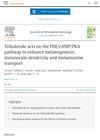
 Tribuloside can increase skin pigmentation by enhancing melanin production and distribution.
 September 2019 in “The journal of investigative dermatology/Journal of investigative dermatology”
 Not having enough cystatin M/E protein causes less hair growth and dry skin.
19 citations
,
May 2001 in “Endocrinology” Mrp3 may aid in wound healing and hair growth.
September 2019 in “The journal of investigative dermatology/Journal of investigative dermatology” A new mutation in the STING protein causes a disease with lupus-like symptoms and responds well to a specific inhibitor treatment.
65 citations
,
February 2011 in “Molecular cancer therapeutics” CCT128930 is a promising new drug that effectively targets and inhibits a cancer-related protein, showing potential for cancer treatment.
The research developed new fortilin protein constructs for potential heart disease treatments.
4 citations
,
August 2024 in “International Journal of Molecular Sciences” EBGS reduces platelet adhesion, potentially helping prevent blood clots.
 April 2017 in “Journal of Investigative Dermatology”
 Triptolide effectively and safely reduces actinic keratosis lesions in mice.
66 citations
,
March 2016 in “Nucleic Acids Research” Musashi-2 limits epithelial cell movement and affects cell growth.
34 citations
,
May 2001 in “Endocrinology” Mrp3 helps in wound healing and hair growth.
1 citations
,
September 2023 in “Frontiers in Genetics” A heterozygous mutation in HTRA1 can cause severe CARASIL symptoms.
10 citations
,
June 2022 in “Biomedicine & Pharmacotherapy” ARTS helps stop tumors by promoting cell death.
1 citations
,
January 2022 in “Annals of Dermatology” A new mutation in the MBTPS2 gene causes a mild form of IFAP syndrome.
28 citations
,
September 1998 in “Journal of Investigative Dermatology” Two distinct caspases in human skin help with cell death and skin formation.
7 citations
,
September 2003 in “Journal of Investigative Dermatology” PAR-1 may play a role in hair growth regulation in human hair follicles.