45 citations
,
November 2022 in “Acta Biomaterialia” A new 3-D co-culture system improves hair growth potential in cells for hair regeneration.
 5 citations
,
February 2009 in “International Journal of Cosmetic Science”
5 citations
,
February 2009 in “International Journal of Cosmetic Science” Coenzyme Q10 helps reduce aging in human hair.
44 citations
,
October 1990 in “Archives of Dermatological Research” The connective tissue around hair follicles changes structure throughout the hair cycle.
 22 citations
,
August 1999 in “Experimental Dermatology”
22 citations
,
August 1999 in “Experimental Dermatology” Certain drugs can cause early hair growth in mice by affecting the nerves.
January 2003 in “Linchuang pifuke zazhi” Zingiber coralliaum oil promotes early hair growth in mice.
35 citations
,
December 2008 in “PubMed” Trichilemmoma, BCC, and SCC tumors have different stem cell marker expressions.
25 citations
,
December 1973 in “Biochemical Journal” Guinea-pig hair and follicle proteins are mostly similar, but follicles have more group 2 proteins and fewer group 3 and 4 proteins.
 15 citations
,
December 2014 in “PLoS ONE”
15 citations
,
December 2014 in “PLoS ONE” A mutation in the iRhom2 gene causes hairless mice due to abnormal hair follicle development.
7 citations
,
June 2017 in “Journal of Cutaneous Pathology” Cystic panfolliculoma resembles hair follicle tumors due to specific cell interactions.
 2 citations
,
September 2022 in “Organoid”
2 citations
,
September 2022 in “Organoid” A new method was developed to efficiently grow skin hair follicles from stem cells, potentially aiding alopecia treatment.
 April 2023 in “Journal of Investigative Dermatology”
 Autophagy is important for determining the protein makeup of hair.
 April 2017 in “Journal of Investigative Dermatology”
 Early and late matrix progenitors in hair follicles create different cell layers, with early ones forming the companion layer and later ones forming the inner root sheath and hair shaft.
January 2006 in “Chinese Journal of Dermatology” Mesenchymal cells are essential for hair follicle stem cell growth.
Four transcription factors can convert mouse cells into hair cell-like cells, aiding hearing loss research and treatment.
 April 2019 in “Journal of Investigative Dermatology”
 Removing REDD1 in mice increases skin fat by making fat cells larger and more numerous.
5 citations
,
January 1983 in “PubMed” Human skin releases different steroids, with some coming from sebaceous glands and others from sweat glands.
 22 citations
,
April 2017 in “Cell Stem Cell”
22 citations
,
April 2017 in “Cell Stem Cell” Skin wounds can create fat cells that help regenerate hair follicles, with BMP signaling playing a crucial role in this process.
 1 citations
,
December 2022 in “Life”
1 citations
,
December 2022 in “Life” Topical corticosteroids are the main treatment for Erosive Pustular Dermatosis, but recurrence is common after stopping treatment.
12 citations
,
April 2004 in “PubMed” A rare skin condition in a baby showed unusual fat and hair follicle changes.
 March 2024 in “IP Indian journal of clinical and experimental dermatology”
 Giant solitary trichoepithelioma is a rare, usually non-cancerous hair follicle tumor that can sometimes turn into skin cancer.
September 2021 in “Morphologia” Dermal fibroblasts have at least three distinct types, each with unique roles in skin structure and hair development.
January 2011 in “Revista Portuguesa de Endocrinologia Diabetes e Metabolismo” Congenital adrenal hyperplasia may be linked to adrenal myelolipoma.
 2 citations
,
August 1995 in “Acta agriculturæ Scandinavica. Section A, Animal science”
2 citations
,
August 1995 in “Acta agriculturæ Scandinavica. Section A, Animal science” Adult male raccoon dogs shed their winter fur in spring and grow new fur for winter in autumn.
 19 citations
,
September 2016 in “Journal of the European Academy of Dermatology and Venereology”
19 citations
,
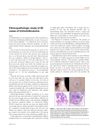
September 2016 in “Journal of the European Academy of Dermatology and Venereology” Trichofolliculoma is a unique benign tumor mainly affecting middle-aged adults' faces, often misdiagnosed without histopathology.
48 citations
,
January 2002 in “Journal of Structural Biology” Trichocyte filaments have a low-density core and may include proteins for hair structure.
14 citations
,
April 1976 in “Journal of Cutaneous Pathology” A calcified nodule on a boy's face came from hair follicles and expelled calcium through the skin.
 77 citations
,
April 2004 in “Gene expression patterns”
77 citations
,
April 2004 in “Gene expression patterns” The three estrogen receptor genes are highly expressed in zebrafish neuromasts during development.
18 citations
,
April 2002 in “Journal of cutaneous pathology” Tiny infundibular cysts are the main lesions in chloracne, not comedones.
16 citations
,
September 2006 in “Journal of Cutaneous Pathology” P63 is a marker for epidermal stem cells in rats.
14 citations
,
May 2022 in “Stem cell reports” The study created hair-bearing skin models that lack a key protein for skin layer attachment, limiting their use for certain skin disease research.