February 2026 in “Expert Opinion on Pharmacotherapy” Low-dose oral and topical minoxidil are recommended for managing hair loss in transplant patients, with specific dosing and timing guidelines.
 2 citations
,
November 1987 in “Archives of Dermatology”
2 citations
,
November 1987 in “Archives of Dermatology” Minoxidil solution helps regrow hair in men with hair loss, with most improvement seen at 12 months and effects lasting over 30 months.
 25 citations
,
May 1986 in “The American Journal of the Medical Sciences”
25 citations
,
May 1986 in “The American Journal of the Medical Sciences” Minoxidil helps hair growth and boosts self-esteem in balding men.
 12 citations
,
February 1999 in “British Journal of Dermatology”
12 citations
,
February 1999 in “British Journal of Dermatology” Minoxidil increased small openings in blood vessel walls near growing hair in rats.
 January 2022 in “Experimental Dermatology”
 Minoxidil solution and foam both increase hair growth, but the solution works better than the foam.
 33 citations
,
May 1991 in “British Journal of Pharmacology”
33 citations
,
May 1991 in “British Journal of Pharmacology” Cromakalim relaxes various blood vessels, while minoxidil sulphate is more selective; they likely act on different potassium channels.
 April 2026 in “Zenodo (CERN European Organization for Nuclear Research)”
 Nanocarrier systems could improve hair loss treatments by delivering drugs more effectively.
 1 citations
,
May 1983 in “Acta dermato-venereologica”
1 citations
,
May 1983 in “Acta dermato-venereologica” Minoxidil caused hair regrowth, but cyproterone acetate did not maintain it.
2 citations
,
January 2016 in “Journal of Evolution of medical and Dental Sciences” PRP is more effective than minoxidil for treating male pattern baldness.

10% minoxidil improves frontal hair count more than 5% but has more side effects.
 June 2024 in “European Journal of Clinical and Experimental Medicine”
 Oral minoxidil for hair loss can cause weight gain due to fluid retention.
 3 citations
,
April 2016 in “PubMed”
3 citations
,
April 2016 in “PubMed” Using Minoxidil 5% foam with a botanical hair solution twice daily can significantly improve hair growth and appearance in men with hair loss, and is generally well-tolerated.
 101 citations
,
March 1987 in “Journal of The American Academy of Dermatology”
101 citations
,
March 1987 in “Journal of The American Academy of Dermatology” Minoxidil solution helps hair regrowth in alopecia areata, with 5% being more effective.
September 2022 in “Journal of The American Academy of Dermatology” Combining dutasteride mesotherapy with oral minoxidil is more effective for hair loss than using oral minoxidil alone.
Topical 5% minoxidil is safe and effective for treating hair loss in Korean men.
April 1989 in “Archives of Dermatology” Minoxidil effectively treats male pattern baldness.
 June 2025 in “International Journal of Applied Pharmaceutics”
 PRP-Exo is more effective than minoxidil for hair growth.
January 2005 in “日本機械学會論文集. C編” Minoxidil sulfate and pinacidil promote hair growth likely by increasing blood flow, not by activating K channels.
181 citations
,
July 2004 in “Journal of controlled release” Smaller nanoparticles improve minoxidil absorption through hair follicles.
 1 citations
,
September 2023 in “Journal of The American Academy of Dermatology”
1 citations
,
September 2023 in “Journal of The American Academy of Dermatology” Low dose oral minoxidil can help with hair loss when used alone.
 September 2023 in “Journal of The American Academy of Dermatology”
 Low-dose oral minoxidil may be effective for hair loss treatment.
23 citations
,
July 1993 in “The journal of investigative dermatology/Journal of investigative dermatology” Certain chemicals and peptides can promote hair growth or prevent baldness.
October 2021 in “QJM: An International Journal of Medicine” Both sildenafil and minoxidil effectively treat male hair loss, but impact hair differently.
 16 citations
,
January 2007 in “JEADV. Journal of the European Academy of Dermatology and Venereology/Journal of the European Academy of Dermatology and Venereology”
16 citations
,
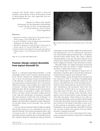
January 2007 in “JEADV. Journal of the European Academy of Dermatology and Venereology/Journal of the European Academy of Dermatology and Venereology” A man had an allergic reaction to minoxidil, which stopped after he discontinued use and started corticosteroids.
 December 2020 in “Dermatología argentina”
 Low-dose oral minoxidil effectively treats male pattern baldness.
 July 2014 in “Journal of Dermatology and Cosmetic”
 Niosomal minoxidil was found to be more effective in increasing hair count and patient satisfaction than conventional minoxidil in treating hair loss.
 October 2016 in “International journal of medical research and review”
 Minoxidil, a hair loss treatment, may cause acne-like skin eruptions.
 November 2013 in “Journal of Mazandaran University of Medical Sciences”
 Minoxidil with caffeine works better for hair loss than minoxidil alone.
August 2022 in “Journal of The American Academy of Dermatology” A 5-mg dose of oral minoxidil slightly lowers blood pressure temporarily, especially in those with higher initial blood pressure.