Muscarinic acetylcholine receptors help regulate and promote hair growth.
2 citations
,
May 2024 in “International Journal of Molecular Sciences” Targeting CD169+ skin macrophages may help treat psoriasis.
 28 citations
,
March 2017 in “Endocrinology”
28 citations
,
March 2017 in “Endocrinology” Removing vitamin D and calcium receptors in mice skin cells slows down skin wound healing.
55 citations
,
November 2010 in “Journal of Allergy and Clinical Immunology” The L412F variant of TLR3 is linked to skin infections, more viral infections, and autoimmune issues.
July 2026 in “Materials Today Bio” The MQ complex helps heal melanoma wounds by controlling ROS levels with light.
31 citations
,
July 2012 in “Journal of Lipid Research” ACBP is crucial for healthy skin in mice.
April 2024 in “Anais Brasileiros de Dermatologia” 10 citations
,
July 2023 in “Pharmaceutics” Activating PKM2 and Wnt/β-catenin signaling speeds up wound healing.
3 citations
,
July 2023 in “Cells” MG53 helps reduce skin damage caused by nitrogen mustard.
January 2018 in “bioRxiv (Cold Spring Harbor Laboratory)” The mutant HR bmh protein mis-localizes in cells, affecting skin and hair development.
48 citations
,
March 2010 in “PloS one” C/EBPalpha and C/EBPbeta are crucial for normal skin and oil gland cell development in adult mice.
 March 2019 in “Journal der Deutschen Dermatologischen Gesellschaft”
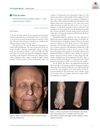
 Rothmund-Thomson syndrome type 2 can cause chronic, poorly healing wounds.
 January 2016 in “Human & Experimental Toxicology”
 A specific DNA sequence caused hair loss in male mice by activating immune cells and increasing a certain immune signal.
June 2026 in “Strathprints: The University of Strathclyde institutional repository (University of Strathclyde)” Topical IKKα inhibitors may help prevent CCS tumours.
33 citations
,
December 2015 in “International Journal of Molecular Sciences” Melanocyte stem cells are crucial for skin pigmentation and have potential in disease modeling and regenerative medicine.
 6 citations
,
May 2014 in “Biomarkers and Genomic Medicine”
6 citations
,
May 2014 in “Biomarkers and Genomic Medicine” Charnoly bodies could be a marker for cell damage, and certain nutrients and proteins might prevent them, potentially helping with brain diseases and cancer.
6 citations
,
January 2010 in “Journal of Biochemical and Molecular Toxicology” The ID2 gene can help distinguish between sensitizers and irritants in skin cells.
September 1999 in “Molecular Carcinogenesis” Increased ODC expression makes normally tumor-resistant mice more prone to tumor development.
Mdm2 is crucial for controlling p53 to maintain healthy cells and prevent tumors.
February 2020 in “Journal of chemical neuroanatomy” Researchers found a way to make rat hair follicle cells start turning into motor neuron-like cells, but couldn't fully turn them into working motor neurons.
July 2026 in “bioRxiv (Cold Spring Harbor Laboratory)” TCDD exposure causes sebaceous glands to differentiate and produce more lipids before shrinking.
 286 citations
,
April 2009 in “The journal of neuroscience/The Journal of neuroscience”
286 citations
,
April 2009 in “The journal of neuroscience/The Journal of neuroscience” TRPA1 is crucial for mechanical sensitivity in skin sensory neurons.
ETS2 is crucial in squamous cell carcinoma development and could be a therapeutic target.
109 citations
,
November 2011 in “Nature Neuroscience”  January 2025 in “Nature Communications”
 CPK1 helps root hair growth in Arabidopsis by activating channels for calcium signaling.
 86 citations
,
August 2011 in “Toxicological sciences”
86 citations
,
August 2011 in “Toxicological sciences” TCDD speeds up skin barrier formation by increasing certain gene expressions.
November 2015 in “Journal of the Korea Academia-Industrial cooperation Society” The new assay can help develop products for hair re-growth.
 April 2023 in “Journal of Investigative Dermatology”
 Krox20 (Egr2) is important for the function of epithelial stem cells.
 11 citations
,
August 2010 in “Developmental neurobiology”
11 citations
,
August 2010 in “Developmental neurobiology” Ptprq has multiple forms that change during inner ear development.
 11 citations
,
October 2001 in “Dermatologic Clinics”
11 citations
,
October 2001 in “Dermatologic Clinics” The document concludes that DAB389-IL2 is promising for treating refractory cutaneous T-cell lymphoma, but more research is needed on its effectiveness and side effect management.