19 citations
,
February 2001 in “Journal of paediatrics and child health” A new mutation in the mitochondrial DNA was found in a boy with MELAS, even though his family didn't show typical signs.
July 2017 in “D-Scholarship@Pitt (University of Pittsburgh)” Notch signaling stops Merkel cell development, and hair follicles help maintain them after skin injury.
13 citations
,
June 2012 in “European journal of medical genetics” Identical twins had different symptoms because one had more cells with an extra chromosome fragment in different tissues.
 November 2022 in “Journal of Investigative Dermatology”
 Some people with schwannomatosis have a new type of mutation in the LZTR1 gene.
6 citations
,
April 2012 in “PubMed” Enteral supplements can improve symptoms of Cronkhite-Canada syndrome.
1 citations
,
October 2022 in “Journal of Cosmetic Dermatology” Combining microneedling with 2% minoxidil is more effective and safe for treating female pattern hair loss than using minoxidil alone.
January 2026 in “Aging and Disease” The α-MSH-MC1R-cAMP pathway does not protect skin cells from UVA damage.
 1 citations
,
November 2016 in “Congenital Anomalies”
1 citations
,
November 2016 in “Congenital Anomalies” Get head MRI for babies with achondroplasia early, use free immunoglobulin light chains to detect certain neurodevelopmental disorders, and video calls work for speech therapy in patients with facial anomalies.
14 citations
,
June 1982 in “Archives of Dermatology” A man had bad reactions to a hair loss treatment called DNCB.
 21 citations
,
April 1990 in “Journal of comparative neurology”
21 citations
,
April 1990 in “Journal of comparative neurology” The study found that nerve signals are stronger when there are more connection points, but not necessarily denser, along the nerve's path in the spine.
 January 2024 in “Pharmaceutical medicine”
 Most European physicians know the risks and safe use of Cyproterone acetate, but few remember receiving official safety communications.
June 2023 in “Lithuanian University of Health Sciences” 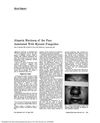 28 citations
,
May 1978 in “Archives of dermatology”
28 citations
,
May 1978 in “Archives of dermatology” Alopecia mucinosa on the face can be linked to mycosis fungoides, a type of lymphoma.
44 citations
,
January 2015 in “Development” Human Schwann cells can be quickly made from hair follicle stem cells for nerve repair.
 11 citations
,
September 1996 in “Neuroscience letters”
11 citations
,
September 1996 in “Neuroscience letters” Adding fetal calf serum helps Merkel cells survive and change shape.

MTS and caffeine ampoule improve hair and scalp conditions in women with hairline alopecia.
 4 citations
,
February 2020 in “Cell & tissue research/Cell and tissue research”
4 citations
,
February 2020 in “Cell & tissue research/Cell and tissue research” Hair follicle stem cells might help treat traumatic brain injury.
 27 citations
,
May 2018 in “Journal of Dermatological Science”
27 citations
,
May 2018 in “Journal of Dermatological Science” M2 macrophages, a type of immune cell, help in new hair growth on scars by producing growth factors.
4 citations
,
July 2022 in “The Journal of Clinical Endocrinology & Metabolism” A specific genetic mutation causes POMC deficiency, leading to symptoms like weight gain and red hair.
March 2018 in “Dermatologic Surgery”  September 2022 in “Journal of medical sciences and health”
 A person had two different benign skin tumors, a trichoadenoma and melanocytic naevi, at the same time but in different places on the face.
April 2018 in “DSpace@MIT (Massachusetts Institute of Technology)” Nephronectin is linked to worse outcomes in breast cancer and helps cancer spread.
 January 2026 in “Drug Delivery and Translational Research”
 Multicomponent crystals in microneedles improve drug delivery for hair loss treatment.
September 2023 in “bioRxiv (Cold Spring Harbor Laboratory)” Microneedle patches with different pore sizes can effectively deliver drugs and trigger strong immune responses.
July 2025 in “Materials Today Bio” TFC-loaded microneedles effectively promote hair regrowth in androgenetic alopecia.
April 2019 in “The journal of investigative dermatology/Journal of investigative dermatology” Spiny mice regenerate skin better than laboratory mice due to larger hair bulges, more stem cells, and different collagen ratios.
 77 citations
,
July 2020 in “Cell”
77 citations
,
July 2020 in “Cell” Muscles and nerves that cause goosebumps also help control hair growth.
 18 citations
,
November 2016 in “Neuromuscular Disorders”
18 citations
,
November 2016 in “Neuromuscular Disorders” Patients with myotonic dystrophy often have skin problems that suggest early aging and vitamin D issues, and the severity of these problems is linked to their genetic condition and vitamin D levels.
15 citations
,
June 2012 in “British Journal of Dermatology” A new mutation in the KRT86 gene causes a hair disorder with variable expression.
37 citations
,
June 2004 in “Human molecular genetics online/Human molecular genetics” The HCR gene contributes to psoriasis risk.