 66 citations
,
May 2021 in “Science Advances”
66 citations
,
May 2021 in “Science Advances” Different scaffold patterns improve wound healing and immune response in mouse skin, with aligned patterns being particularly effective.
April 2008 in “Faculty Opinions – Post-Publication Peer Review of the Biomedical Literature” The vitamin D receptor helps control hair growth and may protect against certain skin tumors.
January 2026 in “SSRN Electronic Journal”  27 citations
,
June 2013 in “Genes & development”
27 citations
,
June 2013 in “Genes & development” Cav1.2 affects hair growth and could be a target for hair loss treatments.
 67 citations
,
December 2009 in “Stem Cells”
67 citations
,
December 2009 in “Stem Cells” β-Catenin signaling is involved in brain cell growth after injury and could be a therapy target.
January 2020 in “Archivio Istituzionale della Ricerca (Universita Degli Studi Di Milano)” Polycomb Repressive Complex 1 is crucial for keeping stem cells stable and maintaining healthy adult tissues.
 April 2020 in “Research Square (Research Square)”
 Exosomes from stem cells help wounds heal faster by affecting specific cell signals.
65 citations
,
December 2000 in “PubMed” The biology of skin and hair is complex and not fully understood.
 57 citations
,
May 2007 in “Nature”
57 citations
,
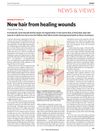
May 2007 in “Nature” Adult mice can grow new hair from skin wounds.
 5 citations
,
September 2022 in “Journal of Investigative Dermatology”
5 citations
,
September 2022 in “Journal of Investigative Dermatology” Careful selection of mice by genetics and age, and controlled housing conditions improve the reliability of hair regrowth in wound healing tests.
3 citations
,
January 2016 NuMA-microtubule interactions are crucial for proper skin structure and hair growth.
 25 citations
,
November 2017 in “Molecular Medicine Reports”
25 citations
,
November 2017 in “Molecular Medicine Reports” PlncRNA-1 helps hair follicle stem cells grow and develop by controlling a specific cell signaling pathway.
April 2019 in “The journal of investigative dermatology/Journal of investigative dermatology” Disrupting the Tsc2 gene in certain cells leads to thicker skin, larger hair, and changes in hair growth signaling, which can be partly reversed with specific treatment.
June 2026 in “Journal of Experimental Botany” Root hair growth is influenced by cell wall dynamics and various cellular factors.
 22 citations
,
April 2017 in “Cell Stem Cell”
22 citations
,
April 2017 in “Cell Stem Cell” Skin wounds can create fat cells that help regenerate hair follicles, with BMP signaling playing a crucial role in this process.
 43 citations
,
December 2013 in “Stem Cells”
43 citations
,
December 2013 in “Stem Cells” Stretching skin increases a certain protein that attracts stem cells, helping skin regeneration.

Sensory neurons and Merkel cells remodel at different rates during normal skin maintenance.
22 citations
,
April 2023 in “The Journal of Cell Biology” Calcium signaling in skin cells is crucial for communication and regeneration.
 July 2012 in “European journal of cancer”
 MPA increases cancer spread by boosting Eph A2 activity.
 9 citations
,
January 2023 in “International Journal of Biological Sciences”
9 citations
,
January 2023 in “International Journal of Biological Sciences” CTHRC1 is essential for healing and preventing heart rupture after a heart attack.
May 2000 in “Journal of Investigative Dermatology” Hedgehog signaling is crucial for hair development, cadherins affect cell adhesion, neutrophils play a role in skin lesions, and BP230 autoantibodies impact skin stability.
June 2003 in “Faculty Opinions – Post-Publication Peer Review of the Biomedical Literature” GLABRA2 represses root hair formation by inhibiting a specific gene.
 10 citations
,
October 2020 in “Frontiers in Cell and Developmental Biology”
10 citations
,
October 2020 in “Frontiers in Cell and Developmental Biology” Wounds can regenerate hair in young mice, but this ability declines with age, offering insights for improving tissue regeneration in the elderly.
 141 citations
,
August 2017 in “Developmental Dynamics”
141 citations
,
August 2017 in “Developmental Dynamics” The document concludes that a better understanding of cell changes during wound healing could improve treatments for chronic wounds and other conditions.
23 citations
,
May 2023 in “Cell Proliferation” TGF-β and FGF pathways are crucial for skin development and regeneration.
 11 citations
,
March 2013 in “Journal of Applied Biomedicine”
11 citations
,
March 2013 in “Journal of Applied Biomedicine” β-catenin helps hair follicle stem cells grow by activating a specific cell pathway.
 6 citations
,
May 2013 in “PloS one”
6 citations
,
May 2013 in “PloS one” The Foxn1(-/-) nude mouse shows disrupted and expanded skin stem cell areas due to high Lhx2 levels.
 April 2018 in “Journal of Investigative Dermatology”
 The research found that blocking a gene called NEMO can potentially prevent harmful effects of aging at the cellular level.
1 citations
,
August 2025 in “Epigenetics & Chromatin” H3K4me3 helps control RSPO3 to influence hair growth and development.
 April 2016 in “Journal of Investigative Dermatology”
 Mice without the p21 gene can fully regenerate injured ears due to reduced Sdf1 increase and leukocyte recruitment, suggesting new ways to induce tissue regeneration in mammals.