4 citations
,
April 2012 in “The journal of investigative dermatology/Journal of investigative dermatology” Krt16-deficient mice help understand skin disorders like PC and FNEPPK.
53 citations
,
September 2004 in “American journal of medical genetics. Part C, Seminars in medical genetics” Mutations in keratin genes cause cell fragility and various skin disorders.
June 2018 in “Chinese Journal of Dermatology” Connective tissue nevi have distinct features, and reflectance confocal microscopy is useful for early diagnosis.
21 citations
,
August 2002 in “British Journal of Ophthalmology” Intralesional cidofovir may be a viable alternative treatment for SCC.
56 citations
,
September 2010 in “Veterinary pathology” Certain mouse strains develop a skin condition similar to a human hair loss disease due to genetic defects.
 August 2022 in “Frontiers in genetics”
 A new genetic change in the DSC3 gene is linked to a rare condition causing hair loss and skin blisters in a child.
 5 citations
,
February 2004 in “Clinical and Experimental Ophthalmology”
5 citations
,
February 2004 in “Clinical and Experimental Ophthalmology” Multiple eye conditions were studied, highlighting the importance of various imaging methods for diagnosis, the vision side effects of drugs tamoxifen and Propecia, and the usefulness of optical coherence tomography for diagnosing and monitoring macular and retinal diseases.
 April 2018 in “Journal of Investigative Dermatology”
 Dsg1 is essential for maintaining a healthy skin barrier in mice.
 June 2023 in “British journal of dermatology/British journal of dermatology, Supplement”
 A child with skin and tooth symptoms was found to have a genetic mutation causing cardiocutaneous syndrome, leading to heart problems.
October 2025 in “Clinical and Experimental Pediatrics” A novel CLDN1 mutation in a 2-month-old with NISCH showed improvement with symptom management.
4 citations
,
December 2014 in “Indian Journal of Dermatology” A rare skin condition with cysts was found on a 5-year-old boy's scalp.
 81 citations
,
June 2012 in “European journal of human genetics”
81 citations
,
June 2012 in “European journal of human genetics” Inherited ichthyoses cause widespread skin scaling and thickening due to gene mutations.
September 2008 in “Acta Ophthalmologica” Hair follicle stem cells can become corneal-like cells with the right environment.
11 citations
,
March 2004 in “Journal of Comparative Pathology” Norfolk Terriers have a genetic skin defect causing scaling and blisters due to a keratin issue.
15 citations
,
November 2009 in “Journal of Comparative Pathology” Epidermolysis bullosa in calves was not caused by mutations in the keratin genes bKRT5 and bKRT14.
6 citations
,
December 2015 in “Medicine” Cronkhite-Canada syndrome may be more treatable and less severe than previously thought.
February 2024 in “Pediatric Dermatology” A 5-year-old girl with a rare genetic disorder, lipoid proteinosis, showed reduced new lesions but persistent scars after avoiding skin trauma.
1 citations
,
April 2025 in “Clinical Cosmetic and Investigational Dermatology” A rare skin lesion in a 64-year-old woman was successfully treated with a laser, showing minimal redness and no return after one month.
2 citations
,
June 2020 in “bioRxiv (Cold Spring Harbor Laboratory)” Corneal regeneration relies on distinct stem cell compartments in the limbal niche.
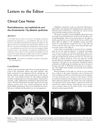 6 citations
,
February 2004 in “Clinical and Experimental Ophthalmology”
6 citations
,
February 2004 in “Clinical and Experimental Ophthalmology” The document concludes that careful diagnosis is crucial for chromosome 13q deletion syndrome, tamoxifen can cause reversible eye damage, finasteride may be linked to cataracts, and OCT is useful for diagnosing macular diseases.
13 citations
,
July 2004 in “Pediatric dermatology” A new severe form of monilethrix syndrome includes hair loss, scalp itching, cataracts, and distinct facial features.
June 2020 in “bioRxiv (Cold Spring Harbor Laboratory)” Stem and progenitor cells in the eye have different division rates and locations, affecting how they respond to injury.
 January 2020 in “Medical journal of clinical trials & case studies”
 A 37-year-old male with severe skin and internal issues has a rare inherited skin condition called dystrophic epidermolysis bullosa.
 6 citations
,
July 2011 in “British Journal of Dermatology”
6 citations
,
July 2011 in “British Journal of Dermatology” A man with KID syndrome developed a rare cancer in a long-term skin infection.
 April 2026 in “Nature Communications”
 Aged corneal cells can revert to a stem-like state to help repair tissue.
 May 2025 in “Cermin Dunia Kedokteran”
 Leukokoria can signal Coats disease or other retinal issues, requiring early detection to prevent severe outcomes.

Cornification is the process where living skin cells die to create a protective barrier, and problems with it can cause skin diseases.
 June 2022 in “Indian journal of clinical and experimental opthalmology”
 The report shows a young man with Hutchinson-Gilford Progeria Syndrome had typical and additional eye problems related to the disease.
 September 2024 in “Journal of Medicine and Life”
 A specific gene mutation causes a severe skin disorder in a family.
19 citations
,
October 2022 in “The Ocular Surface”