4 citations
,
December 2014 in “Indian Journal of Dermatology” A rare skin condition with cysts was found on a 5-year-old boy's scalp.
5 citations
,
September 2024 in “Biomolecules and Biomedicine” Total glucosides of paeony may help treat alopecia areata by reducing inflammation and hair loss.
 4 citations
,
May 2023 in “Research Square (Research Square)”
4 citations
,
May 2023 in “Research Square (Research Square)” Cepharanthine can potentially treat gastric cancer by stopping tumor growth.
 December 2014 in “Bangladesh Journal of Veterinary Medicine”
 Ectoparasites cause skin issues in Egyptian lesser blind mole rats, affecting their population.
 March 2024 in “Research Square (Research Square)”
 Sex steroids affect the MafB gene differently in male and female hamsters.
 24 citations
,
June 2020 in “Industrial Crops and Products”
24 citations
,
June 2020 in “Industrial Crops and Products” Activated carbon fibers from Metaplexis japonica seed hair are highly effective for removing the dye methylene blue from water.
9 citations
,
February 2024 in “mBio” Biliverdin IXβ and IXδ help Pseudomonas aeruginosa adapt to chronic infections.
 1 citations
,
December 2022 in “BMC Genomics”
1 citations
,
December 2022 in “BMC Genomics” The Msx2 gene affects feather development in Hungarian white geese and a specific gene variation could indicate feather quality.
22 citations
,
June 2021 in “Plants” Sterculia foetida seed extract shows promise for therapeutic use due to its anti-inflammatory and pain-relief properties.
 2 citations
,
July 2022 in “Dermatology Reports”
2 citations
,
July 2022 in “Dermatology Reports” EPDS and MS might share an immune-related cause.
 12 citations
,
September 2014 in “Journal of Food Science and Nutrition”
12 citations
,
September 2014 in “Journal of Food Science and Nutrition” Platycarya strobilacea extract is a strong antioxidant that can grow hair better than minoxidil.
 March 2025 in “Buletin Veteriner Udayana”
 The cat's scabies and pneumonia improved significantly with treatment.
66 citations
,
August 2007 in “Applied and environmental microbiology” The engineered yeast strain BLYAS can quickly and sensitively detect androgenic chemicals.
October 2010 in “EUR Research Repository (Erasmus University Rotterdam)” A fungal skin infection was successfully treated with medication and compression therapy.
 4 citations
,
January 2000
4 citations
,
January 2000 Piedraia hortae fungi dissolve both the outer and inner layers of hair.
 3 citations
,
July 2014 in “QJM”
3 citations
,
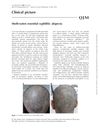
July 2014 in “QJM” A 35-year-old man had patchy hair loss that was actually due to syphilis, not alopecia areata.
January 2013 in “Scholarworks (University of Massachusetts Amherst)” FERONIA regulates plant growth, pollen interactions, and sugar signaling.
 January 2024 in “Medical mycology journal”
 A mother and her two daughters got a skin infection from their cat.
 2 citations
,
September 2021 in “Cutis”
2 citations
,
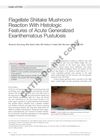
September 2021 in “Cutis” Eating shiitake mushrooms caused a man to develop a rash similar to a skin condition known as AGEP.
 April 2016 in “The journal of investigative dermatology/Journal of investigative dermatology”
 MPZL3 is crucial for seborrheic dermatitis development.
 2 citations
,
August 2024 in “Animal Bioscience”
2 citations
,
August 2024 in “Animal Bioscience” m6A-circHECA may affect cashmere goat hair growth and is possibly controlled by gene promoter methylation.
Ganoderma lucidum extract and microneedle therapy promote hair growth in mice.
5 citations
,
September 2023 in “Journal of Cosmetic Dermatology” c-Maf positive macrophages help form hypertrophic scars by affecting fibroblasts and collagen production.
 November 2024 in “Traditional & Kampo Medicine”
 Kumazasa extract promotes hair growth in mice like minoxidil but without side effects.
33 citations
,
August 2009 in “Journal of Investigative Dermatology” Overexpressing the epigen gene in mice leads to enlarged sebaceous glands and greasy fur.
Zinc methionylglycinate at 160 ppm improves dog hair and zinc levels best.
13 citations
,
November 2017 in “Neurotoxicity research/Neurotoxicity resarch” Sodium metabisulfite increases sodium channel activity, leading to higher cell excitability and potential damage.
The study identified a key protein involved in producing underarm odor and found ways to inhibit it.
6 citations
,
January 1997 in “Medical Mycology” The fungus Piedraia hortae damages hair by slowly breaking down its layers, leading to long-lasting infection.
12 citations
,
January 1994 in “Dermatology” The patient's hair had unique damage and a lower sulfur-to-nitrogen ratio compared to relatives, but not compared to healthy controls.