6 citations
,
March 2022 in “Molecules” Methyl jasmonate boosts tanshinone production in Salvia miltiorrhiza callus cultures.
 11 citations
,
May 2015 in “Stem Cells Translational Medicine”
11 citations
,
May 2015 in “Stem Cells Translational Medicine” Megestrol acetate helps fat-derived stem cells grow, move, and turn into fat cells through a specific receptor.
5 citations
,
January 2009 in “International Journal of Trichology” Two siblings had a rare hair condition with banded hair, which doesn't need treatment.
March 2025 in “Regenerative Therapy” Spirulina maxima extract may help hair growth by boosting cell activity.
 February 2025 in “The Indian Journal of Animal Sciences”
 Sarcoptes scabiei caused mange in Goa goats, but they fully recovered with treatment.
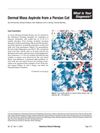 22 citations
,
December 2003 in “Veterinary clinical pathology”
22 citations
,
December 2003 in “Veterinary clinical pathology” The Persian cat has a skin infection caused by a fungus, treatable with antifungal medication.
 October 2024 in “Tikrit Journal of Pure Science”
 High Geh gene expression in Staphylococcus aureus contributes to acne.
372 citations
,
December 2004 in “Nature Genetics” 13 citations
,
August 2024 in “iScience” 3D spheroid culture makes stem cells better at reducing inflammation.
 January 2025 in “Epsilon Archive for Student Projects (University of Southampton)”
 Mange and orf are present in some goat herds in Zambia, but more research is needed.
January 2011 in “Zhongguo nongye Kexue” Transgenic sheep cells with spider silk gene were successfully created for future sheep hair expression.
7 citations
,
November 1997 in “Reproduction Fertility and Development” Epidermal growth factor disrupts hair and gland formation in bandicoots.
 June 2022 in “bioRxiv (Cold Spring Harbor Laboratory)”
 A specific molecular switch, driven by MAPK/ERK signaling, helps spiny mice heal wounds by regenerating skin instead of forming scars.
 17 citations
,
December 2003 in “Veterinary dermatology”
17 citations
,
December 2003 in “Veterinary dermatology” Some masked palm civets in Japan have a skin disease caused by mites.
January 2019 in “University of Liverpool” Equine eosinophilic granuloma is the most common skin disease in horses, while mast cell tumors are less common and differ in their cellular makeup.
January 2009 in “Xumu shouyi xuebao” Sheep cells were successfully modified to include a spider silk protein gene.
 September 2013 in “Science”
 Special astroglia cells improved stroke recovery in rats, a hair growth drug reduced cancer spread, and tiny magnesium structures were more easily shaped.
22 citations
,
January 2020 in “Veterinary dermatology” The conclusion is that certain dog and cat breeds are prone to Malassezia dermatitis, which can be diagnosed with skin tests and treated with antifungal shampoos or medications, and preventing relapses involves managing underlying issues and maintaining good hygiene.
 4 citations
,
March 2011 in “Korean Journal of Veterinary Research”
4 citations
,
March 2011 in “Korean Journal of Veterinary Research” Two dogs in Korea were diagnosed with a rare skin condition usually seen in cats.
 1 citations
,
January 2008 in “Journal of Physiology & Pathology in Korean Medicine”
1 citations
,
January 2008 in “Journal of Physiology & Pathology in Korean Medicine” Mylabris phalerata Pall. extracts can promote hair growth effectively at low doses.
January 2014 in “Institutional Repositories DataBase (IRDB)” Fibroblast spheres can form stem cells, but marker distribution needs more study.
April 2015 in “Journal of the American Academy of Dermatology” The woman likely has secondary syphilis, treatable with penicillin.
18 citations
,
January 2018 in “BMC dermatology” A new mutation in the PLEC gene causes a rare condition with skin blistering, muscle weakness, and hair loss.
April 2024 in “Molecules/Molecules online/Molecules annual” The composite sponge helps heal diabetic wounds by reducing inflammation and promoting new blood vessel growth.
1 citations
,
August 2020 The Shaven mutation in mice affects hair growth and causes a greasy coat due to abnormal lipid content.
 9 citations
,
January 2008 in “Medical mycology”
9 citations
,
January 2008 in “Medical mycology” A dog's skin infection caused by the fungus Chaetomium globosum was effectively treated with ketoconazole.
 December 2021 in “Research Square (Research Square)”
 M-CSF-stimulated myeloid cells can cause alopecia areata in mice.
9 citations
,
July 1993 in “Archives of dermatology” Pityriasis amiantacea is a scalp condition with thick, greasy scales and sometimes hair loss.
June 2026 in “JAAD Case Reports” The patient's scalp plaques were caused by impetigo and successfully treated with antibiotics.
14 citations
,
March 2014 in “Experimental and Molecular Pathology” Sulfur mustard damages hair follicles and sebaceous glands in mice.