 August 2019 in “Journal of Invertebrate Pathology”
 Thymosin beta 4 protects cells from damage by blocking a harmful microRNA and boosting a protective gene.
14 citations
,
August 2014 in “The FASEB Journal” CAP1/Prss8 does not activate PAR2 or inhibit PN-1.
 January 1999 in “American Journal of Medical Genetics Part A”
 The report expanded knowledge of MBTPS1-related disorders by identifying new symptoms.
10 citations
,
December 2015 in “Experimental dermatology” EGFR helps mouse hair follicles stop growing by reducing certain growth regulators.
3 citations
,
July 2023 in “Cells” MG53 helps reduce skin damage caused by nitrogen mustard.
 May 2026 in “International Journal of Nanomedicine”
 Nanozymes help heal burn wounds by fighting bacteria, reducing inflammation, and promoting blood vessel growth.
![Activity of 17β-(N-Alkyl/Arylformamido) and 17β-[(N-Alkyl/Aryl) Alkyl/Arylamido]-4-Methyl-4-Aza-5α-Androstan-3-Ones as 5α-Reductase Inhibitors in the Hamster Flank Organ and Ear](/images/assets/861159f1-7bd4-420c-a16b-4829458efe68/small/15592.jpg) 10 citations
,
August 1998 in “Journal of Investigative Dermatology”
10 citations
,
August 1998 in “Journal of Investigative Dermatology” The compounds tested could potentially treat hair loss and alopecia.
 39 citations
,
January 2015 in “Journal of Electroanalytical Chemistry”
39 citations
,
January 2015 in “Journal of Electroanalytical Chemistry” New sensor detects minoxidil accurately and effectively.
 13 citations
,
August 1995 in “The Journal of Steroid Biochemistry and Molecular Biology”
13 citations
,
August 1995 in “The Journal of Steroid Biochemistry and Molecular Biology” The activity of a specific rat enzyme in the prostate and epididymis is highly dependent on the acidity level.
1 citations
,
July 2025 in “Advanced Science” The microneedles effectively kill MRSA and improve wound healing.
 April 2018 in “Journal of Investigative Dermatology”
 The conclusion is that a new method combining magnetic tweezers and traction force microscopy may help understand skin cell interactions and diseases.
December 2021 in “Journal of natural fibers” The conclusion is that new methods for isolating hair cuticle cells and removing the cuticle layer are effective and convenient.
 23 citations
,
March 2010 in “Medical hypotheses”
23 citations
,
March 2010 in “Medical hypotheses” Merkel cells may have roles in sensing magnetic fields, creating fingerprints, Reiki energy healing, passing on environmental information to offspring, and influencing hair shape.
 15 citations
,
February 2015 in “Han-gug chugsan sigpum hag-hoeji/Korean journal for food science of animal resources”
15 citations
,
February 2015 in “Han-gug chugsan sigpum hag-hoeji/Korean journal for food science of animal resources” Egg shell membrane hydrolysates can reduce wrinkles and improve skin health.
26 citations
,
March 2006 in “Endocrine, metabolic & immune disorders. Drug targets” This enzyme helps metabolize fatty acids and isoleucine, and could be key in treating neurological diseases and certain cancers.
 8 citations
,
December 2009 in “Journal of The European Academy of Dermatology and Venereology”
8 citations
,
December 2009 in “Journal of The European Academy of Dermatology and Venereology” Researchers found a new mutation in the FERMT1 gene in a Spanish family with Kindler syndrome.
ANE syndrome is caused by a mutation in the RBM28 protein that disrupts ribosome assembly.
March 2026 in “Journal of Enzyme Inhibition and Medicinal Chemistry” PROTACs show promise in cancer treatment by effectively degrading specific harmful proteins.
4 citations
,
April 2012 in “The journal of investigative dermatology/Journal of investigative dermatology” Krt16-deficient mice help understand skin disorders like PC and FNEPPK.

Higher sulfotransferase enzyme levels predict better response to minoxidil for hair growth.
1 citations
,
December 2022 in “Planta Medica” Combining enzymes papain and chymotrypsin with laser treatment reduces facial hair more effectively than laser alone.
April 2021 in “The journal of investigative dermatology/Journal of investigative dermatology” TET enzymes are important for skin and hair development by controlling gene activity in specific areas.
26 citations
,
January 1992 in “Carcinogenesis” TPA strongly increases ODC activity in certain skin cells, potentially aiding tumor growth.
24 citations
,
January 2023 in “Frontiers in Medicine” Moist Exposed Burn Ointment speeds up healing of diabetic wounds.
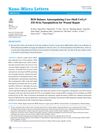 57 citations
,
March 2024 in “Nano-Micro Letters”
57 citations
,
March 2024 in “Nano-Micro Letters” The nanoplatform helps heal wounds by balancing bacteria-killing and inflammation-reducing functions.
19 citations
,
May 2001 in “Endocrinology” Mrp3 may aid in wound healing and hair growth.
 354 citations
,
February 2011 in “Genes & Development”
354 citations
,
February 2011 in “Genes & Development” EZH1 and EZH2 are crucial for healthy hair growth and skin repair.
 June 2022 in “Pflügers Archiv - European Journal of Physiology”
 The enzyme sEH is important for hair growth and its inhibition could help treat hair loss.
45 citations
,
January 1977 in “Advances in experimental medicine and biology” Hair follicles have an enzyme that converts arginine to citrulline in proteins.
101 citations
,
September 2006 in “Journal of Biological Chemistry” Human mitochondrial DNA polymerase makes very few errors, crucial for preventing degenerative diseases.