 September 2025 in “Journal of King Saud University - Science”
 Lophocereus marginatus extracts may help treat melanoma and stimulate hair growth.
January 2025 in “Indian Dermatology Online Journal” Hydroxychloroquine may cause nail discoloration in lupus patients.
 August 2024 in “Journal of Dermatology & Cosmetology”
 Acitretin effectively prevented skin cancer in a patient with late-onset Rothmund-Thomson syndrome.
July 2024 in “Journal of Investigative Dermatology” Topical melatonin may reduce skin aging by inhibiting certain cellular pathways.
 September 2023 in “Curēus”
 Alopecia areata may be linked to hearing problems, so patients should monitor their hearing.
August 2023 in “Journal of Investigative Dermatology” Senescent melanocytes in nevus skin boost hair growth.
 June 2023 in “JAAD Case Reports”
 A man had a rare skin cancer that looked like a bald spot.
 April 2023 in “Tropical Animal Health and Production”
 Giving melatonin to sheep before the non-breeding season can improve their chances of reproducing in northwest Mexico.
 April 2023 in “Australasian Journal of Dermatology”
 Lentiginous melanoma is most common on the face, especially the nose, cheek, and pre-auricular areas, with men more likely to have it on the scalp, ears, upper back, and trapezius, and women on the cheek and anterior arm. Sun damage is a key factor in its formation.
November 2022 in “Skin Appendage Disorders” PT-20 did not significantly improve gray hair repigmentation.
 November 2021 in “World Family Medicine Journal /Middle East Journal of Family Medicine”
 The document's conclusion cannot be provided because the document is not readable or understandable.
May 2019 in “CINECA IRIS Institutial Research Information System (University of Genoa)” MITF+ melanoma patients are more likely to have multiple melanomas and unique skin patterns.
December 2018 in “Dermatologic Surgery”  September 2017 in “Journal of Investigative Dermatology Symposium Proceedings”
 Non-melanoma skin cancer in darker-skinned people can be misdiagnosed, so doctors need to be more aware to diagnose it correctly and early.
 April 2016 in “Journal of The American Academy of Dermatology”
 People with certain allergic conditions or higher white blood cell counts have more severe hair loss, and treating hair and nail side effects early in melanoma therapy can improve quality of life.
 April 2016 in “Journal of Investigative Dermatology”
 Decreasing MIG6 can increase the movement and invasiveness of MEK-inhibited mutant NRAS melanoma, particularly when stimulated by EGF.
January 2016 in “Xumu Shouyi Xuebao”  January 2014 in “Pathology”
 Early subungual melanoma might be treated with less aggressive surgery because it invades the skin under the nail more slowly.
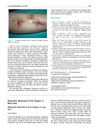 November 2012 in “Actas Dermo-Sifiliográficas”
 An 86-year-old man had a rare tongue melanoma but refused treatment, showing the need for early cancer detection and treatment.
 January 2012 in “heiDOK (Heidelberg University)”
 Dormant melanoma cells in mice interact minimally with memory T cells due to a suppressive tumor environment.
January 2006 in “Linchuang pifuke zazhi” Stem cell factor and certain proteins help melanocytes from hair follicles move and attach better, aiding vitiligo repigmentation.
September 2022 in “Scientific Reports” Scalp melanoma is more common and easier to diagnose early in people with androgenetic alopecia due to sun damage.
101 citations
,
April 2013 in “Science” Feather pigment patterns form through melanocyte arrangement and simple regulatory mechanisms.
31 citations
,
March 2014 in “Journal of the European Academy of Dermatology and Venereology” BRAF inhibitors for melanoma often cause skin side effects, but they can be managed with proper care.
 29 citations
,
April 2019 in “Acta neuropathologica communications”
29 citations
,
April 2019 in “Acta neuropathologica communications” Stopping mitochondrial respiration can prevent brain cancer spread in skin cancer patients, and plant compound β-sitosterol could help achieve this.
 21 citations
,
February 2013 in “Clinics in Dermatology”
21 citations
,
February 2013 in “Clinics in Dermatology” New treatments for advanced skin cancer are improving patient outcomes, but drug resistance and finding the right treatment combinations are still big challenges.
20 citations
,
October 2019 in “JAMA Otolaryngology–Head & Neck Surgery” Head and neck melanoma cases rose by 51.1% in young males aged 15-39 from 1995 to 2014.
14 citations
,
December 2009 in “Der Hautarzt” 12 citations
,
September 2022 in “Frontiers in Genetics” Enhancing CD8+ T cell function to induce ferroptosis in tumor cells may help treat skin melanoma.
11 citations
,
February 2023 in “Journal of Investigative Dermatology” Low m6Ascores in melanoma predict better survival and response to immunotherapy.