88 citations
,
January 2001 in “Dermatology” EE/CMA is more effective than EE/LNG in reducing acne.
 December 2011 in “Ophthalmology”
 Demodex may be linked to blepharitis, and treatments like tea tree oil and ivermectin can help.
 8 citations
,
June 2018 in “ACTA SCIENTIAE VETERINARIAE”
8 citations
,
June 2018 in “ACTA SCIENTIAE VETERINARIAE” A maned wolf was successfully treated for a fungal infection, highlighting the need to understand such diseases for conservation.
Essential oils can help hair grow and are safer and more accessible than other treatments.
 January 2024 in “Deleted Journal”
 Thuja plants have medicinal properties and potential for developing new therapies.
Ceiba leaf extracts significantly speed up hair growth.
November 2025 in “Quantum Wellness : Jurnal Ilmu Kesehatan” Pacing tawar leaves may help treat itching, insect bites, and promote hair growth.
 19 citations
,
June 2007 in “Veterinary Dermatology”
19 citations
,
June 2007 in “Veterinary Dermatology” Amitraz effectively treated sarcoptic mange in three alpacas.
The nutraceutical with rosemary may reduce inflammation in dog skin.
May 2019 in “Small Animal Dermatology” The dog had a good prognosis with proper treatment and cleaning.
 3 citations
,
December 2021 in “Journal of medicinal plants”
3 citations
,
December 2021 in “Journal of medicinal plants” Halocnemum strobilaceum has potential health benefits and uses, including anticancer and antimicrobial properties.
 June 2024 in “Infection and Drug Resistance”
 An adult woman with scalp infection recovered after antifungal treatment, with no return of symptoms.
 1 citations
,
October 2024 in “Dermatology Practical & Conceptual”
1 citations
,
October 2024 in “Dermatology Practical & Conceptual” Both rosemary extract and 2% ketoconazole lotions effectively treat seborrheic dermatitis and improve quality of life.
1 citations
,
January 2023 in “Chemical Engineering Journal” December 2025 in “Dietetics” European olive products are beneficial for skin care and are expected to become more important.
VCFO effectively treats fungal infections in cats and promotes hair regrowth.
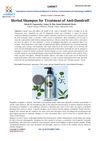
January 2025 in “Zenodo (CERN European Organization for Nuclear Research)” The herbal shampoo with neem, onion, and flaxseed oils effectively promotes hair health and is a stable, eco-friendly alternative to synthetic products.
 February 2023 in “International Journal of Advanced Research in Science, Communication and Technology”
 Herbal shampoos with Neem and Tulsi might be safer and more effective for controlling dandruff.
5 citations
,
January 2020 in “Veterinary Dermatology” Enilconazole and lime sulfur work well for whole body treatment, while other products need frequent application for effective antifungal action.
 March 2022 in “Journal of health sciences and medicine”
 Azelaic acid and permethrin both effectively kill the skin mite Demodex folliculorum in a lab setting.
September 2023 in “Journal of the American Academy of Dermatology” The cleanser gel significantly reduces facial oiliness.
 January 2024 in “Middle East Journal of Applied Science & Technology”
 The herbal body lotion is a good natural alternative to synthetic skincare, providing smoothness and hydration without irritation.
November 2025 in “Revista Multidisciplinar do Nordeste Mineiro” Rosemary oil can help hair growth and is as effective as some traditional treatments but with fewer side effects.
 4 citations
,
March 2016 in “DOAJ (DOAJ: Directory of Open Access Journals)”
4 citations
,
March 2016 in “DOAJ (DOAJ: Directory of Open Access Journals)” Clove oil in emu oil helps condition hair and promote hair growth.
65 citations
,
September 2014 in “BMC genomics” Different hair types in mammals are linked to variations in specific protein genes, with changes influenced by their living environments.
50 citations
,
February 2013 in “BMC evolutionary biology” Cetaceans lost hair due to changes in the Hr and FGF5 genes.
25 citations
,
August 2017 in “Frontiers in Zoology” Marine mammals lost many α-keratin genes, aiding their adaptation to aquatic life by becoming hairless.
9 citations
,
May 2002 in “PubMed” Retinoic acid affects skin and hair health by working with specific receptors, and its absence can lead to hair loss and skin changes.

Bee pollen, green tea, essential oils, and various plant extracts improve skin and hair health.
 57 citations
,
August 1998 in “The journal of small animal practice/Journal of small animal practice”
57 citations
,
August 1998 in “The journal of small animal practice/Journal of small animal practice” Malassezia-associated dermatitis can cause itching in cats with feline paraneoplastic alopecia.