 2 citations
,
October 2025 in “Discover Immunity.”
2 citations
,
October 2025 in “Discover Immunity.” Alopecia Areata is an autoimmune disease causing hair loss, with no cure yet, but research may lead to new treatments.
 2 citations
,
February 2023 in “Research Square (Research Square)”
2 citations
,
February 2023 in “Research Square (Research Square)” The scaffold effectively prevents melanoma relapse and aids wound healing.
 2 citations
,
September 2022 in “Organoid”
2 citations
,
September 2022 in “Organoid” A new method was developed to efficiently grow skin hair follicles from stem cells, potentially aiding alopecia treatment.
 2 citations
,
January 2022 in “Eduvest”
2 citations
,
January 2022 in “Eduvest” A teenage girl with a fungal scalp infection got better with antifungal and allergy medication, and special shampoo.
 2 citations
,
March 2019 in “Lasers in surgery and medicine”
2 citations
,
March 2019 in “Lasers in surgery and medicine” Higher light doses cause more damage to hair follicles, predicting better hair removal results.
 2 citations
,
January 2019 in “Springer eBooks”
2 citations
,
January 2019 in “Springer eBooks” Segmental Vitiligo is a stable, early-onset form of vitiligo that responds well to early treatment and is ideal for repigmentation studies.
 2 citations
,
January 2017 in “Journal of Pigmentary Disorders”
2 citations
,
January 2017 in “Journal of Pigmentary Disorders” Vitiligo causes white skin patches and can lead to psychological stress.
 2 citations
,
October 2016
2 citations
,
October 2016 Chemotherapy and radiotherapy can cause skin side effects like rashes, hair loss, and nail changes, which are usually managed with conservative treatments.
 2 citations
,
July 2014 in “Our Dermatology Online”
2 citations
,
July 2014 in “Our Dermatology Online” Contact immunotherapy can cause vitiligo in patients with autoimmune conditions.
 2 citations
,
January 2014 in “Springer eBooks”
2 citations
,
January 2014 in “Springer eBooks” The book details skin conditions in older adults, their link to mental health, cancer treatment importance, hair loss remedies, and managing autoimmune and itchy skin.
 2 citations
,
January 2012 in “InTech eBooks”
2 citations
,
January 2012 in “InTech eBooks” Chemotherapy often causes hair loss, which usually grows back within 3 to 6 months, but there's no effective treatment to prevent it.
 2 citations
,
January 2000 in “Elsevier eBooks”
2 citations
,
January 2000 in “Elsevier eBooks” The document explains how hair is studied in forensics to identify its source and its role in criminal investigations.
 1 citations
,
September 2025 in “PLoS ONE”
1 citations
,
September 2025 in “PLoS ONE” Certain drugs may cause vitiligo, so patients should be monitored.
 1 citations
,
May 2025 in “Animal Bioscience”
1 citations
,
May 2025 in “Animal Bioscience” Four genes affect hair follicle density in goats.
 1 citations
,
January 2025 in “Frontiers in Pharmacology”
1 citations
,
January 2025 in “Frontiers in Pharmacology” Total glucosides of paeony can help treat skin conditions but need more research for clinical use.
 1 citations
,
September 2024 in “Quality in Sport”
1 citations
,
September 2024 in “Quality in Sport” Hair graying can be delayed or prevented with antioxidants, lifestyle changes, and genetic therapy.
1 citations
,
October 2023 in “PloS one” Cosmetic hair treatments can increase hair testosterone levels, while natural hair color does not affect it.
 1 citations
,
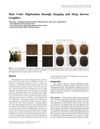
January 2022 in “Electronic Imaging”
1 citations
,
January 2022 in “Electronic Imaging” A new method accurately captures and renders hair color for virtual reality and hair dye use.
 1 citations
,
January 2020 in “Elsevier eBooks”
1 citations
,
January 2020 in “Elsevier eBooks” Forensic medicine is crucial for justice and needs continuous innovation and technology integration.
 1 citations
,
December 2018 in “IntechOpen eBooks”
1 citations
,
December 2018 in “IntechOpen eBooks” Human hair shows promise for non-invasive medical testing, but more research is needed to standardize its use.
 1 citations
,
May 2018 in “International Journal of Molecular Biology Open Access”
1 citations
,
May 2018 in “International Journal of Molecular Biology Open Access” Hydrogen peroxide is a major risk factor for melanoma in swimmers, more than UV light.
 1 citations
,
May 2017 in “Journal of Stem Cell Research & Therapeutics”
1 citations
,
May 2017 in “Journal of Stem Cell Research & Therapeutics” Pluripotent stem cells show promise for treating skin color loss disorders like vitiligo.
 1 citations
,
March 2017 in “Archives of Plastic Surgery”
1 citations
,
March 2017 in “Archives of Plastic Surgery” A new method using gentian violet dye makes it easier to see and work with white hair in hair transplant surgeries.
 1 citations
,
July 2015 in “British Journal of Dermatology”
1 citations
,
July 2015 in “British Journal of Dermatology” Imiquimod improved skin pigmentation in most patients with xeroderma pigmentosum and may prevent further skin cancer, but some treatments can have side effects.
 1 citations
,
January 2015 in “Journal of Pigmentary Disorders”
1 citations
,
January 2015 in “Journal of Pigmentary Disorders” Melasma is a skin condition linked to female hormones, genetics, UV exposure, and certain medications, but not to pituitary, adrenal, or thyroid diseases.
 1 citations
,
December 2014 in “Scanning”
1 citations
,
December 2014 in “Scanning” Multiphoton microscopy effectively images rabbit skin structures in detail without staining and shows differences from human skin.
 1 citations
,
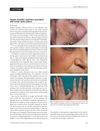
February 2004 in “Journal of The European Academy of Dermatology and Venereology”
1 citations
,
February 2004 in “Journal of The European Academy of Dermatology and Venereology” Hair loss improved with treatment and successful transplant.
 1 citations
,
May 2001 in “Proceedings of SPIE, the International Society for Optical Engineering/Proceedings of SPIE”
1 citations
,
May 2001 in “Proceedings of SPIE, the International Society for Optical Engineering/Proceedings of SPIE” The system helps monitor hair properties using RGB video microscopy.
 July 2026 in “Organoid Research”
 A unified framework is needed to improve skin organoid construction for research and clinical use.
 June 2026 in “Discover Immunity.”
 Mesenchymal stem cells help improve skin healing and rejuvenation.