Search
for
Sort by
Research
600-630 / 1000+ resultsresearch Anti-oxidant,Moisturizing and Whitening Effect of Collagen and Its Compound
Collagen reduces skin melanin, boosts antioxidants, and improves skin moisture.

research Supplementary Material for: Life of the B10 mouse: a view from the hair follicles and tissue stem cells
Mouse skin and hair aging starts at 200 days, with changes in hair follicles and more white hairs as signs of aging.
research Obstetric and Gynecologic Dermatology
A pregnant woman's skin condition improved after giving birth, possibly due to high estrogen levels during pregnancy.
research Wnt/β-catenin signaling pathway activates melanocyte stem cells in vitro and in vivo
The Wnt/β-catenin pathway can activate melanocyte stem cells and may help regenerate hair follicles.
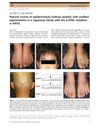
research Natural course of epidermolysis bullosa simplex with mottled pigmentation in a Japanese family with the p.P25L mutation in KRT 5
The p.P25L mutation in the KRT5 gene causes a rare skin condition that worsens over time and may lead to hair loss starting in young adulthood.
research Stimulation of melanogenesis by Carthamus tinctorius floret extract in B16F10 murine melanoma cells
Safflower extract increases melanin production in certain skin cells without harming them.
research FilaggrinHigh melanomas exhibit active FGFR and allergic signatures with impaired GNA14 and Th1 signatures
FilaggrinHigh melanomas have active FGFR signaling and weak GNA14 and Th1 signatures.
research Review of human hair optical properties in possible relation to melanoma development
Certain types of human hair might help ultraviolet rays reach and damage cells, possibly leading to melanoma.
research Discrimination of Dysplastic Nevi from Common Melanocytic Nevi by Cellular and Molecular Criteria
Dysplastic nevi have unique gene expressions, making them distinct from common melanocytic nevi.
research Reversible Activation of c-Myc in Skin
Activating c-Myc in skin causes rapid cell growth and changes, but these effects are reversible.
research Dermatology in black skin
Black skin needs more focused dermatology research for better diagnosis and treatment.
research Mechanism of action and promising clinical application of melatonin from a dermatological perspective
Melatonin may help treat skin conditions.
research Advancing the Understanding and Management of Segmental Vitiligo and Co‐Existing Pigmentary Disorders
Better diagnostic tools and treatment guidelines are needed for segmental vitiligo and related pigment issues.
research Decision letter: Crosstalk with keratinocytes causes GNAQ oncogene specificity in melanoma
The microenvironment affects the behavior and survival of melanocytes with the GNAQ oncogene in melanoma.
research Einfluss von Melatonin auf die Physiologie des Haares
research Melanosis Coli After Long-Term Ingestion of Cape Aloe
Long-term Cape Aloe use causes harmless colon pigmentation that can help detect polyps.
research Diversity of human skin three-dimensional organotypic cultures
research Transglutaminase-mediated cross-linking in mammalian epidermis

research High proliferation and delamination during skin epidermal stratification
High proliferation and cell delamination drive early skin development, while later stages may not rely on cell division orientation.

research Epidemiology of skin cancer in the mature patient
Older adults have a high rate of skin cancers like basal cell carcinoma and melanoma, mainly due to UV exposure and age.
research A Note on Postinflammatory Hair Darkening
Hair can darken after inflammation and then return to its original color.
research Photoageing of Hair Fiber and Photoprotection
Sunlight damages hair, causing cuticle loss, protein changes, and discoloration.
research Tyrosine kinase inhibition and grey hair
Imatinib can repigment grey hair, while SU11428 can cause temporary hair depigmentation.
research 백모 모구의 유전자 발현 프로파일링을 통한 백모화 기전 분석
Graying hair is caused by changes in gene expression affecting cell functions.
research The Serine Protease Activity of Corin Is Required for Normal Pigment Type Switching
research What’s new in the treatment of vitiligo
New treatments for vitiligo show promise but still face challenges, especially for hands and feet.
research Brain and muscle Arnt-like protein-1 (BMAL1) controls circadian cell proliferation and susceptibility to UVB-induced DNA damage in the epidermis
BMAL1 controls skin cell growth and UV damage risk, peaking at night.

research Melan-A Positive cells significantly expressed in immune-targeted follicles of Alopecia Areata
Melanocytes may trigger the immune response in alopecia areata, affecting hair regrowth.
research Ultrastructure of the contrasting types of keratinization seen in the tail epidermis of the laboratory mouseMus musculus
Mouse tail skin has different keratinization near hair follicles and scales.