 9 citations
,
March 2022 in “Frontiers in Immunology”
9 citations
,
March 2022 in “Frontiers in Immunology” Foxp3+ Regulatory T Cells are important for immunity and tolerance, affect hair growth and wound healing, and their dysfunction can contribute to obesity-related diseases and other health issues.
47 citations
,
August 2012 in “Cell Cycle” Stem cells in hair follicles can become neurons and other cells, especially in the upper part, useful for nerve repair.
14 citations
,
July 2019 in “Journal of Investigative Dermatology” Integrin-linked kinase is crucial for melanoblasts to properly colonize the skin.
September 2024 in “Journal of Investigative Dermatology” VIP reduces hair pigmentation by decreasing melanin production.
 10 citations
,
September 2021 in “International Journal of Nanomedicine”
10 citations
,
September 2021 in “International Journal of Nanomedicine” Tiny particles called extracellular vesicles show promise for treating skin conditions and promoting hair growth.
57 citations
,
April 2009 in “Differentiation” SDF-1/CXCL12 and its receptor CXCR4 are crucial for melanocyte movement in mouse hair follicles.
 65 citations
,
September 2004 in “The American journal of pathology”
65 citations
,
September 2004 in “The American journal of pathology” Blocking BMP signaling causes hair loss and disrupts hair growth cycles.
 3 citations
,
November 2023 in “Frontiers in cell and developmental biology”
3 citations
,
November 2023 in “Frontiers in cell and developmental biology” Melanocytes are important for skin and hair color and protect the skin from UV damage.
 1 citations
,
January 2014 in “Elsevier eBooks”
1 citations
,
January 2014 in “Elsevier eBooks” Melanocytes produce melanin; their defects cause vitiligo and hair graying, with treatments available for vitiligo.
 210 citations
,
July 1993 in “The journal of investigative dermatology/Journal of investigative dermatology”
210 citations
,
July 1993 in “The journal of investigative dermatology/Journal of investigative dermatology” Hair color production in mice is closely linked to the hair growth phase and may also influence hair growth itself.
 109 citations
,
July 1993 in “The journal of investigative dermatology/Journal of investigative dermatology”
109 citations
,
July 1993 in “The journal of investigative dermatology/Journal of investigative dermatology” Hair color production is closely linked to the active growth phase of hair in mice and may also influence hair growth itself.
 8 citations
,
August 2015 in “Journal of dermatological science”
8 citations
,
August 2015 in “Journal of dermatological science” Rhododendrol in skin-whitening products can cause skin depigmentation and immune reactions.
 7 citations
,
June 2021 in “Cell Proliferation”
7 citations
,
June 2021 in “Cell Proliferation” Low oxygen levels improve the function of hair and skin cells when they are in direct contact.
 6 citations
,
April 2013 in “Current Dermatology Reports”
6 citations
,
April 2013 in “Current Dermatology Reports” Dermatologists are crucial for managing skin side effects in metastatic melanoma patients using vemurafenib and ipilimumab.
 66 citations
,
December 2014 in “Nature Communications”
66 citations
,
December 2014 in “Nature Communications” Fibroblasts can be turned into melanocytes for potential skin treatments.
 June 2020 in “bioRxiv (Cold Spring Harbor Laboratory)”
 Activating β-catenin increases melanocytes and decreases Schwann cells.
 240 citations
,
April 2011 in “Pigment Cell & Melanoma Research”
240 citations
,
April 2011 in “Pigment Cell & Melanoma Research” Melanocyte stem cells in hair follicles are key for hair color and could help treat greying and pigment disorders.
 67 citations
,
November 2019 in “Nature Communications”
67 citations
,
November 2019 in “Nature Communications” Oncogenic melanocyte stem cells can develop into melanoma similar to human cases.
 5 citations
,
March 2019 in “Scientific Reports”
5 citations
,
March 2019 in “Scientific Reports” The technique can isolate cells to help treat skin pigmentation issues.
 April 2026 in “bioRxiv (Cold Spring Harbor Laboratory)”
 Hair follicles protect melanocytes from sun damage, helping them replenish skin.
 14 citations
,
April 2005 in “Experimental Dermatology”
14 citations
,
April 2005 in “Experimental Dermatology” Stressed fibroblasts greatly increase melanin production in hair, skin, and eye cells, mainly due to a growth factor called bFGF.
 2 citations
,
February 2017 in “International Journal of Molecular Sciences”
2 citations
,
February 2017 in “International Journal of Molecular Sciences” Erdr1 could be a new marker for diagnosing hair loss.
 1 citations
,
January 2019 in “Journal of Embryology & Stem Cell Research”
1 citations
,
January 2019 in “Journal of Embryology & Stem Cell Research” MSCs help rejuvenate skin by promoting cell growth and reducing inflammation.
 November 2025 in “EXPERIMENTAL ANIMALS”
 Stingless bee propolis may help regenerate hair follicles and improve pigment function in chemotherapy-induced hair loss.
 January 2006 in “Carl von Ossiezky University of Oldenburg”
 Unpigmented keratinocytes absorb substances faster, while melanocytes bind more strongly to melanin.
 9 citations
,
September 2021 in “Stem Cell Reviews and Reports”
9 citations
,
September 2021 in “Stem Cell Reviews and Reports” Hair follicle stem cells from aged eyelid skin can become corneal endothelial-like cells for potential eye treatments.
 2 citations
,
January 2002
2 citations
,
January 2002 Melanin and melanocytes contribute to the brown pigmentation in stasis dermatitis.
 42 citations
,
October 2011 in “Seminars in Cell & Developmental Biology”
42 citations
,
October 2011 in “Seminars in Cell & Developmental Biology” Eph/ephrin signaling is important for skin cell behavior and could be targeted to treat skin diseases.
 11 citations
,
October 2017 in “Oncotarget”
11 citations
,
October 2017 in “Oncotarget” Gsdma3 affects hair growth by controlling Wnt5a, which influences hair cell development.
 2 citations
,
March 2018 in “The Journal of Dermatology”
2 citations
,
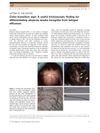
March 2018 in “The Journal of Dermatology” The "color-transition sign" helps tell apart alopecia areata incognita from telogen effluvium by looking at hair color changes.