 1 citations
,
September 2022 in “International Journal of Research Publication and Reviews”
1 citations
,
September 2022 in “International Journal of Research Publication and Reviews” Nanotechnology in hair care improves results but has risks.
 1 citations
,
January 2020 in “Research Square (Research Square)”
1 citations
,
January 2020 in “Research Square (Research Square)” Inherited color dilution in Rex rabbits is linked to DNA methylation changes in hair follicles.
 1 citations
,
September 2017 in “Journal of Investigative Dermatology”
1 citations
,
September 2017 in “Journal of Investigative Dermatology” Backhousia citriodora leaf extract effectively reduces oily skin across different ethnic groups.
 1 citations
,
December 2013 in “Journal of Evolution of Medical and Dental Sciences”
1 citations
,
December 2013 in “Journal of Evolution of Medical and Dental Sciences” Alopecia areata causes patchy hair loss due to unknown factors, affecting all ages and genders.
 1 citations
,
December 2005 in “Therapeutische Umschau”
1 citations
,
December 2005 in “Therapeutische Umschau” The document concludes that protecting skin from the sun, avoiding smoking, and using treatments like Minoxidil and Finasteride can help manage skin and hair aging.
 January 2026 in “Frontiers in Drug Discovery”
 Transforming skin disease treatment requires new strategies, better drug models, and patient-focused research.
 December 2025 in “Journal of Education Health and Sport”
 LED therapy is safe and effective for improving skin health and appearance.
 October 2025 in “Animal Bioscience”
 Key genes linked to important traits in Chinese sheep and goats have been identified, but challenges remain in breeding improvements.
 August 2025 in “Research Square (Research Square)”
 High TNF-α levels may increase hair loss risk after PRP therapy.
 June 2025 in “Saratov Medical Journal”
 Ongoing research and innovation are crucial for improving skin care and treatment.
 January 2025 in “International Journal of Advanced Research in Science Communication and Technology”
 Polyherbal hair dyes are safer and more eco-friendly than chemical dyes.
 November 2024 in “Image Analysis & Stereology”
 The method improves hair image segmentation accuracy while reducing annotation costs.
 August 2024 in “Qucosa (Saxon State and University Library Dresden)”
 This study explores the role of dermal white adipose tissue (dWAT) in regulating acute skin inflammation, particularly through the IL-33-dependent expression of interleukin 4 and 13 in myeloid cells. Using an Imiquimod (IMQ) mouse model, the research shows that activated dWAT releases proinflammatory mediators that influence myeloid cells, crucial for inflammation regulation and tissue repair. IL-33 from dWAT is identified as a key stimulator of these cytokines, but obesity impairs this pathway, reducing IL-4 and IL-13 expression, which may contribute to chronic inflammation in obesity. These findings have implications for inflammatory conditions like atopic dermatitis and diabetic wound healing.
 August 2024 in “New Zealand Medical Student Journal”
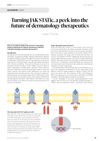
 JAK inhibitors show promise for treating skin diseases effectively and safely.
 July 2024 in “Egyptian Journal of Medical Human Genetics”
 These gene variations are not linked to alopecia areata in Egyptians.
 July 2024 in “International Journal of Medical Arts”
 Latanoprost is more effective than minoxidil for treating alopecia areata.

Photobiomodulation effectively improves skin and hair conditions with minimal side effects.
 January 2024 in “International Research Journal of Modernization in Engineering Technology and Science”
 Fasting may reduce chemotherapy side effects.
 January 2024 in “Journal of Natural Remedies”
 Solanum nigrum extract may help regrow hair.
 December 2023 in “Research Square (Research Square)”
 These specific gene polymorphisms are not linked to Alopecia Areata in Egyptians.
 December 2023 in “bioRxiv (Cold Spring Harbor Laboratory)”
 Aged individuals heal wounds less effectively due to specific immune cell issues.
 October 2023 in “bioRxiv (Cold Spring Harbor Laboratory)”
 A protein called EGFR protects hair follicle stem cells, and when it's disrupted, hair follicles can be damaged, but blocking certain pathways can restore hair growth.
 October 2023 in “Scientific reports”
 Dexamethasone affects hair growth by altering levels of proteins that either promote or inhibit hair follicle growth.
 September 2022 in “bioRxiv (Cold Spring Harbor Laboratory)”
 A new staining method shows a special area in the hair's skin layer with lots of proteoglycans.
January 2020 in “Revista Dermatológica Centro Uraga” Recognizing trichoscopic features is crucial for diagnosing various hair loss conditions.
 January 2019 in “LASER THERAPY”
 Laser technologies improve medical treatments and outcomes.
 January 2019 in “Revista Medicina Cutánea Ibero-Latino-Americana”
 Vitamin D is important for skin health and can help improve various skin conditions.

Microneedle technology is effective for skin rejuvenation and enhancing cosmeceutical delivery, with ongoing innovation and increasing commercialization.
 April 2018 in “bioRxiv (Cold Spring Harbor Laboratory)”
 Certain small molecules can help regrow hair by turning on the body's cell cleanup process.
 September 2017 in “Journal of Investigative Dermatology”
 Stabilizing HIF-1A in hair follicles may reduce oxidative stress and promote hair growth by increasing glycolysis.