86 citations
,
February 2012 in “Journal of Clinical Investigation” Stem cells in hair follicles are diverse and change throughout the hair cycle.
70 citations
,
May 2008 in “The journal of investigative dermatology/Journal of investigative dermatology” Notch/RBP-J signaling is crucial for proper placement and timing of melanocyte development in hair follicles.
 67 citations
,
August 2013 in “International Journal of Cosmetic Science”
67 citations
,
August 2013 in “International Journal of Cosmetic Science” Hair greying is caused by oxidative stress damaging hair follicles and melanocytes.
 43 citations
,
February 2008 in “Journal of cutaneous pathology”
43 citations
,
February 2008 in “Journal of cutaneous pathology” Melanocyte precursors in human fetal skin follow a specific migration pattern and some remain in the skin's deeper layers.
37 citations
,
October 2017 in “Advanced drug delivery reviews” The review suggests that there are various treatments to help restore skin color after severe burns.
 31 citations
,
April 2019 in “Cell reports”
31 citations
,
April 2019 in “Cell reports” Patient-derived melanocytes can potentially treat vitiligo by restoring skin pigmentation.
26 citations
,
January 2018 in “Annals of dermatology/Annals of Dermatology” Hair graying may be caused by stem cell depletion from stress or melanocyte damage.
 22 citations
,
October 2021 in “Cold Spring Harbor Perspectives in Biology”
22 citations
,
October 2021 in “Cold Spring Harbor Perspectives in Biology” Three types of stem cells help maintain and repair skin, responding to health and environmental changes.
21 citations
,
December 2023 in “Journal of Investigative Dermatology” Hair graying is caused by damage and cell depletion but might be temporarily reversible with drugs and hormones.
 21 citations
,
January 2019 in “Experimental dermatology”
21 citations
,
January 2019 in “Experimental dermatology” Light therapy using helium-neon lasers can help restore skin color in vitiligo by promoting skin cell growth and movement.
 20 citations
,
January 2015 in “Current problems in dermatology”
20 citations
,
January 2015 in “Current problems in dermatology” Graying hair happens due to aging and might be delayed by new treatments.
 19 citations
,
April 2016 in “Experimental Dermatology”
19 citations
,
April 2016 in “Experimental Dermatology” Melanoblasts migrate to the skin using various pathways, and understanding this process could help with skin disease research.
18 citations
,
October 2022 in “Biomedicines” Regenerative treatments for vitiligo show promise but need more research for long-term safety and effectiveness.
 16 citations
,
July 2016 in “Journal of Dermatological Science”
16 citations
,
July 2016 in “Journal of Dermatological Science” Regenerated hairs can regain their color if the wound occurs during a certain stage of hair growth, and this process is helped by specific skin cells and proteins.
15 citations
,
January 2013 in “Dermatologic Surgery” Epithelial grafting can effectively repigment white hair in vitiligo patients.
14 citations
,
July 2022 in “Nutrients” Vitamin A is important for healthy skin and hair, influencing hair growth and skin healing, but UV light reduces its levels.
 13 citations
,
September 2017 in “Oncotarget”
13 citations
,
September 2017 in “Oncotarget” A certain signaling pathway in mice, when increased, causes hair to gray by depleting the cells that give hair its color.
11 citations
,
September 2024 in “Journal of the European Academy of Dermatology and Venereology” Hair regrows faster in alopecia areata than skin re-pigments in vitiligo due to differences in stem cells and treatment effects.
10 citations
,
February 2012 in “Journal of Clinical Investigation” Advancements in skin and hair biology improve dermatology care and cosmetic treatments.
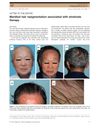 9 citations
,
July 2016 in “The Journal of Dermatology”
9 citations
,
July 2016 in “The Journal of Dermatology” An 82-year-old man's white hair regained color after taking etretinate for psoriasis.
 7 citations
,
May 2020 in “Trends in molecular medicine”
7 citations
,
May 2020 in “Trends in molecular medicine” The document concludes that the immune-inhibitory environment of the hair follicle may prevent melanoma development.
 7 citations
,
January 2020 in “Nature”
7 citations
,
January 2020 in “Nature” Stress turns hair white by depleting color-giving cells in hair follicles through a specific neurotransmitter related to the body's stress response.
 5 citations
,
February 2022 in “Frontiers in physiology”
5 citations
,
February 2022 in “Frontiers in physiology” Hair graying is influenced by factors like nerves, fat cells, and immune cells, not just hair follicles.
 3 citations
,
January 2019 in “Advances in stem cells and their niches”
3 citations
,
January 2019 in “Advances in stem cells and their niches” Dermal papilla cells are key for hair growth and color, influencing hair type and size, and their interaction with stem cells could help treat hair loss and color disorders.

New treatments for vitiligo may focus on protecting melanocyte stem cells from stress and targeting specific pathways involved in the condition.
 2 citations
,
May 2023 in “Photobiomodulation, photomedicine, and laser surgery”
2 citations
,
May 2023 in “Photobiomodulation, photomedicine, and laser surgery” Light therapy is effective and safe for treating skin color disorders like vitiligo and dark spots.
2 citations
,
March 2020 in “Developmental cell” Stress can cause hair to turn gray by depleting pigment-producing cells through the release of a stress hormone.
 2 citations
,
January 2017 in “Journal of Pigmentary Disorders”
2 citations
,
January 2017 in “Journal of Pigmentary Disorders” Genetics, stress, and health issues can cause early hair greying, which affects self-esteem, and there's no cure, only hair dye.
 1 citations
,
May 2021 in “Research Square (Research Square)”
1 citations
,
May 2021 in “Research Square (Research Square)” Micro-injury can help regrow hair and repigment vitiligo by activating specific cells.
 1 citations
,
September 2013 in “Elsevier eBooks”
1 citations
,
September 2013 in “Elsevier eBooks” Hair ages and thins due to factors like inflammation and stress, and treatments like antioxidants and hormones might improve hair health.