 5 citations
,
February 2022 in “Frontiers in physiology”
5 citations
,
February 2022 in “Frontiers in physiology” Hair graying is influenced by factors like nerves, fat cells, and immune cells, not just hair follicles.

The human scalp has different types of pigment cells in hair follicles with varying abilities to produce pigment.
17 citations
,
May 1969 in “American Journal of Physical Anthropology” The silver marmoset's skin is thin, lacks pigment cells, and has unique features like keratinized spines and specialized glands.
January 2008 in “Linchuang pifuke zazhi” Betamethasone activates and increases the growth of certain skin cells from hair follicles.
30 citations
,
January 2005 in “Elsevier eBooks” Vitamin D affects skin and hair by influencing cell behavior and melanin production.
1 citations
,
September 2004 in “Experimental Dermatology” MC-1R is present in skin cells and may help reduce inflammation.
37 citations
,
October 2017 in “Advanced drug delivery reviews” The review suggests that there are various treatments to help restore skin color after severe burns.
11 citations
,
August 1987 in “Archives of Dermatology” Langerhans' cells are not involved in hair depigmentation in these mice.
4 citations
,
January 2011 in “European journal of dermatology/EJD. European journal of dermatology” A boy had a rare scalp condition with thickened skin and different-colored hair.
15 citations
,
April 2011 in “The journal of investigative dermatology/Journal of investigative dermatology” A3B5 can reduce skin pigmentation and slow melanoma growth.
 249 citations
,
April 2002 in “The FASEB journal”
249 citations
,
April 2002 in “The FASEB journal” Human skin can make serotonin and melatonin.
 March 2026 in “Preprints.org”
 Plerixafor may help treat pigmentation disorders by promoting skin repigmentation.
 4 citations
,
March 2013 in “The American Journal of Cosmetic Surgery”
4 citations
,
March 2013 in “The American Journal of Cosmetic Surgery” Melanin absorbing light is necessary but not enough for effective hair removal by light treatment.
 April 2023 in “Journal of Investigative Dermatology”
 An automated method accurately assesses melanoma risk using 3D body images to analyze skin traits.
260 citations
,
January 2020 in “Nature” Stress can cause hair to turn gray by depleting stem cells.
August 2023 in “Journal of Investigative Dermatology” Senescent melanocytes in nevus skin boost hair growth.
86 citations
,
August 2000 in “Pigment cell research” Melanocyte activity in hair follicles is linked to the hair growth cycle, being active in growth phases and inactive in rest phases.
January 2022 in “Clinical Cases in Dermatology” A man developed a unique rash on his neck after taking niacinamide, and doctors recommend considering niacinamide as a cause for similar rashes and using dermatoscopy for diagnosis.
 September 2022 in “Journal of medical sciences and health”
 A person had two different benign skin tumors, a trichoadenoma and melanocytic naevi, at the same time but in different places on the face.
17 citations
,
January 2015 in “Dermatology online journal” A patient's grey hair regained color during treatment with adalimumab.
2 citations
,
October 1974 in “Archives of Dermatology” The woman's skin condition persisted for 20 years despite treatments.
4 citations
,
October 2013 in “PLoS ONE” Vemurafenib causes significant skin side effects, requiring regular dermatologist care and sun protection.
April 2024 in “Russian Journal of Preventive Medicine” Skin changes can signal diabetes and metabolic issues, aiding early diagnosis and treatment.
 10 citations
,
February 2006 in “Archives of dermatology”
10 citations
,
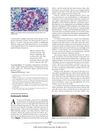
February 2006 in “Archives of dermatology” A man's chest hair turned white after a shingles infection, possibly due to virus-damaged pigment cells.
 5 citations
,
March 2019 in “Scientific Reports”
5 citations
,
March 2019 in “Scientific Reports” The technique can isolate cells to help treat skin pigmentation issues.
 March 2026 in “International Journal of Science and Research (IJSR)”
 Melatonin protects skin and supports hair growth.
 August 2023 in “International Journal of Molecular Sciences”
 The human scalp hair bulb contains different types of melanocytes with varying abilities to produce melanin.
2 citations
,
May 1991 in “PubMed” Nevus comedonicus is a rare skin condition causing dark bumps, treatable with retinoic acid or surgery.
14 citations
,
September 2017 in “Hereditas” Genes influence horse coat color and may help understand human skin conditions.

The digital system for measuring melasma shows promise but needs more development for better accuracy and automation.