9 citations
,
June 2017 in “The American journal of dermatopathology/American journal of dermatopathology” The study found increased skin pigmentation and variable melanocyte density in a patient with Addison's disease.
 25 citations
,
June 2015 in “Clinical, Cosmetic and Investigational Dermatology”
25 citations
,
June 2015 in “Clinical, Cosmetic and Investigational Dermatology” Microneedling helps increase the absorption of a melanin product into hair follicles, which may improve laser hair removal effectiveness.
3 citations
,
June 2025 in “Stem Cell Research & Therapy” Hair follicle-derived melanocyte transplant could effectively treat vitiligo by restoring skin color.
 January 2024 in “Clinical, cosmetic and investigational dermatology”
 Dermatologists should customize cosmetic treatments for dark-skinned patients to minimize risks and complications.
 59 citations
,
April 2016 in “Cell Reports”
59 citations
,
April 2016 in “Cell Reports” EdnrB signaling helps melanocyte stem cells regenerate and could be targeted to treat pigmentation issues.
75 citations
,
January 2003 in “Journal of Investigative Dermatology”  10 citations
,
May 2012 in “PloS one”
10 citations
,
May 2012 in “PloS one” Low ERCC3 gene activity is linked to non-pigmented hair growth.
1 citations
,
July 2024 in “Journal of Investigative Dermatology” MPZL3 protein affects hair growth cycles and could help manage hair loss.
 April 2018 in “The journal of investigative dermatology/Journal of investigative dermatology”
 The model can effectively test gene functions and drug responses in human skin.
 December 2023 in “Journal of ethnopharmacology”
 Tribuloside can increase skin pigmentation by enhancing melanin production and distribution.
37 citations
,
October 2017 in “Advanced drug delivery reviews” The review suggests that there are various treatments to help restore skin color after severe burns.
 April 2016 in “Journal of Investigative Dermatology”
 SOX4 is crucial for the development of melanoma.
 April 2019 in “Journal of Investigative Dermatology”
 More dermatologists in an area are linked to better survival rates for melanoma.
 23 citations
,
November 2015 in “Phytotherapy Research”
23 citations
,
November 2015 in “Phytotherapy Research” Certain herbal compounds, especially from bitter melon, can inhibit cancer growth and promote hair growth by blocking PAK1.
 16 citations
,
July 2016 in “Journal of Dermatological Science”
16 citations
,
July 2016 in “Journal of Dermatological Science” Regenerated hairs can regain their color if the wound occurs during a certain stage of hair growth, and this process is helped by specific skin cells and proteins.
 April 2023 in “Journal of Investigative Dermatology”
 The research shows that skin cancer likely originates from hair follicles and that certain cell populations expand to promote skin cancer growth.

SLC24A5 shows a clear selective sweep, but no link to UV radiation intensity.
49 citations
,
July 2000 in “Journal of Histochemistry & Cytochemistry” POMC-derived peptides are important for skin functions like immune response and stress management.
7 citations
,
January 2008 in “Indian Journal of Dermatology” Pigmentary mosaicism causes skin color changes and can affect multiple body systems, but has no cure.
17 citations
,
November 2000 in “Journal of Investigative Dermatology” ZPK helps skin cells mature and may affect skin health.
June 2026 in “Indian Dermatology Online Journal” A supernumerary nipple was correctly identified using dermoscopy, avoiding misdiagnosis.
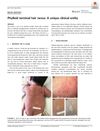 August 2018 in “Pediatric Dermatology”
 A baby had a unique skin condition with a pale patch and surrounding dark hairs, not linked to other health issues.
 January 2011 in “Yearbook of Dermatology and Dermatologic Surgery”
 Moles on the scalp are more common in people with more body moles and atypical moles, but not linked to balding.
7 citations
,
June 2009 in “Journal of the European Academy of Dermatology and Venereology” Basement membrane changes in lichen planopilaris cause scarring and permanent hair loss.
 April 2023 in “Journal of Investigative Dermatology”
 An automated method accurately assesses melanoma risk using 3D body images to analyze skin traits.
 December 2025 in “Scientific Reports”
 α-Mangostin can naturally lighten skin by reducing melanin.
 13 citations
,
July 2012 in “Pigment Cell & Melanoma Research”
13 citations
,
July 2012 in “Pigment Cell & Melanoma Research” A mutation in the Adam10 gene causes freckle-like spots on Hairless mice.
24 citations
,
November 2003 in “Australasian Journal of Dermatology” A rare skin cancer caused hair loss and spread, needing multiple treatments.
 December 2023 in “bioRxiv (Cold Spring Harbor Laboratory)”
 Different types of inactive melanocyte stem cells exist with unique characteristics and potential to develop into other cells.
48 citations
,
March 1997 in “Seminars in Cutaneous Medicine and Surgery” Vitiligo causes white skin patches but can be treated in many ways.