11 citations
,
February 2018 in “Oncotarget” Lower SMAD2/3 activation predicts more severe skin cancer.
 5 citations
,
January 2020 in “Journal of Dermatology and Dermatologic Surgery”
5 citations
,
January 2020 in “Journal of Dermatology and Dermatologic Surgery” Caffeine may benefit skin and hair health but more research is needed to confirm its effectiveness in dermatology.
2 citations
,
June 2023 in “Medicine” A rare skin cancer on a man's elbow was successfully treated with surgery, showing no recurrence after one year.
September 2018 in “Practical diabetes” People with diabetes have a higher risk of skin infections and complications.
March 2018 in “Cambridge University Press eBooks” Transplant patients face higher skin cancer risks due to immunosuppressive therapy, requiring careful skin health monitoring.
 1 citations
,
July 2022 in “International Journal of Environmental Research and Public Health”
1 citations
,
July 2022 in “International Journal of Environmental Research and Public Health” In Poland, people search more for certain skin conditions depending on the season, and despite more STD infections, searches for them have decreased, suggesting a need for better sexual education.
 30 citations
,
September 2009 in “Seminars in Cutaneous Medicine and Surgery”
30 citations
,
September 2009 in “Seminars in Cutaneous Medicine and Surgery” Dermoscopy has greatly improved the diagnosis of skin lesions and our understanding of their morphology and biology.
25 citations
,
January 2024 in “Journal of Lipids” Cubosomes improve drug delivery for skin and eye diseases by enhancing adhesion, retention, and release.
18 citations
,
January 2022 in “Oxidative Medicine and Cellular Longevity” Fibroblasts are crucial in scar formation and wound healing, with potential therapies aiming for scarless healing.
11 citations
,
May 2022 in “JEADV. Journal of the European Academy of Dermatology and Venereology/Journal of the European Academy of Dermatology and Venereology” Most cutaneous adnexal tumors examined were benign and resembled common skin tumors.
3 citations
,
February 2024 in “International journal of molecular sciences” Hesperidin from orange peels is a promising natural ingredient for skincare due to its multiple beneficial properties.
April 2026 in “IntechOpen eBooks” Burn injuries can cause long-term itching, skin color changes, and cancer risks, needing personalized treatment.

Metformin shows promise for treating skin conditions, but more research is needed.
May 2025 in “International Journal of Women’s Dermatology” 5-alpha reductase inhibitors and spironolactone don't increase gynecological tumor risk, glucagon-like-peptide-1 receptor agonists may increase alopecia risk, sanitary pads can cause dermatitis, early hidradenitis suppurativa intervention is crucial for Hispanic patients, community education boosts skin cancer awareness, metformin may improve skin cancer survival, LNG-IUDs can increase acne risk, machine learning accurately detects basal cell carcinoma, JAK-inhibitors may raise miscarriage risk, inclusive skincare ads affect those with darker skin, and CCCA in Black women might involve autoimmunity.
 January 2025 in “AAPS PharmSciTech”
 Transethosomes improve drug delivery through the skin and show promise for treating various conditions.
 March 2014 in “Hair transplant forum international”
 Hair transplant surgeons should also focus on their patients' overall health, including regular check-ups and screening for common health issues.
 January 2018 in “Springer eBooks”
 Cancer treatments targeting specific cells often cause skin, hair, and nail problems, affecting patients' lives and requiring careful management.
15 citations
,
April 2011 in “The journal of investigative dermatology/Journal of investigative dermatology” A3B5 can reduce skin pigmentation and slow melanoma growth.
5 citations
,
May 2018 in “Cancer Cell” Less differentiated melanoma cells are more vulnerable to a type of cell death, which could improve cancer treatments.
 4 citations
,
January 2012 in “Elsevier eBooks”
4 citations
,
January 2012 in “Elsevier eBooks” The document concludes that various skin conditions have specific treatments, ranging from antihistamines for urticaria to surgery and medication for tumors and chronic skin diseases.
May 2020 in “Authorea (Authorea)” Olfactory receptors found outside the nose may offer new treatments for diseases like cancer and help in wound healing and hair growth.
April 2017 in “The journal of investigative dermatology/Journal of investigative dermatology” The study identified key genes and pathways linked to hair disorders, aiding precision medicine.
 March 2017 in “International Journal of Women's Dermatology”
 This special edition focuses on the unique aspects of treating skin conditions in women, including during pregnancy and in diverse populations like women of color and transgender patients.
December 2025 in “Cosmetics” Nanocarriers can improve skin treatments after cancer therapy by enhancing antioxidant delivery and effectiveness.
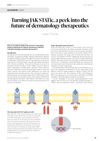 August 2024 in “New Zealand Medical Student Journal”
 JAK inhibitors show promise for treating skin diseases effectively and safely.
 1 citations
,
October 1996 in “Journal of Cutaneous Medicine and Surgery”
1 citations
,
October 1996 in “Journal of Cutaneous Medicine and Surgery” Gene therapy shows promise for treating skin disorders and cancer, but faces technical challenges.
51 citations
,
February 2004 in “Journal of Investigative Dermatology” MCSP may help identify and regulate skin stem cells, affecting hair growth and regeneration.
 7 citations
,
April 2021 in “Dermatology and Therapy”
7 citations
,
April 2021 in “Dermatology and Therapy” H-1 antihistamines may help with various skin conditions, but more research is needed to confirm their effectiveness.
36 citations
,
May 2025 in “Antioxidants” Lipid peroxidation worsens skin diseases but may help treat cancer.
 5 citations
,
January 2022 in “Asian Pacific Journal of Cancer Prevention”
5 citations
,
January 2022 in “Asian Pacific Journal of Cancer Prevention” Certain VDR gene changes can affect melanoma risk.