7 citations
,
April 2000 in “Mammalian Genome” A new mutation in mice causes crooked whiskers and messy hair.
 January 2024 in “Medical mycology journal”
 A mother and her two daughters got a skin infection from their cat.
16 citations
,
June 2015 in “The journal of investigative dermatology/Journal of investigative dermatology” The enzyme DHHC13 is essential for healthy hair and skin, and its deficiency leads to hair loss and skin problems.

Careful diagnosis and management of MCTD are crucial due to potential severe complications.
5 citations
,
December 2016 in “Microscopy Research and Technique” EPI-NCSCs from hair follicles may help treat brain development issues in mice.
67 citations
,
January 1992 in “Journal of Investigative Dermatology” 10 citations
,
December 2015 in “Experimental dermatology” EGFR helps mouse hair follicles stop growing by reducing certain growth regulators.

A neck lesion misdiagnosed as benign was later treated successfully with Mohs Micrographic Surgery.
39 citations
,
March 1997 in “The Lancet” Acquired perforating dermatosis often affects skin in people with kidney issues and diabetes.
July 2024 in “Journal of Investigative Dermatology” ATR12-351 ointment safely delivers LEKTI protein to the skin, reducing enzyme activity in Netherton syndrome.
 October 2022 in “Chinese Journal of Dermatology”
 Dry skin does not mean the skin's protective barrier is broken; it's often due to a lack of natural skin moisturizers.
5 citations
,
October 2021 in “American Journal of Medical Genetics Part A” A new genetic variant causes BRESHECK syndrome by disrupting cell growth and stress response.
 8 citations
,
November 2015 in “The American journal of dermatopathology/American journal of dermatopathology”
8 citations
,
November 2015 in “The American journal of dermatopathology/American journal of dermatopathology” Punctate follicular porokeratosis is a skin condition with specific features seen in hair follicles.
 2 citations
,
June 2021 in “PubMed”
2 citations
,
June 2021 in “PubMed” Chronic scalp lesions with crusts and pus indicate Erosive Pustular Dermatosis, which is confirmed by biopsy and effectively treated with strong topical steroids.
8 citations
,
August 2018 in “Journal of Investigative Dermatology” 8 citations
,
August 2023 in “Journal of Investigative Dermatology” Corin speeds up wound healing by helping skin cells move and grow.
 23 citations
,
January 2015 in “Journal of The American Academy of Dermatology”
23 citations
,
January 2015 in “Journal of The American Academy of Dermatology” People with myotonic dystrophy type 1 have a higher chance of getting skin tumors, including melanoma.
4 citations
,
August 2013 in “Chinese Medical Journal” A specific gene mutation in KRT86 is linked to hair disorder in a Chinese Han family.
11 citations
,
January 2021 in “British Journal of Dermatology” Mutations in the AP1B1 gene cause a new syndrome with skin, hearing, and developmental issues.
2 citations
,
September 1996 in “Neuroscience letters” Adding fetal calf serum to the medium kept Merkel cells alive and changed their shape.
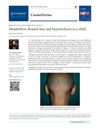 January 2026 in “Cosmoderma”
 A 9-year-old girl has a rare hair disorder causing beaded, sparse hair.
June 2025 in “British Journal of Dermatology” Melanocytic matricoma can look like skin cancer but is usually harmless; surgery and follow-up are advised.
September 2023 in “Journal of the American Academy of Dermatology” Bullous pemphigoid can look like erythema multiforme, so awareness is needed for proper treatment.
12 citations
,
July 2015 in “Experimental Dermatology” Gasdermin A3 overexpression in skin causes inflammation and hair loss.
January 2020 in “Korean journal of ophthalmology/Korean Journal of Ophthalmology” Minoxidil increases cell layer permeability by reducing tight junction proteins and raising ROS levels.
54 citations
,
January 1995 in “Human Molecular Genetics” Monilethrix is linked to a gene cluster on chromosome 12.
 2 citations
,
March 2022 in “Portuguese Journal of Nephrology & Hypertension”
2 citations
,
March 2022 in “Portuguese Journal of Nephrology & Hypertension” A rare EGFR mutation in newborns leads to severe health issues and early death.
 February 2023 in “Research Square (Research Square)”
 Genetic testing confirmed a rare skin disorder in a young girl, which improved with zinc supplementation.
February 2022 in “Skin research and technology” Reflective confocal microscopy can potentially diagnose epidermoid cysts without a biopsy.
 August 2020 in “International Journal of Research in Dermatology”
 Clouston's syndrome is a rare disorder affecting nails, hair, teeth, and skin, caused by a gene mutation, and currently has no treatment, only supportive care.