 July 2025 in “Journal of Cosmetic Dermatology”
 Triamcinolone is more effective than methotrexate for treating localized alopecia areata.
July 2025 in “Journal of Investigative Dermatology” IL-17 inhibitors are more effective than methotrexate in preventing psoriatic arthritis in psoriasis patients.
June 2025 in “British Journal of Dermatology” Tofacitinib is more effective than methotrexate for treating moderate-to-severe alopecia areata.
June 2025 in “British Journal of Dermatology” Tofacitinib was more effective than methotrexate for treating alopecia areata.
May 2025 in “Journal of the European Academy of Dermatology and Venereology”  May 2025 in “JEADV Clinical Practice”
 Tofacitinib and methotrexate successfully treated a woman's severe skin, joint, and hair loss issues.
November 2024 in “Forensic Sciences” Understanding the Y chromosome is key to male health, aging, and developing diagnostic tools.
November 2024 in “Journal of the Philippine Dermatological Society” Combining methotrexate and corticosteroids can effectively regrow hair in severe alopecia areata.
 October 2024 in “Asian Journal of Pharmaceutical and Clinical Research”
 Topical methotrexate is more effective and as safe as betamethasone for treating alopecia areata.
 May 2024 in “Proteome science”
 Bleaching damages hair by reducing the quality of keratin and keratin-associated proteins.
 April 2024 in “The Journal of urology/The journal of urology”
 SRD5A2 methylation in blood can predict how well someone will respond to finasteride treatment.
 January 2024 in “Indian Journal of Pharmaceutical Sciences”
 Peach kernel extract may promote hair growth by boosting cell growth in hair follicles.

Transfer learning with three neural network architectures accurately classifies hair diseases.
Dianabol boosts muscle growth but has serious health risks and legal issues.
November 2023 in “Biology” N6-methyladenosine affects hair follicle development differently in Rex and Hycole rabbits.
 October 2023 in “Benha Journal of Applied Sciences”
 Methotrexate and vitamin D3 are potentially more effective and safer than triamcinolone for treating localized alopecia areata.
September 2023 in “Journal of the American Academy of Dermatology” Methylprednisolone treatment helps most alopecia areata patients, but young age, extensive hair loss, and low vitamin D can affect results.
Intralesional methotrexate effectively treats alopecia areata by reducing TNF-α levels, leading to hair regrowth.
Both treatments for localized alopecia areata are equally effective.
 May 2023 in “Stem cell research & therapy”
 New method efficiently isolates hair growth cells from newborn mouse skin.
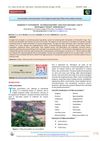 March 2023 in “International journal of pharmaceutical sciences review and research”
 The F2 Emulgel with Tridax procumbens extract showed good physical properties and antimicrobial effectiveness for wound healing.
January 2023 in “Zenodo (CERN European Organization for Nuclear Research)” A new accurate and reliable method was developed to measure Spironolactone and Hydrochlorothiazide together in medicines.
 January 2023 in “National journal of physiology, pharmacy and pharmacology”
 Low-dose methotrexate is generally safe but can cause mild to severe side effects, and folic acid can reduce these risks.
 November 2022 in “Animal Bioscience”
 Adding methionine to a low-protein diet helps Angora rabbits grow better fur.
 November 2022 in “Piretc”
 The document provides a way to measure how new ideas affect the making of goods in a region.
October 2022 in “The Egyptian Journal of Hospital Medicine” Methotrexate and azathioprine can help treat alopecia areata.
 March 2022 in “Nepal Journal of Dermatology Venereology & Leprology”
 Methotrexate with steroids is slightly more effective than azathioprine with steroids for treating severe alopecia areata.
 July 2021 in “Dermatology archives”
 Methotrexate may effectively and safely treat hair loss in children, with notable improvement after 12-15 months.
December 2020 in “Macromolecular Symposia” These polymers can improve hair texture and reduce water loss in hair cosmetics.
January 2020 in “Ayurline: IJ-RIM” Bhrungraj extract showed strong potential to fight liver cancer cells.