 April 2016 in “Journal of Investigative Dermatology”
 Decreasing MIG6 can increase the movement and invasiveness of MEK-inhibited mutant NRAS melanoma, particularly when stimulated by EGF.
LhGH promotes hair growth and prevents hair loss in mice.
 7 citations
,
March 2022 in “Molecules”
7 citations
,
March 2022 in “Molecules” 5-Bromo-3,4-dihydroxybenzaldehyde could potentially help hair growth by activating certain cell pathways and inhibiting others.
 12 citations
,
August 2022 in “Stem cell reviews and reports”
12 citations
,
August 2022 in “Stem cell reviews and reports” Increasing PBX1 reduces aging and cell death in hair follicle stem cells by boosting SIRT1 and lowering PARP1 activity.
 August 2022 in “JAAD case reports”
 A woman with a long-term skin condition developed a serious skin cancer that led to her death.
 11 citations
,
August 2010 in “Developmental neurobiology”
11 citations
,
August 2010 in “Developmental neurobiology” Ptprq has multiple forms that change during inner ear development.
21 citations
,
September 2010 in “Cancer Prevention Research” Overactive signaling in hair follicles can lead to skin cancer.
11 citations
,
June 2001 in “British Journal of Dermatology” c-Myc, Max, and Bin1 help hair follicle cells mature and die.
 30 citations
,
October 2014 in “PLOS ONE”
30 citations
,
October 2014 in “PLOS ONE” BAF200 is essential for proper heart and coronary artery formation.
16 citations
,
June 2015 in “The journal of investigative dermatology/Journal of investigative dermatology” The enzyme DHHC13 is essential for healthy hair and skin, and its deficiency leads to hair loss and skin problems.
77 citations
,
March 2000 in “Journal of Investigative Dermatology” The research identified six functional hair keratin genes and four pseudogenes, providing insights into hair formation and gene organization.
14 citations
,
July 2015 in “International Journal of Molecular Sciences” S-Methylmethionine sulfonium can protect skin from UVB damage.
January 2016 in “Jurnal Farmasi Indonesia” The 10% hibiscus leaf extract hair tonic promotes better hair growth than 2% minoxidil but causes eye irritation.
 April 2016 in “Journal of Investigative Dermatology”
 A peptide known for reducing wrinkles also effectively inhibits an enzyme linked to skin inflammation and acne.
 April 2015 in “Andrology”
 HNG may help prevent the negative effects of chemotherapy on sperm production and white blood cell counts.
The AMHR2-482A>G gene change is linked to higher PCOS risk.
 April 2012 in “KSBB Journal”
 Minoxidil analogs can be improved for hair growth inhibition by modifying specific parts of their structure.
 18 citations
,
February 2022 in “Cell Death Discovery”
18 citations
,
February 2022 in “Cell Death Discovery” ECM1-modified stem cells can effectively treat liver cirrhosis.
 9 citations
,
July 2018 in “Current Pharmaceutical Design”
9 citations
,
July 2018 in “Current Pharmaceutical Design” HO-1 helps skin health and healing but can worsen melanoma; it's a potential treatment target for skin diseases.
146 citations
,
February 2012 in “Journal of Clinical Investigation” Blocking Hedgehog signaling offers new treatment options for advanced basal cell carcinoma.
 August 2024 in “Biomolecules & Therapeutics”
 A new compound, HTPI, promotes hair growth by protecting cells from damage and regulating energy use.
79 citations
,
January 2002 in “Nucleic Acids Research” BMP-2 activates the Dlx3 gene in mouse skin cells, important for hair and skin development.
 November 2025 in “Mendeley Data”
 JAK inhibitors can be safely used in alopecia areata patients with latent hepatitis B or tuberculosis, with proper monitoring.
 5 citations
,
September 2013 in “The Journal of Dermatology”
5 citations
,
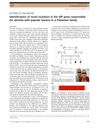
September 2013 in “The Journal of Dermatology” Researchers found a new mutation in the HR gene causing hair loss and skin bumps in a Pakistani family.
July 2019 in “Tumor Biology” Bone marrow-derived cells contribute to skin tumors, suggesting new treatment targets for non-melanoma skin cancers.
15 citations
,
January 2015 in “Stem cells international” Human hair follicle stem cells can be turned into red blood cells.
12 citations
,
March 2012 in “JEADV. Journal of the European Academy of Dermatology and Venereology/Journal of the European Academy of Dermatology and Venereology” A specific gene mutation in Japanese people can cause varying degrees of hair thinning in adulthood.
 51 citations
,
May 2019 in “Biomaterials”
51 citations
,
May 2019 in “Biomaterials” Researchers developed a method to grow hair follicles using special beads that could help with hair loss treatment.
3 citations
,
April 2022 in “Research Square (Research Square)” PBX1 reduces aging and cell death in stem cells by boosting SIRT1 and lowering PARP1.

Secukinumab treatment may cause HBV reactivation and hair discoloration.