 January 2026 in “Zenodo (CERN European Organization for Nuclear Research)”
 Dutasteride 0.5 mg/day is the best treatment for male pattern baldness.
 January 2026 in “Zenodo (CERN European Organization for Nuclear Research)”
 Dutasteride 0.5 mg/day is the best treatment for male pattern baldness.
 December 2020 in “Dermatología argentina”
 Low-dose oral minoxidil effectively treats male pattern baldness.
 March 2026 in “Dermatology and Therapy”
 Low-dose oral minoxidil helps improve hairline and eyebrow coverage in frontal fibrosing alopecia.
January 2008 in “Journal of Medicinal Chemistry” Finasteride may cause sexual and psychological side effects by affecting an enzyme related to epinephrine.
 April 2009 in “11th European Congress of Endocrinology”
 Taking 1 mg finasteride for a year reduces dihydrotestosterone levels in men with early hair loss, but doesn't change their metabolic state.
22 citations
,
March 2003 in “Steroids” PM-9 and finasteride effectively inhibit the enzyme that converts testosterone to DHT.
 10 citations
,
April 2000 in “Archives of Oral Biology”
10 citations
,
April 2000 in “Archives of Oral Biology” Minocycline may cause hair loss by increasing DHT levels, but finasteride can help counteract this effect.
 March 2000 in “The Journal of pharmacy technology”
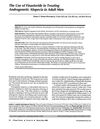
 Finasteride effectively treats mild to moderate hair loss in men aged 18-41, with some side effects.
February 2026 in “European Urology”  September 2019 in “Journal of Investigative Dermatology”
 Finasteride treatment lowers urine androgen and prostaglandin levels, making them potential markers for effectiveness.
February 2026 in “Toxicology Letters” MK-0773 is a moderate inhibitor of the SRD5A2 enzyme.
Topical minoxidil and oral finasteride are effective treatments for androgenetic alopecia.
Topical minoxidil 2% improves hair growth in about 30% of users.
 January 2000 in “Annals of Dermatology”
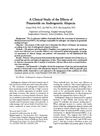
 Finasteride effectively treats hair loss in men with minimal side effects.
 11 citations
,
February 2018 in “Archives of Pharmacal Research”
11 citations
,
February 2018 in “Archives of Pharmacal Research” Finasteride reduces melanin production, possibly treating hyperpigmentation and melanoma, but needs more safety research.
 2 citations
,
May 2012 in “Indian drugs”
2 citations
,
May 2012 in “Indian drugs” Finasteride, a hair loss treatment, works better and is more stable when delivered through specially prepared gels, leading to increased hair growth.
 187 citations
,
June 1999 in “Journal of The American Academy of Dermatology”
187 citations
,
June 1999 in “Journal of The American Academy of Dermatology” Finasteride effectively treats frontal hair loss with few side effects.
 January 2023 in “International Journal of Medicine in Developing Countries”
 Topical minoxidil improved hair loss in a patient when used consistently.
2 citations
,
May 2017 in “Zenodo (CERN European Organization for Nuclear Research)” Topical minoxidil 5% can cause erectile dysfunction and decreased libido.
July 2022 in “British Journal of Dermatology”  4 citations
,
January 2015 in “Journal of drug assessment”
4 citations
,
January 2015 in “Journal of drug assessment” Finasteride gel effectively and safely reduces hair thickness in women with excessive hair growth.
 July 2026 in “Innovations in Pharmaceutical Sciences & Care”
 Combining mesotherapy injections with minoxidil improved hair growth and appearance.
2 citations
,
January 2022 in “BioMed Research International” Finasteride-loaded nanogels are effective, safe, and improve drug absorption through the skin.
 6 citations
,
January 2017 in “Annals of Dermatology”
6 citations
,
January 2017 in “Annals of Dermatology” Combination of 17α-estradiol and minoxidil improves hair growth and reduces hair loss in most patients.
September 2008 in “Evidencia actualizacion en la práctica ambulatoria” Topical minoxidil and oral finasteride are the best treatments for androgenetic alopecia.
January 2005 in “Journal of Elinical Research” The two finasteride preparations are bioequivalent.
1 citations
,
September 2021 in “Pharmaceutics” High-dose finasteride may help treat glioblastoma but needs localized delivery for effectiveness.
 July 2020 in “Pharmaceutical Research”
  June 2019 in “Reactions Weekly”