 May 2025 in “Journal of Extracellular Vesicles”
 Erythrocyte extracellular vesicles help hair growth and skin health.
 5 citations
,
January 2021 in “Daru”
5 citations
,
January 2021 in “Daru” A woman had severe reactions to methotrexate, including skin issues and organ problems, but improved after 38 days in the hospital.
 April 2025 in “Current Rheumatology Reviews”
 Recognizing unusual symptoms can lead to early diagnosis and effective treatment of systemic lupus erythematosus.

PmtHEE is a better model for studying pigmented skin because it includes melanocytes and shows improved cell differentiation.
September 2024 in “Dokumentenrepositorium der RUB (Ruhr University Bochum)” Higher monocyte counts predict less effective adalimumab treatment in hidradenitis suppurativa patients.
January 2026 in “British Journal of Dermatology” Combined microneedling with minoxidil improves hair growth more than minoxidil alone for hair loss.
7 citations
,
January 2020 in “Dermatology online journal” An adult with a rare skin condition improved with tazarotene treatment.
20 citations
,
January 2002 in “Laboratory Animals” Mutations in the hairless gene cause hair loss and skin cysts in rhesus macaques.
15 citations
,
May 1987 in “Fundamental and applied toxicology” SMR-2 and SMR-6 are much more toxic than retinoic acid, causing severe side effects.
9 citations
,
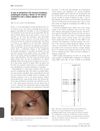
October 2021 in “Journal of Cosmetic Dermatology” Microneedling is an effective and minimally invasive treatment for hair loss.
 7 citations
,
February 2010 in “British Journal of Dermatology”
7 citations
,
February 2010 in “British Journal of Dermatology” A woman with a rare autoimmune disorder had a blister on her eye and unique immune reaction, which was effectively treated with medication.
 April 2023 in “Journal of Investigative Dermatology”
 Type 1/17 inflammation in psoriasis increases skin cell growth due to a molecule that could be a new treatment target.
 January 2023 in “International journal of dermatology, venereology and leprosy sciences”
 Microneedling is an effective and tolerable way to treat vitiligo.
 28 citations
,
October 2017 in “Journal of Cosmetic and Laser Therapy”
28 citations
,
October 2017 in “Journal of Cosmetic and Laser Therapy” Combining electrodynamic microneedle with 5% minoxidil improves hair growth and reduces hair loss in Chinese men.
1 citations
,
October 2023 in “BMC Genomics” miRNAs in the Dlk1-Gtl2 region may improve lamb fur quality.
October 2015 in “The American Journal of Gastroenterology” Allopurinol may cause rare granulomatous microscopic colitis.
January 2015 in “Current Sports Medicine Reports” Athletes with low platelet counts need careful monitoring and informed discussions about playing contact sports safely.
 1 citations
,
July 1990 in “PubMed”
1 citations
,
July 1990 in “PubMed” The document's conclusion cannot be determined from the provided text.
January 2025 in “Stem Cells International” Exosomes from stem cells can reduce UV-induced skin damage by lowering inflammation and oxidative stress.
7 citations
,
June 2017 in “The Journal of Dermatology”  1 citations
,
March 2017 in “Journal of evolution of medical and dental sciences”
1 citations
,
March 2017 in “Journal of evolution of medical and dental sciences” Microneedling with either platelet-rich plasma or 5% minoxidil can increase hair growth in people with androgenetic alopecia, but minoxidil might be slightly better.
 April 2024 in “Dermatologic surgery”
 Microneedling at a depth of 0.5 mm is the most effective single treatment for hair loss among the tested depths.
Microneedling and PRP are generally safe but can cause mild skin issues; serious problems are rare.
January 2016 in “Munich Personal RePEc Archive (Ludwig Maximilian University of Munich)” A new method using gold nanoshells and infrared light effectively delivers siRNA to cancer and stem cells with precision and minimal damage.
March 2025 in “Medical Science Journal for Advance Research” miR-155 levels in blood could help identify alopecia areata.

Proper niche formation in Drosophila requires Slit-Robo signaling for cell migration.
2 citations
,
July 2018 in “Chinese Journal of Dermatology” Sebaceous nevus changes with age, and dermoscopy and RCM are effective for diagnosis.
 18 citations
,
March 1990 in “Archives of Dermatology”
18 citations
,
March 1990 in “Archives of Dermatology” Cyclosporine cleared a woman's resistant skin condition quickly and kept it away for over a year.
8 citations
,
June 2016 in “Journal of Investigative Dermatology” A rare genetic deletion in the KRT1 gene causes unique skin symptoms in a family.
3 citations
,
January 1995 in “PubMed” Selenium therapy improved health in cystic fibrosis patients with fewer side effects at a lower dose.