March 2026 in “Acta Pharmaceutica Sinica B” Microneedles show promise for improving hair regrowth in alopecia.
5 citations
,
April 2024 in “Journal of Ovarian Research” miR-21 helps improve ovarian function recovery in treated mice.
2 citations
,
June 2025 in “Nano Research” Gold nanoclusters can improve detection, imaging, and therapy in medicine.
1 citations
,
January 2007 in “AIP conference proceedings” High-resolution x-ray images showed three main structures in human hair: medulla, cortex, and cuticle.
January 2025 in “Repository of Digital Objects for Teaching Research and Culture (University of Valencia)” Non-coding RNAs may be key in diagnosing and treating rare skin disorders.
 April 2023 in “Journal of Investigative Dermatology”
 An automated system can predict death risk in thin melanoma by analyzing immune cells.
 100 citations
,
June 2006 in “British Journal of Dermatology”
100 citations
,
June 2006 in “British Journal of Dermatology” Hair loss severity relates to increased miniaturization in female pattern hair loss.
 January 2023 in “Annals of dermatology/Annals of Dermatology”
 A substance called miR-1246 may help treat severe hair loss by reducing certain immune cell activities.
33 citations
,
December 2017 in “Saudi Journal of Biological Sciences” Certain microRNAs are crucial for hair follicle development in cashmere goats.
4 citations
,
March 2020 in “JAAD Case Reports” Vitamin B12 deficiency can cause darkening of all nails.
 July 2025 in “Journal of Investigative Dermatology”
 Miniaturized hair follicles in androgenetic alopecia show abnormal mitochondrial activity and damage.
January 2013 in “프로그램북(구 초록집)” A 0.5 mm microneedle roller best promotes hair growth.
43 citations
,
April 1996 in “Journal of Investigative Dermatology” 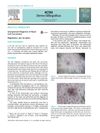 May 2015 in “Actas Dermo-Sifiliográficas”
 A young man was unexpectedly diagnosed with basal cell carcinoma after a scalp examination and confocal microscopy.
July 2019 in “Cancer Research” Bone marrow and hair follicle cells help form skin tumors, suggesting new treatment targets.
 June 2026 in “Mediterranean Journal of Hematology and Infectious Diseases”
 The girl's lupus with kidney and immune complications didn't improve with strong treatment.
 August 2025 in “Frontiers in Microbiology”
 Microneedling, especially with halometasone, improves hair regrowth and gut health in alopecia areata.
 39 citations
,
July 2013 in “Journal of dermatological science”
39 citations
,
July 2013 in “Journal of dermatological science” Hair microRNAs could be effective biomarkers for diagnosing scleroderma.
Ribonucleotide excision repair is crucial to prevent skin cancer.
 42 citations
,
January 2021 in “Journal of Clinical Medicine”
42 citations
,
January 2021 in “Journal of Clinical Medicine” Microneedle arrays with nanotechnology show promise for painless drug delivery through the skin but need more research on safety and effectiveness.
 January 2023 in “Nanomedicine & nanotechnology open access”
 Microneedling is a promising, simple, and cost-effective treatment for hair loss that works well with other therapies.
 3 citations
,
November 2021 in “Applied Microscopy”
3 citations
,
November 2021 in “Applied Microscopy” Hair microscopy is a simple and cost-effective method to help diagnose systemic diseases in children.
Nano-Zinc oxide on skin reduces hair follicle stem cell differentiation.
139 citations
,
October 2005 in “Journal of Investigative Dermatology” The nail matrix has a reduced immune response, protecting it from autoimmunity.
 41 citations
,
September 2012 in “Cellular and Molecular Life Sciences”
41 citations
,
September 2012 in “Cellular and Molecular Life Sciences” MicroRNAs play a crucial role in skin and hair health, affecting everything from growth to aging, and could potentially be used in treating skin diseases.
 1 citations
,
October 2022 in “Scientific reports”
1 citations
,
October 2022 in “Scientific reports” Nestin identifies specific progenitor cells in hair follicles that can become outer root sheath cells.
14 citations
,
June 2005 in “PubMed” A rare ear cyst contained hair fragments.
 3 citations
,
July 2021 in “Life science alliance”
3 citations
,
July 2021 in “Life science alliance” PNKP is essential for keeping adult mouse progenitor cells healthy and growing normally.
5 citations
,
October 2021 in “Journal of the American Academy of Dermatology” PRAME helps distinguish between benign and malignant skin cells in most cases.
 178 citations
,
May 2006 in “Developmental Dynamics”
178 citations
,
May 2006 in “Developmental Dynamics” Jumonji genes are important for development and their mutations can cause abnormalities, especially in the heart and brain.