4 citations
,
August 2016 in “PubMed” Repeated dyeing and shampooing cause hair color loss and damage.
 4 citations
,
May 2014 in “PubMed”
4 citations
,
May 2014 in “PubMed” Monoethanolamine-based hair colorants can cause more damage to hair than ammonia-based ones.
4 citations
,
July 2010 in “International Journal of Cosmetic Science” Curved human hair has different structures on its convex and concave sides.
 4 citations
,
February 2007 in “Journal of the European Academy of Dermatology and Venereology”
4 citations
,
February 2007 in “Journal of the European Academy of Dermatology and Venereology” The study suggests silicon might be important for healthy hair, as less silicon was found in people with hair loss.
4 citations
,
January 2006 in “International Journal of Cosmetic Science” The method shows how hair lipids form specific patterns and their roles in hair structure.
 3 citations
,
October 2021 in “Clinical, Cosmetic and Investigational Dermatology”
3 citations
,
October 2021 in “Clinical, Cosmetic and Investigational Dermatology” Scalp melanoma, a deadly skin cancer, is often found late due to its hard-to-see location, especially in older men. Early detection, possible treatments, and the role of hairdressers in spotting it early are discussed. More research is needed to improve detection and treatment.
 3 citations
,
June 2020 in “Developmental Cell”
3 citations
,
June 2020 in “Developmental Cell” Feather patterns are influenced by enhancers and chromatin looping, and the structure of protein complexes important for hair growth has been detailed.
3 citations
,
May 2009 in “International Journal of Cosmetic Science” Relaxer treatments damage African–American hair, with commercial products causing more harm than lab-made solutions.
2 citations
,
November 2023 in “Skin Research and Technology” RCM and dermoscopy help identify different types of hair loss in children.
2 citations
,
March 2018 in “ACS Sustainable Chemistry & Engineering” Heating human hair creates hollow microtubes with smooth surfaces.
2 citations
,
December 2015 in “DOAJ (DOAJ: Directory of Open Access Journals)” Sonophoresis reduces skin absorption of sodium fluorescein in certain liposomes.
2 citations
,
December 2013 in “Journal of Cosmetic Dermatology” UV treatment can damage hair, so protection is advised.
 2 citations
,
August 2013 in “Journal of Investigative Dermatology”
2 citations
,
August 2013 in “Journal of Investigative Dermatology” Nuclear shape and chromatin changes affect gene expression in skin cell differentiation.
2 citations
,
July 2013 in “Fashion business” Keratin essence protects and improves damaged hair.
2 citations
,
June 2013 in “In Vitro Cellular & Developmental Biology - Animal” Melanocytes from human fetal hair follicles were successfully cultured, showing potential for hair disease research and clinical use.
2 citations
,
May 1979 in “PubMed” Monilethrix is not caused by a metabolic defect.
1 citations
,
December 2024 in “Tissue Barriers” The epidermis is the stiffest skin layer.
 1 citations
,
May 2024 in “Dermatology and Therapy”
1 citations
,
May 2024 in “Dermatology and Therapy” Frontal Fibrosing Alopecia needs better diagnostics and treatments, with dutasteride showing promise.
 1 citations
,
September 2022 in “River Publishers eBooks”
1 citations
,
September 2022 in “River Publishers eBooks” The document concludes that hair keratin-chitosan scaffolds were successfully made and are suitable for biomedical use.
 1 citations
,
February 2022 in “bioRxiv (Cold Spring Harbor Laboratory)”
1 citations
,
February 2022 in “bioRxiv (Cold Spring Harbor Laboratory)” Certain interactions help prepare the androgen receptor for pairing and activation, which is important for its role in development and disease.
 1 citations
,
August 2017 in “British Journal of Dermatology”
1 citations
,
August 2017 in “British Journal of Dermatology” Sodium hypochlorite can effectively prevent and remove Staphylococcus aureus biofilms in atopic dermatitis at high enough concentrations.
 1 citations
,
October 2012 in “The Journal of Dermatology”
1 citations
,
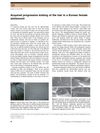
October 2012 in “The Journal of Dermatology” A Korean girl developed kinky hair without known cause or effective treatment.
1 citations
,
January 2010 in “Han-guk hyeonmigyeong hakoeji/Applied microscopy” Straight permed hair loses weight faster than virgin hair when heated, but ends up heavier after burning.
1 citations
,
September 2008 in “International Journal of Cosmetic Science” Cassia HPTC is an effective hair conditioner, better than some traditional formulas.
 1 citations
,
January 2008
1 citations
,
January 2008 Topical iodine can help regenerate human scar tissue quickly.
1 citations
,
January 2008 in “Massey Research Online (Massey University)” A successful enzyme depilation system needs a broad-spectrum protease that doesn't harm collagen VI.
1 citations
,
February 2003 UV radiation causes significant protein loss and color changes in hair, especially blond hair.
 July 2026 in “Diagnostics”
 Integrating various skin imaging technologies improves diagnosis and treatment in dermatology.
 April 2026 in “Biosensors”
 Red light increases hair follicles and ATP in mouse skin.
March 2026 in “Journal of the mechanical behavior of biomedical materials/Journal of mechanical behavior of biomedical materials” Bleaching and UV exposure significantly damage hair.