
Androgenetic alopecia, or hair loss, is caused by a mix of genetics, hormones, and environment, where testosterone affects hair growth and causes hair to become smaller and grow for a shorter time.
April 2022 in “Journal of Investigative Dermatology” Hair shaft miniaturization leads to hair follicle stem cell loss, suggesting Piezo1 as a potential treatment target.
 January 2022 in “Springer eBooks”
 Platelet-rich plasma (PRP) is a promising treatment for hair loss, believed to extend the life cycle of hair follicles and prevent their shrinkage.

The FUE hair transplant technique provides a natural and satisfying solution for male pattern baldness.
 March 2021 in “Uludağ Üniversitesi Tıp Fakültesi dergisi”
 The review provided information on various treatments to stop hair thinning and increase hair density in people with common genetic hair loss.
 January 2021 in “International journal of pharmaceutical research”
 Sansevieria trifasciata P. extracts, especially the ethyl acetate fraction, effectively promote hair growth in male rabbits with hair loss.
Hair loss is caused by hormonal changes that shorten hair growth phases and shrink hair follicles.
January 2020 in “Revista Dermatológica Centro Uraga” Recognizing trichoscopic features is crucial for diagnosing various hair loss conditions.
East and Southeast Asians typically have less dense but thicker, straight black hair.
September 2016 in “Journal of dermatological science” The conclusion is that the variation in hair thinness in patients is mostly due to the amount of underdeveloped hairs, and treatments that thicken fine hairs might work for those with mild to severe conditions.
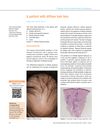 January 2015 in “Indian Dermatology Online Journal”
 The patient's hair loss is most likely due to diffuse alopecia areata.
January 2015 in “Faculty of 1000 Research Ltd” Androgenetic alopecia may be irreversible due to the detachment of a muscle from hair follicles.
January 2007 in “한국미용학회지” People with hair loss have smaller hair roots and less fat tissue.
January 2007 in “한국미용학회지” Women without alopecia have more fat tissues and longer hair roots than those with alopecia.
January 2002 in “Europe PMC (PubMed Central)” The model successfully simulates human hair growth and patterns, including hair loss types.
September 1997 in “JEADV. Journal of the European Academy of Dermatology and Venereology/Journal of the European Academy of Dermatology and Venereology” Common hair loss can be diagnosed with a physical exam and sometimes a hair test or skin biopsy, and treated with medication or surgery, with ongoing treatment needed to keep results.
 October 2017 in “Journal of The European Academy of Dermatology and Venereology”
 Stem cells preservation in AGA could be a potential therapy, but more cases needed.

Hair loss in women can be caused by genetics, menopause, certain health conditions, and emotional stress, and it often results in thinner hair and a changing hairline.

Proper medical treatments can control and even reverse female pattern hair loss, but it's important to check for related conditions like excessive male hormone production, especially in severe cases.
 November 2014 in “British Journal of Dermatology”
 Hair loss is due to thinner hairs, not less hairs; hair diameter indicates balding progression and treatment effectiveness.
 January 2007 in “Revista del Centro Dermatológico Pascua”
 Hair loss in women, often not related to male hormones, increases with age and can cause significant emotional distress.
 242 citations
,
February 2016 in “Science”
242 citations
,
February 2016 in “Science” Hair loss and aging are caused by the breakdown of a key protein in hair stem cells.
 224 citations
,
March 2006 in “Seminars in Cutaneous Medicine and Surgery”
224 citations
,
March 2006 in “Seminars in Cutaneous Medicine and Surgery” The document concludes that understanding hair follicle biology can lead to better hair loss treatments.
 158 citations
,
February 2000 in “Archives of dermatology”
158 citations
,
February 2000 in “Archives of dermatology” Some people with pattern hair loss may also have scalp inflammation and scarring similar to lichen planopilaris.
 72 citations
,
September 1997 in “Dermatologic Surgery”
72 citations
,
September 1997 in “Dermatologic Surgery” Careful planning and patient counseling can lead to excellent hair transplant results, often in one or two sessions.
 58 citations
,
January 2006 in “Skin Pharmacology and Physiology”
58 citations
,
January 2006 in “Skin Pharmacology and Physiology” High levels of testosterone and 5α-DHT can lead to cell death in cells important for hair growth.
 53 citations
,
April 2014 in “Experimental Dermatology”
53 citations
,
April 2014 in “Experimental Dermatology” Wnt10b makes hair follicles bigger, but DKK1 can reverse this effect.
 42 citations
,
March 2006 in “Drug Discovery Today: Therapeutic Strategies”
42 citations
,
March 2006 in “Drug Discovery Today: Therapeutic Strategies” The conclusion is that we need more effective hair loss treatments than the current ones, and these could include new drugs, gene and stem cell therapy, hormones, and scalp cooling, but they all need thorough safety testing.
28 citations
,
June 2000 in “PubMed” Androgenetic alopecia is common hair loss due to genetics and DHT.
 20 citations
,
August 2005 in “Journal of Cutaneous Pathology”
20 citations
,
August 2005 in “Journal of Cutaneous Pathology” The protein ARA70/ELE1 is involved in male pattern baldness, and lower levels of its short form may lead to hair thinning.