 1 citations
,
July 2016 in “Prescriber”
1 citations
,
July 2016 in “Prescriber” Minoxidil and spironolactone slow hair loss in women.
 1 citations
,
March 2009 in “Hair transplant forum international”
1 citations
,
March 2009 in “Hair transplant forum international” The TrichoScan method effectively measures hair growth and helps choose patients for hair restoration surgery.
 1 citations
,
January 2020 in “Skin appendage disorders”
1 citations
,
January 2020 in “Skin appendage disorders” Finasteride may help treat frontal fibrosing alopecia, but more research is needed.

Diagnosing and managing monilethrix is harder when it occurs with other hair loss conditions.

Diagnosing and managing monilethrix is harder when it occurs with other hair loss conditions.
March 2026 in “Skin Appendage Disorders” Diagnosing and treating monilethrix is challenging when it occurs with other hair disorders.
 September 2025 in “Journal of Dermatology Research Reviews & Reports”
 Rigenera® effectively improves hair condition in Androgenetic Alopecia, and HairMetrix® tracks progress well.
 July 2025 in “Journal of the American Academy of Dermatology”
 Hair diameter diversity helps assess hair loss, but its standard measure varies by individual and ethnicity.
 January 2024 in “Journal of Cosmetic Dermatology”
 Men's and women's pattern hair loss progress differently, with men showing more hair thinning and women having more widespread hair loss.
 January 2024 in “Asian Journal of Medical Sciences”
 Dermoscopes help tell FPHL apart from other hair loss types and can detect it early by identifying specific patterns.
 September 2023 in “Biomedical Optics Express”
 New imaging techniques show testosterone delays hair growth and shrinks follicles in mice, but have limited depth for viewing.
 August 2023 in “JAAD Case Reports”
 A woman with lupus experienced hair regrowth after treatment, but hair transplantation is not advised for her condition.
 June 2023 in “Aesthetic Plastic Surgery”
 The PRECISE scale helps estimate how many grafts are needed for hair transplant based on the severity of hair loss.

The RNA AL136131.3 slows down hair growth and speeds up hair loss by affecting sugar breakdown in hair follicles.
Multiphoton microscopy can effectively distinguish between scarring and non-scarring alopecia.
 January 2015 in “Indian Dermatology Online Journal”
 The patient's hair loss is most likely due to diffuse alopecia areata.
 April 2012 in “Informa Healthcare eBooks”
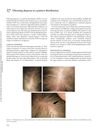
 Fibrosing alopecia in a pattern distribution is a unique hair loss condition with inflammation and scarring, resembling but distinct from common balding.
 April 2012 in “Informa Healthcare eBooks”
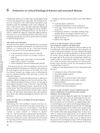
 The document concludes that diagnosing hair loss requires evaluating multiple histological features, as no single feature is definitive on its own.
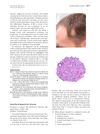
The man has Temporal Triangular Alopecia, a stable, non-scarring hair loss condition best treated with hair transplantation.
The ProScope HR is an effective, user-friendly, and affordable tool for diagnosing hair loss.
 July 2004 in “Dermatologic Surgery”
 A woman had temporary hair loss due to a stress-related condition after a facelift.
 February 2024 in “International Journal of Molecular Sciences”
 Hair loss in Androgenetic Alopecia is caused by genetics, aging, and lifestyle, leading to hair follicle shrinkage and related health risks.
 January 2020 in “Przegla̧d dermatologiczny”
 A 5-year-old boy was diagnosed with congenital triangular alopecia, a type of hair loss without skin changes, usually starting between ages 2-5, with no specific treatment.
April 2023 in “Journal of Investigative Dermatology” AL136131.3 slows hair growth by affecting energy processes in hair loss.
April 2023 in “Dohuk medical journal” Trichoscopy effectively differentiates Androgenetic Alopecia from Telogen Effluvium.
January 2023 in “Frontiers in Medicine” ALRV5XR is the most effective hair regrowth treatment at 24 weeks.
April 2022 in “Journal of advances in medicine and medical research” Topical minoxidil 5% effectively improves hair density and width in men with androgenetic alopecia.
 February 2022 in “Chinese Journal of Dermatology”
 A 36-year-old woman with worsening hair loss over 10 years was treated with various medications, and after six months, her hair loss did not worsen significantly.
December 2021 in “Skin appendage disorders” A reliable severity score for female pattern hair loss was developed and validated.
March 2017 in “Hair transplant forum international” Asian men have varying hair densities, important for hair transplant success.