 July 2008 in “Expert Review of Dermatology”
 Proper planning for hair transplants is crucial for natural results, with careful patient selection and strategic graft placement being key factors.
January 2023 in “Journal of Plastic Surgery and Hand Surgery” Autogenic PRP improves graft viability more than xenogenic PRP, but both are effective.
October 2022 in “Hair Transplantation” Proper technique in strip hair transplantation minimizes complications.
May 2016 in “Hair transplant forum international”  153 citations
,
August 2002 in “Dermatologic Surgery”
153 citations
,
August 2002 in “Dermatologic Surgery” Follicular Unit Extraction (FUE) is a less invasive hair transplant method with minimal scarring, suitable for about 60% of patients, especially those needing fewer grafts and quicker recovery.
Stem cells can improve skin grafts by enhancing blood flow and hair growth.
 January 2017 in “SM dermatology journal”
 Eyebrow hair transplants have high patient satisfaction and require surgeons to have artistic and technical skills.
 3 citations
,
May 2021 in “Indian Dermatology Online Journal”
3 citations
,
May 2021 in “Indian Dermatology Online Journal” FUE is a versatile hair transplant technique with many uses and good outcomes when performed with skill.
 January 2023 in “Journal of surgery and research”
 New treatment effectively reverses hair thinning in most patients with mild side effects.
 October 2023 in “Facial Plastic Surgery”
 The document concludes that hair transplant practices, especially Follicular Unit Excision, are continually improving with refined techniques and tools for better results.
May 2025 in “Arquivos Catarinenses de Medicina” Fat micrografting improves hair transplant success in burn-related hair loss.
September 2023 in “Journal of the American Academy of Dermatology” Combining robotic and specialized tools improves hair transplant results.
 4 citations
,
January 2012 in “International Society of Hair Restoration Surgery”
4 citations
,
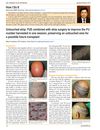
January 2012 in “International Society of Hair Restoration Surgery” Combining FUE and strip surgery increases hair harvested in one session and keeps options open for future transplants.
 14 citations
,
March 2017 in “Plastic and reconstructive surgery. Global open”
14 citations
,
March 2017 in “Plastic and reconstructive surgery. Global open” Hair follicle damage happens during hair transplants and can impact success; better surgical methods are needed.
 15 citations
,
May 2004 in “Facial Plastic Surgery Clinics of North America”
15 citations
,
May 2004 in “Facial Plastic Surgery Clinics of North America” New techniques in hair restoration surgery can fix unnatural results from old methods, improving patient self-esteem.
 November 2018 in “Springer eBooks”
 The document concludes that hair transplant methods are often selected for provider convenience over patient benefit, highlighting the need for less invasive techniques and careful physician involvement for better results.
 8 citations
,
March 2006 in “Seminars in Cutaneous Medicine and Surgery”
8 citations
,
March 2006 in “Seminars in Cutaneous Medicine and Surgery” Hair transplantation has improved to look more natural, but managing patient expectations and using precise techniques are key for the best outcomes.
2 citations
,
October 2012 in “Indian Journal of Dermatology, Venereology and Leprology” Minoxidil may help reduce early hair loss after a hair transplant.
5 citations
,
September 2017 in “PubMed” A new type of amniotic tissue graft improves wound healing better than other grafts.
 April 2018 in “The journal of investigative dermatology/Journal of investigative dermatology”
 Researchers created a 3D-printed skin model that grew human hair when grafted onto mice by improving blood supply to the grafts.
 2 citations
,
August 1994 in “The Journal of Dermatologic Surgery and Oncology”
2 citations
,
August 1994 in “The Journal of Dermatologic Surgery and Oncology” The article concludes that hair transplantation is advancing, but a reliable way to ensure complete tumor removal is still needed.
 January 2015 in “D-Scholarship@Pitt (University of Pittsburgh)”
 Diabetic patients' stem cells make vascular grafts more prone to clots, but new methods may improve grafts.
 November 2014 in “PubMed”
 A robotic device could improve surgical hair restoration, but it needs more testing to confirm its effectiveness compared to current methods.
 24 citations
,
August 2013 in “Facial Plastic Surgery Clinics of North America”
24 citations
,
August 2013 in “Facial Plastic Surgery Clinics of North America” SMP is a medical tattoo for hair loss, improving appearance and camouflaging scars, but requires skill and has limitations.
Autologous Regenerative Therapy may improve hair restoration by using stem cells from fat.
April 2026 in “ACS Applied Materials & Interfaces” A new treatment using probiotic microneedles shows promise for promoting hair growth and reducing inflammation in androgenetic alopecia.
11 citations
,
January 2019 in “Dermatologic Surgery” Hair follicle transplants help heal wounds, but scar quality and hair growth vary by location.
 1 citations
,
May 2021 in “International Journal of Dermatology”
1 citations
,
May 2021 in “International Journal of Dermatology” Long hair follicular unit excision is effective for hair transplants, providing quick, natural-looking results with less pain but needs more time, staff, and skill.
 November 2023 in “Facial Plastic Surgery”
 Follicular Unit Excision (FUE) is a popular, less invasive hair restoration method with high patient satisfaction when done correctly, despite some complications from untrained practitioners.
 25 citations
,
August 2010 in “Acta Biomaterialia”
25 citations
,
August 2010 in “Acta Biomaterialia” Researchers developed a method to grow hair follicle cells for transplantation using a special chip.